

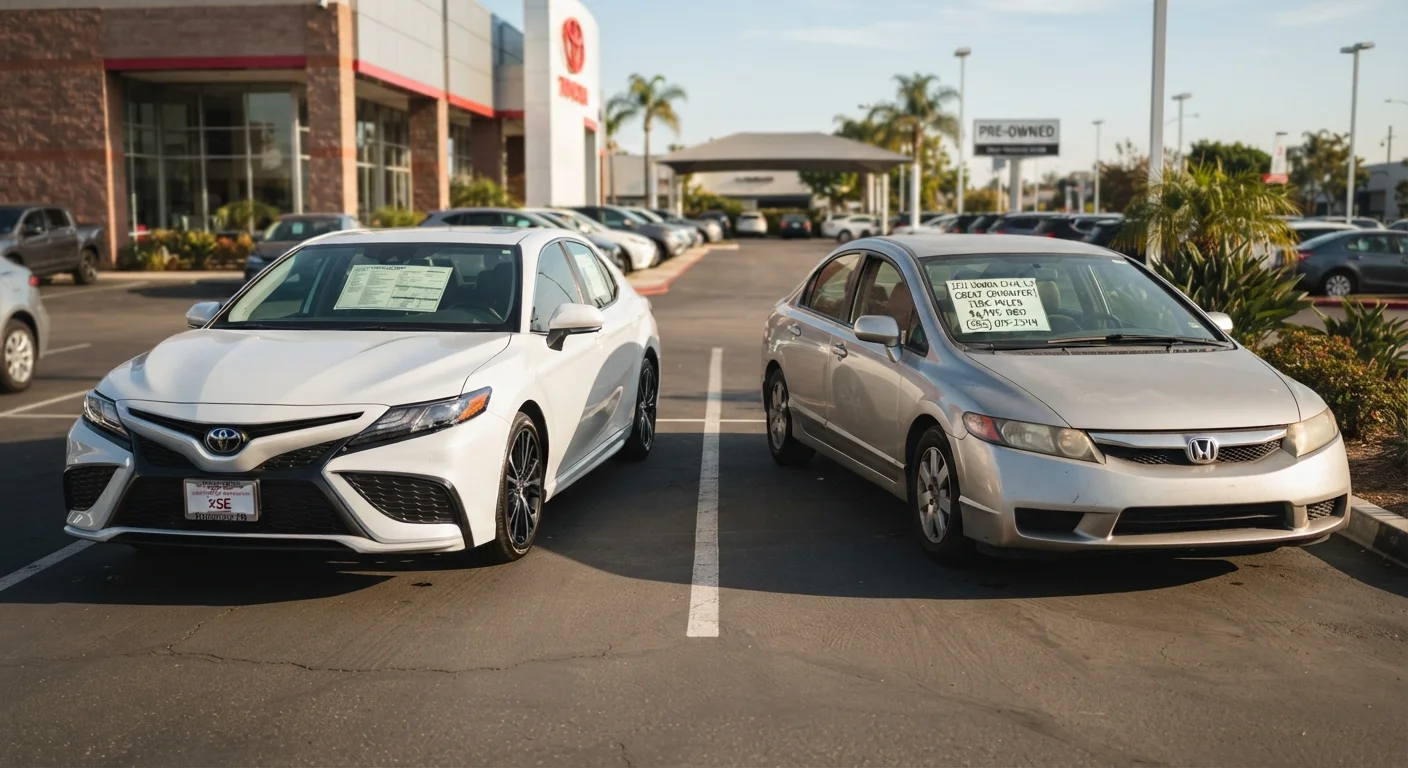
Our Verdict
Neither new nor used is universally the right answer for senior buyers. A new car delivers predictability and modern safety features at a premium price, while a well-chosen used vehicle can offer genuine value if its history is verified. The decision hinges on your financial situation, how much you drive, and how much uncertainty you can comfortably absorb.
| Best for | Recommended |
|---|---|
| Seniors who prioritize peace of mind, latest safety tech, and can manage higher monthly costs | New Car |
| Those on fixed incomes seeking lower purchase prices and slower depreciation | Used Car |
| Buyers wanting warranty protection without new-car pricing | Certified Pre-Owned Vehicle |
The Core Tradeoff: Cost vs. Certainty
When seniors weigh a new car against a used one, two competing values typically sit at the center: lower cost versus greater certainty. A new vehicle gives you a known starting point — zero prior owners, full factory warranty, and the latest available safety systems. A used vehicle offers a lower purchase price and a depreciation curve that has already done its steepest work before you arrived.
Understanding which of those values matters more to you personally is the most useful first step. The factors worth weighing before choosing include your driving habits, financial flexibility, and how comfortable you are with some degree of mechanical uncertainty.
| New Car | Used Car | Certified Pre-Owned | |
|---|---|---|---|
| Upfront Cost | Highest | Lowest | Moderate |
| Depreciation Impact | Steepest in year one | Slower, prior loss absorbed | Moderate, some absorbed |
| Warranty Coverage | Full manufacturer warranty | Little to none | Extended limited warranty |
| Safety Technology | Latest available features | Varies by model year | Varies; often fairly current |
| Financing Options | Widest range available | More limited, higher rates | Manufacturer rates sometimes available |
| Ownership Uncertainty | Very low | Higher without history check | Low to moderate |
| Ideal Driving Volume | High annual mileage | Low to moderate | Low to moderate |
What New Cars Actually Offer Seniors
A new car's most practical advantages for older drivers are warranty protection and modern safety features. Current model-year vehicles routinely include automatic emergency braking, lane-keeping assistance, and backup cameras as standard equipment — features that can meaningfully reduce accident risk. For seniors whose reflexes or vision have changed over time, these systems offer a genuine safety buffer.
The financial downside is real, however. New vehicles depreciate sharply in their first year, meaning the resale value drops well before most warranties expire. Why used cars depreciate differently than new ones explains how that initial loss is absorbed by the first owner — often someone other than you if you buy used.
~20%
First-year new car depreciation
Industry analyses consistently estimate new vehicles lose roughly 15–20% of their value within the first year of ownership.
3–5 years
Typical new-car bumper-to-bumper warranty
Most domestic and imported vehicles sold new in the US include a bumper-to-bumper warranty lasting three to five years from purchase date.
Financing a new car also typically offers more options, but longer loan terms carry risks worth understanding carefully. See our analysis of paying cash vs. financing for a balanced look at those tradeoffs.
Watch for Stretched Loan Terms
A lower monthly payment on a new car can be appealing, but longer loan terms — 72 or 84 months — mean you'll pay considerably more in interest over time and may owe more than the car is worth for much of the loan period. Seniors on fixed incomes should assess the full loan cost, not just the monthly figure. Consulting a licensed financial adviser before committing to financing is always worthwhile.
What Used Cars Offer — and Where Caution Is Needed
A used vehicle's primary appeal is straightforward: the purchase price is lower, and the steepest depreciation has already occurred. For seniors on fixed incomes, this can mean buying a vehicle outright rather than taking on a monthly loan obligation, or simply preserving more savings for other needs.
The caution, of course, lies in history. A used car's condition depends heavily on how it was driven, stored, and maintained by previous owners. Low odometer readings do not automatically signal a sound vehicle — age, service records, and storage conditions can matter just as much. The full picture behind mileage figures is worth understanding before placing too much weight on a single number.
Request a Vehicle History Report
For any used car you're seriously considering, ask for a vehicle history report that details prior ownership, accident records, and maintenance logs. A professional pre-purchase inspection by an independent mechanic adds a further layer of confidence. These two steps together are among the most effective ways to reduce uncertainty when buying pre-owned.
Certified Pre-Owned (CPO) programs, offered through many franchised dealerships, represent a middle path. CPO vehicles undergo manufacturer-specified inspections and carry extended limited warranties, reducing some of the uncertainty associated with standard used-car purchases. They cost more than non-certified used vehicles but less than new ones.
For practical guidance on locating quality pre-owned options, finding a used car that suits seniors walks through trustworthy sources and search strategies.
Matching the Decision to Your Situation
There is no universally correct answer here. A senior who drives infrequently, has limited liquid savings, and wants to avoid loan obligations may find a well-inspected used vehicle the more sensible route. A senior who drives regularly, values predictable repair costs, and has the financial flexibility to absorb a higher payment may find a new car — or a CPO vehicle — worth the premium.
Body style and comfort features also interact with the new-vs-used decision. Comparing sedan, hatchback, and small SUV options helps narrow down which vehicle type suits daily needs before committing to a budget tier. Similarly, if you're considering newer powertrain technology, how electric and hybrid vehicles compare for older drivers provides relevant context.
For a comprehensive end-to-end walkthrough of this entire decision, the senior's complete roadmap to choosing between new and used covers every stage from budget planning through final purchase checks.
This article provides general educational information about vehicle purchasing considerations. It is not personalized financial or legal advice. Costs, financing terms, and vehicle availability vary by location and individual circumstances. Consult a licensed financial adviser for guidance specific to your situation.
The content on this site is for informational purposes only and is not a substitute for professional advice. Always consult a qualified professional for guidance specific to your situation.