

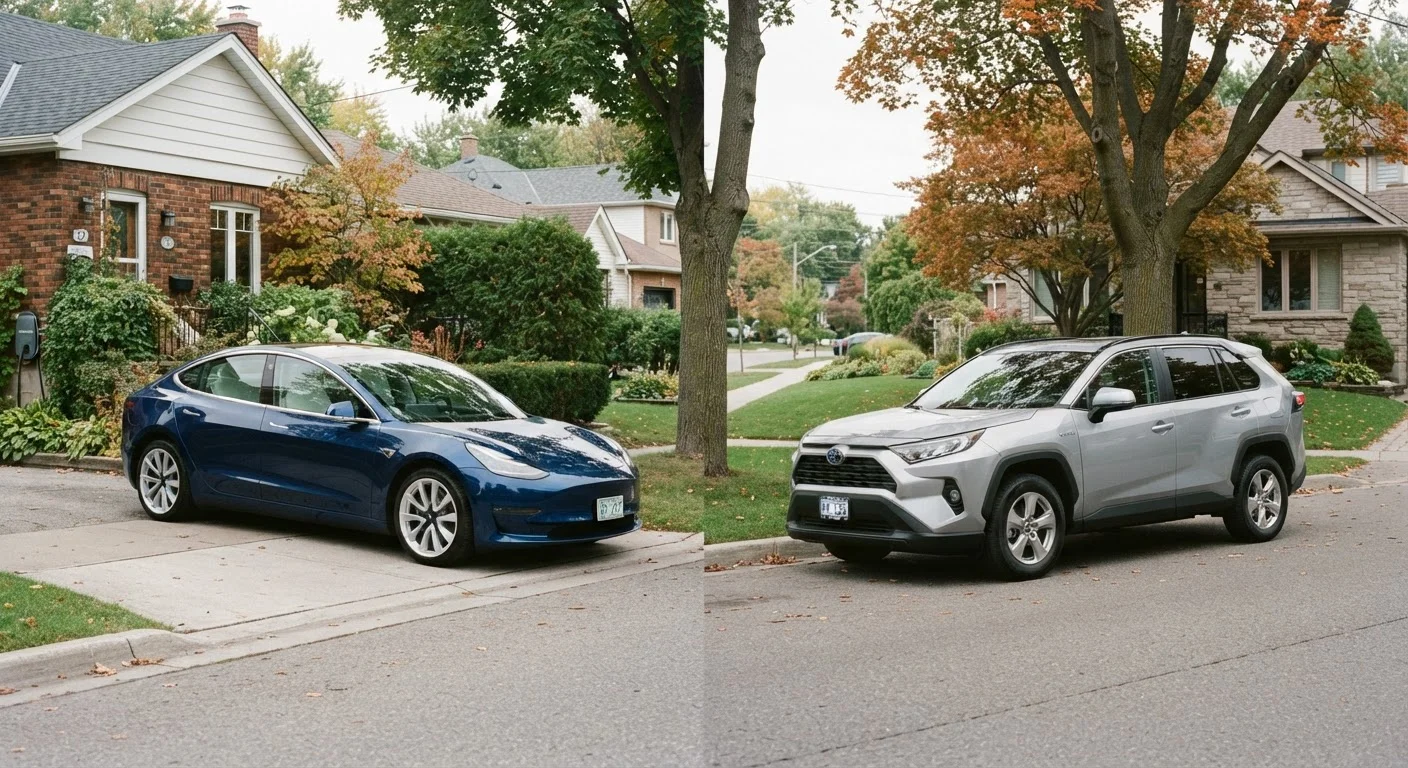
Our Verdict
Neither technology is universally superior — the right choice depends on a driver's daily mileage, access to charging, and comfort with new technology. Hybrids offer a gentler transition with no charging requirements, while fully electric vehicles can deliver a simpler, quieter driving experience once the infrastructure is in place.
| Best for | Recommended |
|---|---|
| Drivers who want familiar refuelling and no charging setup | Hybrid |
| Those with short, predictable daily routes and home charging access | Full Electric |
| Drivers seeking minimal long-term mechanical maintenance | Full Electric |
| Those who take frequent long road trips or live in areas with few charging stations | Hybrid |
Understanding the Two Technologies
For many older drivers, the choice between a fully electric vehicle (EV) and a hybrid can feel overwhelming. Clearing up the basics helps make the decision far more manageable.
A hybrid vehicle combines a conventional gasoline engine with an electric motor and a small battery pack. The battery recharges automatically through a process called regenerative braking — meaning the car recaptures energy when you slow down. You never plug a standard hybrid in; you simply refuel at any gas station as usual. For a deeper look at how hybrids and plug-in variants differ, see our breakdown of hybrid vs. plug-in hybrid.
A fully electric vehicle runs entirely on electricity stored in a large battery pack. There is no gasoline engine at all. You recharge at home using a dedicated charger, or at public charging stations. Because there is no combustion engine, EVs have significantly fewer mechanical components — no oil changes, no timing belts, no transmission fluid.
| Full Electric (EV) | Hybrid | |
|---|---|---|
| Refuelling method | Plug-in charging at home or public stations | Standard gasoline pump, no plug-in required |
| Range concern | Requires route planning for long trips | No range anxiety; refuel anywhere |
| Daily maintenance | Very low; no oil changes or exhaust service | Moderate; standard gasoline servicing still needed |
| Driving feel | Smooth, quiet, single-pedal option available | Familiar; transitions seamlessly between modes |
| Upfront cost | Generally higher; incentives may apply | Typically lower than comparable EVs |
| Transition ease | Requires new charging habits | Minimal change from conventional driving |
Everyday Practicality for Senior Drivers
The most important measure for any driver is how a vehicle fits into daily life. For seniors, that typically means comfort, predictability, and low stress.
Hybrids ask almost nothing new of their drivers. You fill the tank as you always have, and the vehicle manages the electric motor invisibly in the background. This makes them an appealing stepping stone, and our companion article — Is a Hybrid a Good Middle Ground? — explores this in more depth.
Fully electric vehicles, once the charging routine is established, can actually simplify daily life. You plug in at home each evening and start every morning with a full charge — similar to charging a phone. Many seniors who have made the switch report that the smooth, quiet cabin and the absence of gear shifts make city driving noticeably less tiring. Why some seniors find EVs easier to drive than expected covers those first-hand impressions in detail.
Try Before You Decide
Many dealerships offer extended test drives or weekend loan programs for EVs and hybrids. Spending a full day with each type — including an overnight charge for the EV — gives a far more realistic sense of whether the technology fits your routine than a short showroom drive. Ask specifically about home charging installation costs and timelines before committing.
Range, Charging, and the Road Trip Question
Range — how far a vehicle can travel before needing fuel or recharging — is a central concern for EV shoppers. Most current fully electric models offer between 200 and 300 miles on a full charge, which comfortably covers the average American's daily driving. However, long interstate trips require planning around charging stops, which typically add 20–45 minutes per session at a fast-charging station.
Hybrids carry no such concern. Their gasoline engine eliminates range anxiety entirely, and they can be refuelled in minutes at any of the hundreds of thousands of gas stations across the country. For drivers who make frequent long-distance trips or live in rural areas with limited charging infrastructure, this is a genuine and meaningful advantage.
~37 miles
Average US daily driving distance
According to the U.S. Department of Transportation's Federal Highway Administration, the average American drives roughly 37 miles per day — well within the range of most current EVs.
~140,000
Public EV charging ports in the US
The U.S. Department of Energy's Alternative Fuels Station Locator has tracked rapid growth in public charging infrastructure, though coverage remains uneven across rural and urban areas.
If you are also weighing vehicle type alongside powertrain, our comparison of SUVs and sedans for older drivers addresses how body style interacts with these considerations.
Costs, Maintenance, and Long-Term Value
Purchase prices for fully electric vehicles have been declining but generally remain higher than comparable hybrids, though federal tax incentives — which vary by vehicle and buyer eligibility — can reduce the gap. Prospective buyers should consult a tax professional or the IRS website directly to understand current incentive availability, as these programs change periodically.
On the maintenance side, EVs have a clear structural advantage. Without an internal combustion engine, there is no oil to change, no exhaust system to maintain, and fewer brake pad replacements thanks to regenerative braking. Hybrids reduce maintenance compared to conventional cars but still require all standard gasoline engine servicing.
For seniors comparing new and pre-owned options in either category, what actually matters when choosing new vs. used provides useful context. Budget-conscious buyers may also find value in browsing our affordable senior cars hub for guidance on reliable, cost-effective options across both powertrain types.
This article is for general informational and educational purposes only. It does not constitute financial, tax, or purchasing advice. Vehicle pricing, incentive eligibility, and technology specifications vary and change over time. Consult qualified professionals and official sources before making any purchase or financial decision.
The content on this site is for informational purposes only and is not a substitute for professional advice. Always consult a qualified professional for guidance specific to your situation.