

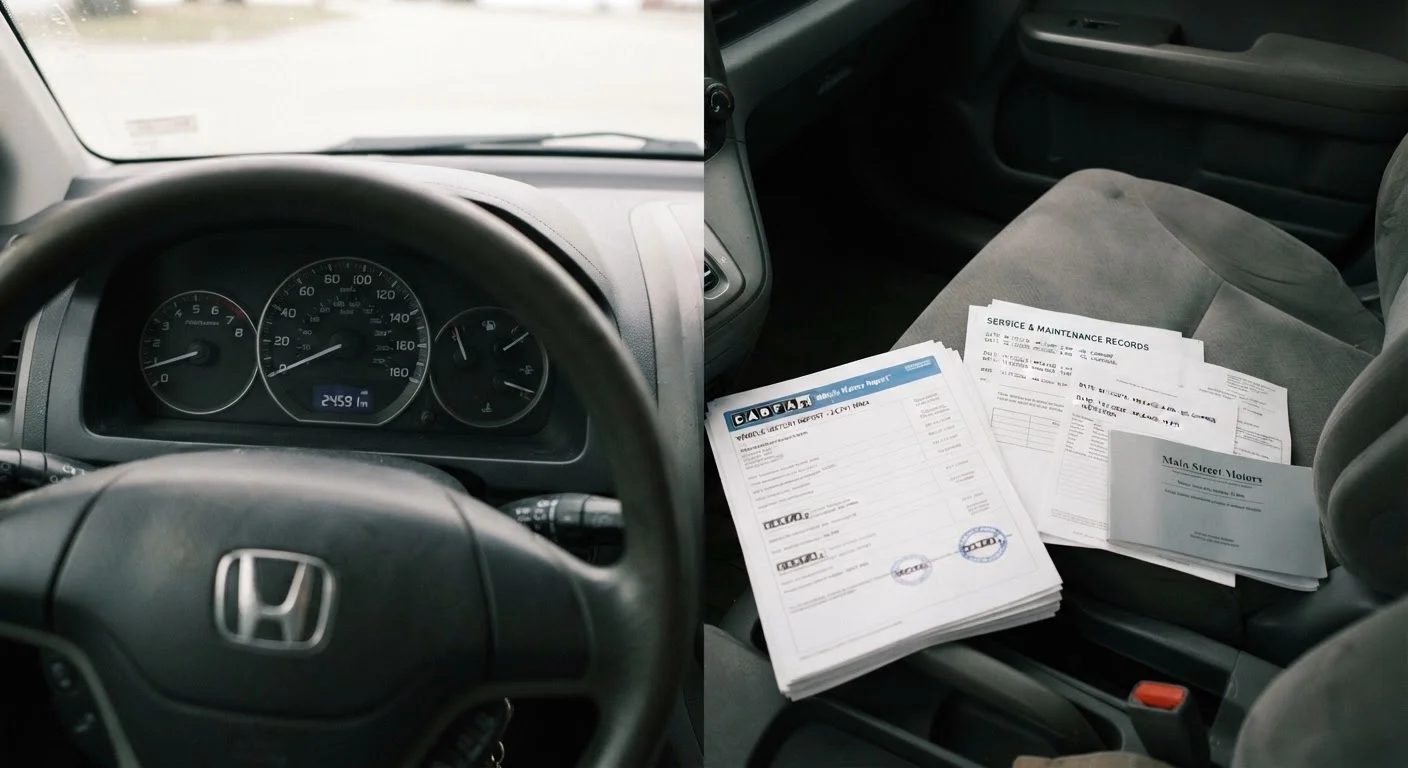
Why Mileage Dominates the Conversation — and Why That Can Mislead
When browsing used car listings, the odometer reading is often the first filter buyers apply. It's easy to understand why: mileage feels like an objective, hard-to-argue-with measure of how much a car has been used. But treating it as the single most important number can cause buyers — seniors especially — to overlook vehicles that are excellent value and to overpay for cars that only look good on paper.
The reality is that mileage measures distance traveled, not care taken, conditions driven in, or maintenance performed. A 40,000-mile car that spent years in stop-and-go city traffic with infrequent oil changes may be in worse mechanical shape than a 90,000-mile highway-driven vehicle with a full service record. Understanding what odometer readings really tell you is the essential first step.
Myth
A car with under 50,000 miles is almost certainly in great shape and a safe buy.
Fact
Low mileage only tells you how far a car has traveled — not how it was driven, maintained, or stored.
Short trips that never allow the engine to reach full operating temperature can actually cause more wear than longer highway drives. Oil that isn't fully warmed up doesn't lubricate as effectively, and moisture can accumulate in the engine. A car used exclusively for brief errands may have 30,000 miles but significant internal wear. Always pair mileage figures with service history. Our article on how mileage and age interact explains this dynamic in detail.
Myth
A car that has been sitting unused for several years is well-preserved because it hasn't been driven.
Fact
Prolonged inactivity causes its own set of problems — rubber deterioration, fuel system issues, and brake corrosion among them.
Gaskets, belts, and seals are made from rubber and polymer compounds that dry out and crack when a car isn't driven regularly. Brake rotors can develop surface rust, and brake fluid absorbs moisture over time, reducing stopping performance. Fuel left in the tank or lines can degrade and gum up the fuel system. A low-mileage car that has been sitting for three or more years warrants especially close inspection — and likely several maintenance items — before it's road-ready.
Myth
High mileage always means a car is near the end of its reliable life.
Fact
A well-maintained higher-mileage car can offer substantially more reliable service than a neglected low-mileage one.
Modern vehicles are engineered to last well beyond 150,000 miles when properly serviced. What matters is how those miles were accumulated and whether routine maintenance was performed on schedule. Transmission fluid changes, coolant flushes, and spark plug replacements at the correct intervals keep high-mileage cars running reliably. Dismissing a well-documented higher-mileage vehicle in favor of a lower-mileage one with no service records is a common and costly mistake. See how mileage, age, and condition each affect what you should pay for a fuller picture of value.
Myth
The odometer number is all you need to compare two similar used cars fairly.
Fact
Two cars with identical mileage can differ dramatically in condition depending on driving type, climate, maintenance, and accident history.
A vehicle driven 60,000 miles on smooth interstates in a mild climate, serviced every 5,000 miles, is a fundamentally different proposition from one with the same mileage accumulated on unpaved roads or in extreme cold. Vehicle history reports can flag accidents, title issues, and service gaps. Climate matters too — road salt in northern states accelerates undercarriage corrosion. Seniors evaluating used cars should request a vehicle history report and, whenever possible, have the car inspected by a mechanic who can assess condition independently of the odometer. Other common used-car myths follow a similar pattern of over-relying on a single data point.
What Seniors Should Prioritize When Evaluating a Used Car
For older drivers, the evaluation checklist should extend well beyond the odometer. Age of the vehicle, documented service history, driving environment, and the condition of time-sensitive components all matter — often more than miles alone.
~200,000
Miles modern well-maintained vehicles can reach
Automotive engineers and consumer reliability data suggest many contemporary vehicles can exceed 200,000 miles with consistent scheduled maintenance.
1 in 5
Used cars with undisclosed prior damage
Estimates from vehicle history reporting services suggest roughly one in five used vehicles has some form of damage or title event not disclosed by the seller.
Service records are among the most telling documents a seller can provide. Regular oil changes, timely timing belt replacements, and brake service all signal that a car was cared for. A vehicle with 80,000 miles and complete dealer service records may be far more trustworthy than a 30,000-mile car with no paperwork at all.
Age-related degradation is a separate concern from mileage. Rubber components — seals, hoses, belts, and gaskets — deteriorate over time regardless of use. A car that sat in a driveway for several years may have dry-rotted belts or cracked coolant hoses despite low miles. This is especially relevant for vehicles described as "garaged" or "lightly driven" over many years.
Comfort and safety features matter enormously to seniors. Easy entry and exit, clear sightlines, responsive braking, and driver-assistance technologies contribute to daily confidence behind the wheel. These factors are explored in more depth in our guide on what actually matters for senior car buyers. A car that scores perfectly on mileage but lacks adequate seat height adjustment or has a cramped cabin may simply not be the right fit.
Before any purchase, arranging a pre-purchase inspection with a trusted, independent mechanic is strongly advisable. No listing photo or odometer reading substitutes for a qualified professional examining the vehicle in person. For additional guidance on how all these factors interact, see our comparison of mileage vs. age when judging a used car's condition.
This article is for general informational and educational purposes only. Vehicle condition, value, and reliability vary significantly by individual car, history, and market. Always consult a qualified mechanic and conduct thorough research before making any vehicle purchase decision.
The content on this site is for informational purposes only and is not a substitute for professional advice. Always consult a qualified professional for guidance specific to your situation.