

Our Verdict
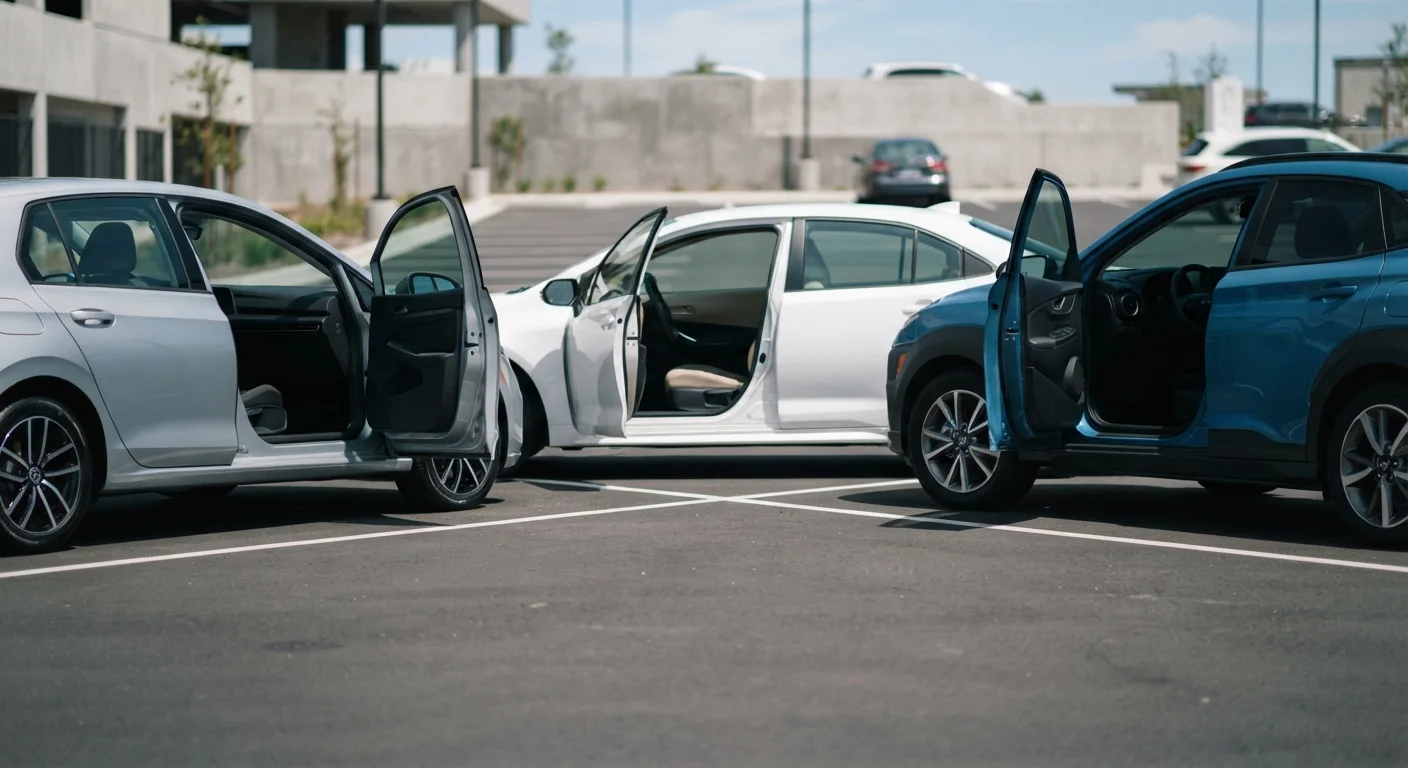
No single body style is objectively best for every senior on a budget. Sedans suit those prioritising low cost and straightforward driving dynamics; hatchbacks reward drivers who need versatile cargo space without stepping up to a larger vehicle; and small SUVs make the most sense for seniors whose joint mobility makes lower car entry genuinely difficult. Testing each type in person — and factoring total ownership cost, not just sticker price — is the most reliable path to a confident decision.
| Best for | Recommended |
|---|---|
| Seniors focused on minimising purchase price and running costs | Sedan |
| Drivers who need flexible cargo space without a high step-in | Hatchback |
| Those with hip, knee, or back concerns who benefit from a higher, neutral seat position | Small SUV |
| Seniors balancing comfort with a tight fixed income | Hatchback |
Why Body Style Matters More Than Most Seniors Expect
When older drivers shop on a budget, the focus naturally lands on price. But the shape of a vehicle — its body style — has a direct, everyday impact on comfort, ease of entry, running costs, and long-term practicality. A car that costs $2,000 less to buy can still be a poor value if climbing in and out aggravates a bad hip, or if the low roofline makes visibility a constant strain.
This comparison looks at three body styles commonly available in the affordable segment of the US market: the traditional sedan, the hatchback, and the small SUV (also called a subcompact or compact crossover). Each has genuine advantages for older drivers — and genuine drawbacks. Understanding them helps you weigh what actually matters for your situation rather than defaulting to the most popular option. For context on how body style intersects with the new-versus-used decision, see what actually matters when choosing new or used.
Sedans: Low Cost, Familiar Feel
Sedans remain among the most affordable vehicles to purchase, insure, and maintain in the US. Their lower centre of gravity translates to stable, predictable handling, and their separate trunk provides a degree of security for stored items. Fuel economy in the sedan segment — particularly among four-cylinder models — tends to be strong.
The trade-off is entry. Sedans sit low, which means bending the knees and lowering the body significantly to get in, then pushing up to exit. For seniors with knee arthritis, lower back pain, or reduced hip flexibility, this motion can become genuinely difficult over time. Trunk access also requires bending forward to load and retrieve items, which is worth considering if you regularly carry groceries or mobility equipment.
Visibility can be another factor: the lower seating position reduces the driver's sightlines compared with taller vehicles. For drivers who feel more confident with a commanding view of the road, this matters. That said, for seniors whose mobility is not a limiting factor, the sedan's cost advantages are real and durable. How sedans and SUVs compare on joint comfort explores this ergonomic question in greater depth.
| Sedan | Hatchback | Small SUV | |
|---|---|---|---|
| Typical purchase price (used) | Lower | Low to moderate | Moderate to higher |
| Entry/exit ease | More bending required | Similar to sedan, better headroom | Easier for most; check step height |
| Cargo practicality | Separate trunk; awkward loading | Flexible tailgate; easy loading height | Good; higher loading lip on some models |
| Fuel economy | Generally strong | Generally strong | Moderate; improving in newer models |
| Insurance cost | Typically lowest | Comparable to sedan | Often higher |
| Road visibility | Lower sightlines | Slightly improved | Higher vantage point |
| Ride comfort | Smooth, stable handling | Similar to sedan | Can be softer; varies by model |
Hatchbacks: The Underrated Middle Ground
Hatchbacks share most of a sedan's mechanical footprint — often built on the same platform — but replace the separate trunk lid with a rear tailgate that opens to a combined cargo and passenger area. This has two practical consequences for seniors. First, loading cargo is significantly easier: items slide in at a moderate height rather than requiring a deep reach into a low trunk. Second, the rear seating area can be accessed from a wider angle, which helps when assisting passengers with mobility needs.
Seat height in a hatchback is generally similar to a sedan, so entry ease is comparable. However, the slightly taller roofline in many hatchbacks improves headroom, making it easier to sit upright without ducking. Purchase prices for used hatchbacks can be very competitive, and insurance costs typically mirror those of sedans in the same size class.
If you regularly carry grandchildren, medical equipment, or shopping, the hatchback's flexible rear space — seats that fold flat in most models — adds genuine day-to-day utility. For seniors managing a fixed income, this versatility without the added cost of a larger vehicle can represent solid value. See used car budget planning for seniors on a fixed income for guidance on structuring a realistic total-cost budget.
Test the Seat Before You Commit
Sit in and out of any vehicle at least three times before deciding — once is rarely enough to judge how your body responds to the motion. Bring any mobility aids you regularly use, and try the vehicle both on flat ground and after simulating a slight incline if possible. Pay attention to whether you grip the door frame or roof for support, as that motion differs significantly between body styles.
Small SUVs: Easier Entry, Higher Total Costs
Small SUVs and crossovers have become the default choice for many American buyers, and their popularity with older drivers is understandable. The elevated seating position — typically 8 to 10 inches higher than a sedan's floor — means seniors often step in and out with less bending, reducing strain on the knees and lower back. The higher vantage point also improves road visibility, which many older drivers find reassuring.
However, these benefits come with meaningful financial trade-offs. Small SUVs generally carry higher purchase prices than comparable sedans or hatchbacks, and their fuel economy — while improving across newer models — tends to trail smaller body styles. Insurance premiums and repair costs can also run higher. For drivers considering accessories to address entry challenges on any vehicle, portable car steps and running boards are worth understanding before assuming a taller vehicle is the only solution.
It's also worth noting that not every senior will find SUV entry easier. If a model's step-in height is too tall relative to a driver's hip height, it can be just as difficult — or more so — than a low sedan. Sitting in and out of several models before buying is essential. The comparison of compact cars and crossovers on ease of entry offers additional detail on specific dimensions to evaluate.
~8–10 in
Typical seat height advantage of small SUVs over sedans
General automotive ergonomics data indicates most crossovers position occupants significantly higher than comparable sedans, reducing knee flexion on entry.
3–5 MPG
Typical fuel economy gap between sedans and small SUVs
EPA combined ratings generally show a 3–5 MPG difference between small SUVs and sedans in similar displacement classes, though hybrids narrow this gap.
Making the Right Choice for Your Circumstances
The practical decision comes down to three questions: How freely can you move when entering and exiting a vehicle? What will you routinely carry? And what is your realistic total budget — not just purchase price, but insurance, fuel, and maintenance over the years you plan to own it?
Seniors whose mobility is not currently a concern, and who prioritise keeping costs minimal, will often find the sedan or a compact hatchback most appropriate. Those with joint concerns that are already affecting daily movement may find the reduced bending of a small SUV justifies the added expense — particularly if a good used example is available at a competitive price. For strategies on finding quality used vehicles, practical sources and search strategies for used cars provides a useful framework.
If you're also weighing drivetrain options — such as hybrid powertrains that can reduce fuel costs across any body style — how electric and hybrid vehicles compare for older drivers is worth reading alongside this guide.
This article is for general informational and educational purposes only. Vehicle pricing, specifications, running costs, and availability vary by region, model year, and individual circumstances. Readers should verify details with dealers or independent automotive resources and consult a qualified financial adviser before making any significant purchase decision.
The content on this site is for informational purposes only and is not a substitute for professional advice. Always consult a qualified professional for guidance specific to your situation.