

Start here
Why the Source Matters as Much as the Car
Next
Main Places to Find Used Cars
Then
Smart Search Strategies for Seniors
Watch out for
Red Flags and How to Avoid Them
Final step
What to Do Once You've Found a Candidate
Why the Source Matters as Much as the Car
When most people think about buying a used car, they focus almost entirely on the vehicle itself — the make, the mileage, the color. But where you find that car shapes nearly every other part of the experience: how much information you receive, what protections you have as a buyer, and how easy it is to walk away if something feels off.
Different sources carry different trade-offs. A franchised dealership may charge more but provides paperwork, inspections, and often a return window. A private seller may offer a lower price but zero warranty and limited recourse if problems arise after the sale. Understanding those differences before you start searching puts you in a much stronger position.
For a broader look at the new-versus-used decision itself, see our senior's complete roadmap to choosing between new and used.
Certified Pre-Owned (CPO)
A used vehicle that has passed a manufacturer or dealer inspection and comes with a limited extended warranty. Coverage terms vary, so always ask what is actually included.
Vehicle Identification Number (VIN)
A unique 17-character code assigned to every vehicle. It can be used to look up a car's history, including past accidents, ownership changes, and odometer readings.
Vehicle History Report
A document generated from a VIN that summarizes a vehicle's recorded past — accidents, title status, service visits, and prior ownership. It helps spot problems before buying.
As-Is Sale
A purchase where the seller offers no warranty or guarantee. Whatever condition the car is in at the time of sale is exactly what you get — repairs afterward are entirely your responsibility.
Pre-Purchase Inspection (PPI)
An examination of a used vehicle by an independent mechanic before the buyer agrees to purchase. It is one of the most reliable ways to identify hidden mechanical problems.
Clean Title
A vehicle title that has no major brand attached, meaning the car has not been declared a total loss, rebuilt after a flood, or subject to certain legal actions. A clean title is generally what you want.
Main Places to Find Used Cars
Here are the main channels where used cars are sold in the US, along with what each one typically means for a buyer:
- Franchised new-car dealerships: Sell both new vehicles and trade-ins. Trade-ins that don't meet their standards are often sent to wholesale, so what remains has usually cleared some internal bar. These dealers are licensed, regulated, and accountable.
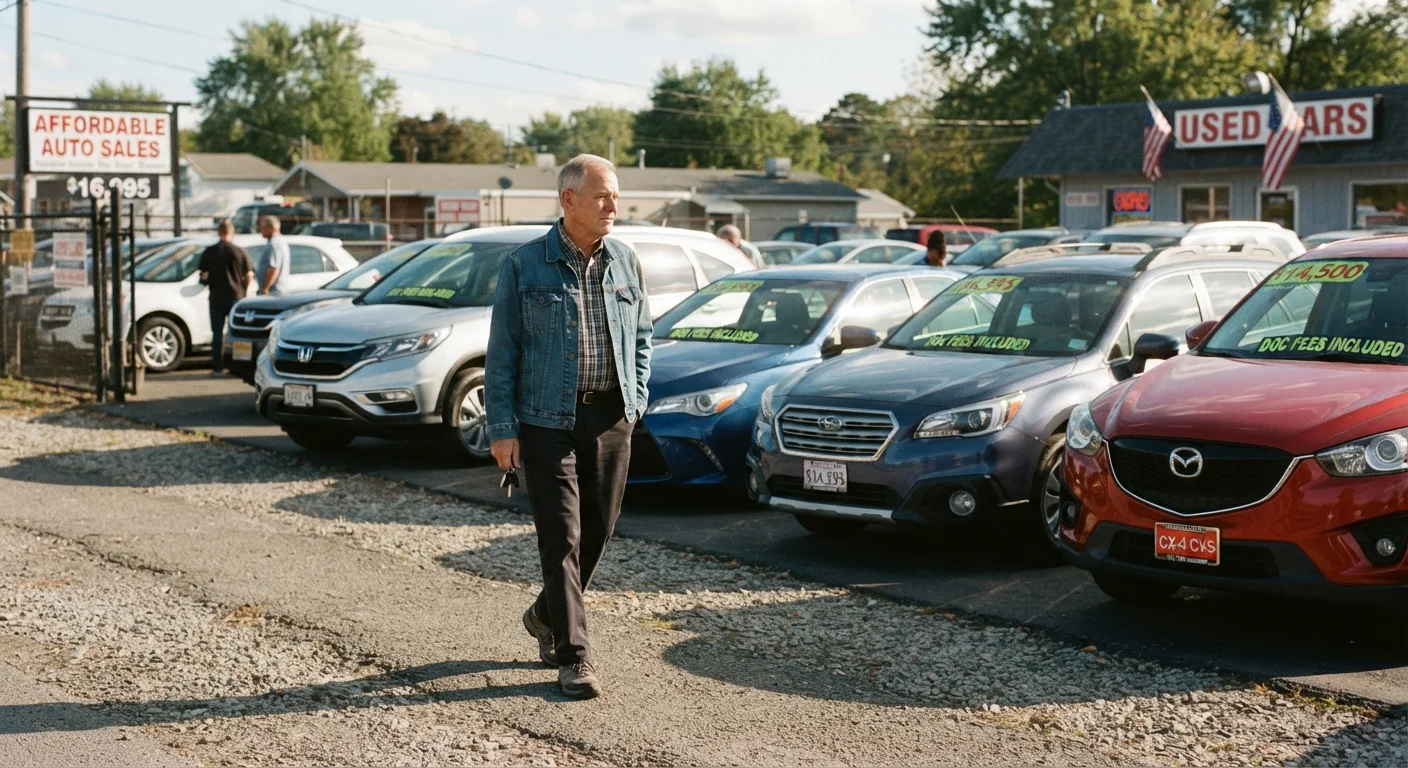
- Independent used-car dealers: Smaller lots that deal exclusively in pre-owned vehicles. Quality and practices vary widely. Ask about any inspection the dealer performed and whether a return policy exists.
- Certified pre-owned (CPO) programs: Offered through manufacturer-affiliated dealerships. A CPO vehicle has passed a multi-point inspection and includes some form of extended warranty. Coverage details differ by manufacturer, so read the terms carefully.
- Private sellers: Individuals selling their own vehicle. Prices can be lower, but there's no warranty, no licensed dealer oversight, and limited legal recourse in most states. A vehicle history report and independent mechanical inspection are especially important here.
- Online listing platforms: National sites aggregate listings from dealers and private sellers in one place. They're excellent for researching availability and comparing prices in your area, but always verify the listing source before proceeding.
- Auctions: Generally not recommended for first-time or senior buyers. Vehicles often cannot be inspected beforehand, and sales are typically final.
Consider Starting Your Search Online
National listing sites let you browse hundreds of local listings from home, at your own pace, without any sales pressure. Use them as a research tool first — compare prices, look at photos, and build your shortlist — before visiting anyone in person. This approach also makes it easier to spot when a price seems unusually high or low for your area.
Smart Search Strategies for Seniors
Once you know where to look, the next step is narrowing the field to cars that actually suit you. Here are practical ways to search more effectively:
- Use filter tools on listing sites. Most major platforms let you filter by price range, mileage, year, transmission type, and distance from your zip code. Start with filters that reflect your non-negotiables — for example, automatic transmission only.
- Search by feature, not just model. If low step-in height, a backup camera, or large dashboard controls matter to you, search for vehicle types known for those features rather than specific models. Our body style comparison guide explains how sedans, hatchbacks, and small SUVs differ in comfort and ease of entry.
- Set a realistic budget ceiling before you search. Include taxes, registration fees, and insurance estimates — not just the sticker price. This prevents you from falling for a vehicle you can't comfortably afford once all costs are added.
- Look at model-year ranges strategically. US federal law required backup cameras on all new passenger vehicles from May 2018 onward. Searching for vehicles from that model year or later means a camera is more likely already built in.
- Keep a shortlist. Don't commit mentally to the first car you like online. Maintain a list of three to five candidates and compare them side by side before visiting any of them in person.
Red Flags and How to Avoid Them
Used car listings can sometimes be misleading. Knowing what to watch for protects you before you spend time or money on a trip to inspect.
Scams Target Used Car Buyers
Fraudulent listings do appear on legitimate platforms, particularly for private-party sales. Common tactics include pricing a vehicle far below market value, requesting payment before an in-person viewing, or claiming to ship a vehicle from out of state. If a listing feels too convenient or the seller avoids meeting in person, trust that instinct and move on to the next candidate.
- Prices significantly below market: Use a pricing reference guide to gauge fair value for the year, make, mileage, and condition. A price well below comparable listings is often a sign of hidden damage or a scam.
- Vague or missing vehicle history: Any legitimate seller should be willing to share the Vehicle Identification Number (VIN) so you can run a history report. Reluctance to provide the VIN is a serious red flag.
- Pressure to decide immediately: Trustworthy sellers allow time for inspection and consideration. Walk away from anyone who tells you another buyer is moments away or that the price expires today.
- Online-only payment requests: Requests for wire transfers, gift cards, or cryptocurrency before you have seen the vehicle in person are characteristic of fraud. Never pay for a vehicle you have not inspected.
- Inconsistent details: If the mileage in photos doesn't match the listing, or the VIN on the dash doesn't match paperwork, stop and ask for clarification before going further.
What to Do Once You've Found a Candidate
Locating a promising vehicle is just the start. Before making any commitment, take these steps:
- Run a vehicle history report using the VIN. Reports from established services typically show ownership history, accident records, title issues, and odometer readings at past inspections.
- Schedule an independent pre-purchase inspection. Have a mechanic you choose — not one recommended by the seller — inspect the vehicle before you agree to anything. This single step can reveal expensive problems that aren't visible to the eye.
- Test drive it yourself. Pay attention to how it feels to get in and out, seat comfort on longer drives, visibility, and whether controls are within easy reach.
- Review all paperwork carefully. Confirm the title is clean (not salvage or rebuilt), check that the VIN matches on the dash, door jamb, and title document, and understand what any warranty actually covers.
Our pre-purchase checklist walks through each of these steps in detail, and our complete buying walkthrough covers everything from that point through to registration.
This article provides general educational information about searching for used vehicles. It is not financial, legal, or professional advice. Pricing, availability, and consumer protection laws vary by state and circumstance. Consult a licensed professional for guidance specific to your situation.
Frequently Asked Questions
Franchised dealerships and certified pre-owned programs generally offer the most consumer protections, including inspection records and limited warranties. However, they typically cost more than private sellers. The right source depends on your budget, comfort level, and willingness to do your own due diligence.
Reputable national listing sites are generally safe for research and initial contact. The key is to never send payment before seeing the vehicle in person, always meet in a public place, and run a vehicle history report on any car before proceeding.
A certified pre-owned (CPO) vehicle has passed a manufacturer or dealer inspection and typically comes with an extended warranty. CPO programs vary by manufacturer, so ask exactly what is and isn't covered before relying on that label.
There is no universal limit, but most used car guides suggest looking at maintenance history alongside mileage. A well-maintained vehicle with higher mileage can be more reliable than a low-mileage car with a poor service record.
Not necessarily, but private sales come with fewer protections than dealer purchases. If you pursue a private sale, run a vehicle history report, arrange an independent inspection, and handle payment through a traceable method such as a cashier's check.
Look for easy entry and exit (higher seat position, wide doors), automatic transmission, clear sight lines, power steering, and good braking response. Modern safety aids like backup cameras became standard on new US vehicles in 2018, so used cars from that year onward are more likely to include them.
The content on this site is for informational purposes only and is not a substitute for professional advice. Always consult a qualified professional for guidance specific to your situation.