

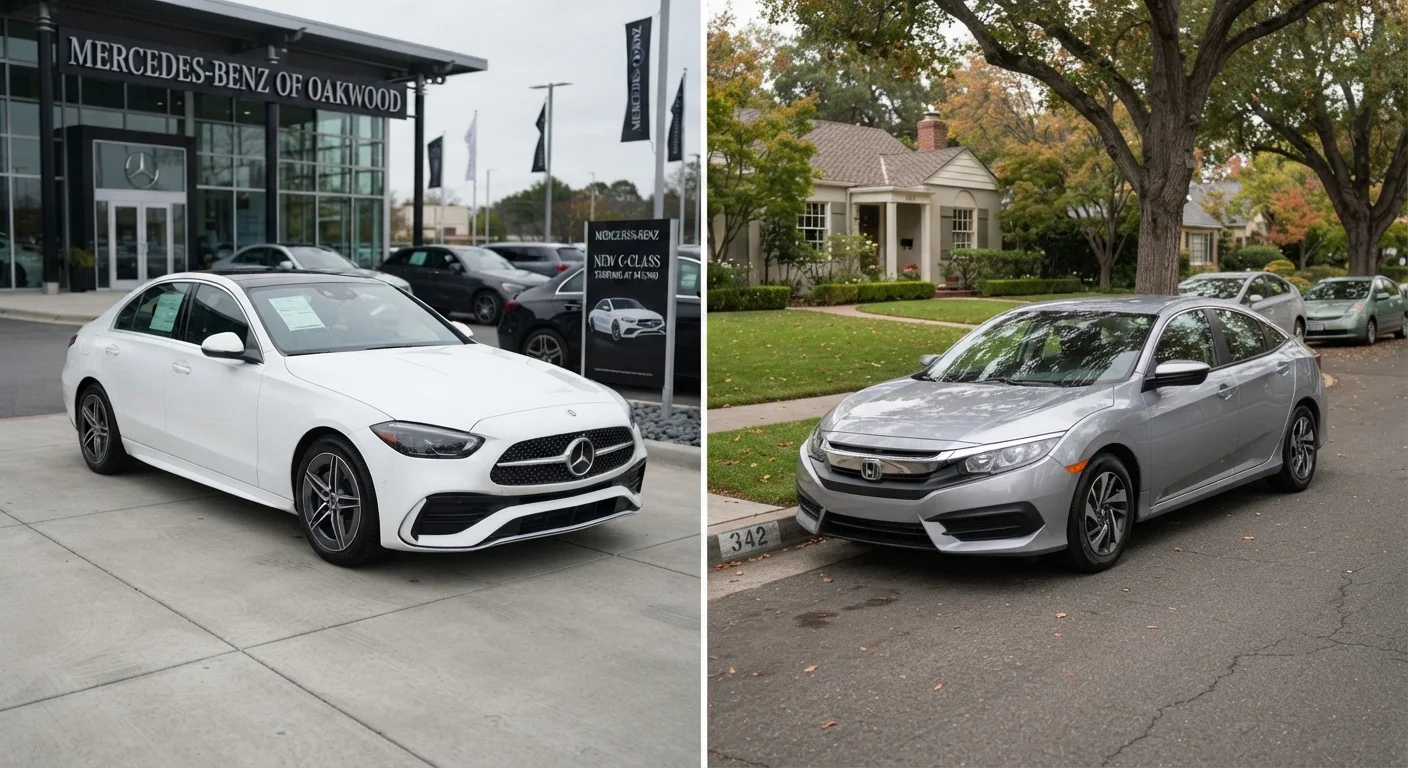
How Depreciation Works — and Why the First Years Matter Most
Depreciation is not spread evenly across a vehicle's life. Research consistently shows that new cars experience their largest drops in market value during the first one to three years. By some industry estimates, a new vehicle can lose roughly 20% of its value within the first year alone, and a further meaningful percentage by year three. After that initial plunge, the decline slows and becomes more gradual.
This front-loaded loss is what makes the new-versus-used decision so financially significant. For a thorough grounding in how depreciation works before diving into the new-versus-used comparison, see this plain-language guide to depreciation.
~20%
Average new-car value lost in year one
Industry data widely cited by automotive valuation services suggests new vehicles lose roughly 20% of their value in the first 12 months.
~50%
Value retained after five years (typical range)
Many mainstream vehicles retain approximately half their original value after five years, though this varies significantly by make, model, and condition.
2–5 years
Common 'sweet spot' for used-car value
Automotive researchers frequently identify this age window as offering a balance between reduced depreciation exposure and remaining useful vehicle life.
Why Used Cars Follow a Different Depreciation Curve
When you purchase a used car, you are entering the depreciation timeline at a later point. The original owner absorbed the steepest decline; you are buying in at a lower base price and — provided the vehicle is in reasonable condition — facing a much flatter rate of ongoing loss.
This is sometimes described as letting someone else pay for the new-car premium. The practical implication is that a used car bought in good condition and maintained well can hold a relatively stable value for several more years before depreciation accelerates again as the vehicle ages and approaches the point where major repairs become probable.
Several factors influence how quickly a used car continues to depreciate after purchase:
- Mileage: Higher mileage signals greater mechanical wear and reduces buyer demand, which pushes value down faster.
- Condition and service history: A clean vehicle history report and documented maintenance records help preserve value.
- Model popularity: Vehicles with strong consumer demand in the used-car market tend to depreciate more slowly.
- Age: As a vehicle crosses certain age thresholds, the cost of potential repairs can weigh on its market value more heavily.
Check the Vehicle History Before You Buy
A vehicle history report can reveal previous accidents, title issues, odometer discrepancies, and ownership records — all of which affect both current value and future depreciation. Request one for any used car you are seriously considering, and factor the findings into your assessment of the vehicle's likely value trajectory.
What This Means for Senior Car Buyers
For seniors on a fixed income, the depreciation curve has direct practical consequences. Buying a used vehicle in the two-to-five-year age range can mean a meaningfully lower purchase price compared with a new equivalent — without necessarily sacrificing reliability, modern safety features, or comfort.
However, the financial picture is not solely about depreciation. Financing rates for used cars are often higher than for new ones, and used vehicles may no longer carry a manufacturer's warranty (though certified pre-owned programs can partially address this). Insurance considerations also shift between new and used vehicles. For a broader look at the real trade-offs involved, see the real trade-offs for senior car buyers and what actually matters for seniors when choosing new or used.
Understanding the total cost of ownership — purchase price, financing, insurance, expected maintenance, and likely resale value — gives you a complete picture that depreciation alone cannot provide. The used car costs hub covers pricing, negotiation, and ownership costs in detail. Before finalizing any purchase, inspecting the vehicle thoroughly is an essential step that can protect you from buying a car with hidden problems that accelerate value loss.
This article provides general educational information about vehicle depreciation and is not personalized financial or purchasing advice. Costs, values, and financing terms vary by vehicle, location, and individual circumstances. Consult a qualified financial adviser for guidance specific to your situation.
Frequently Asked Questions
A new car's value drops sharply the moment it is registered and driven off the lot, partly because it is no longer eligible for new-car purchase incentives and partly because the market immediately prices it as a used vehicle. This initial drop can represent a significant portion of the car's total depreciation over its lifetime.
No. Used cars generally depreciate more slowly than new ones because the steepest losses have already occurred. However, older vehicles can face accelerating depreciation as they approach the age when major mechanical repairs become likely, which reduces buyer demand.
Higher mileage typically accelerates depreciation because it signals greater wear on the engine, transmission, and other components. A used car with well-below-average annual mileage tends to hold its value better. Average annual mileage in the US is generally considered to be around 12,000–15,000 miles per year.
A lightly used vehicle — sometimes called a near-new or certified pre-owned car — can offer a balance between modern features and reduced depreciation exposure. However, financing costs, remaining warranty coverage, and condition all factor into whether it makes financial sense for your specific situation. Consulting a financial adviser is worthwhile for large purchases.
Many automotive researchers suggest that vehicles between two and five years old have absorbed the bulk of early depreciation while still being relatively reliable and technologically current. That said, the right choice depends on the specific vehicle, its service history, and your budget — there is no universal answer.
The content on this site is for informational purposes only and is not a substitute for professional advice. Always consult a qualified professional for guidance specific to your situation.