

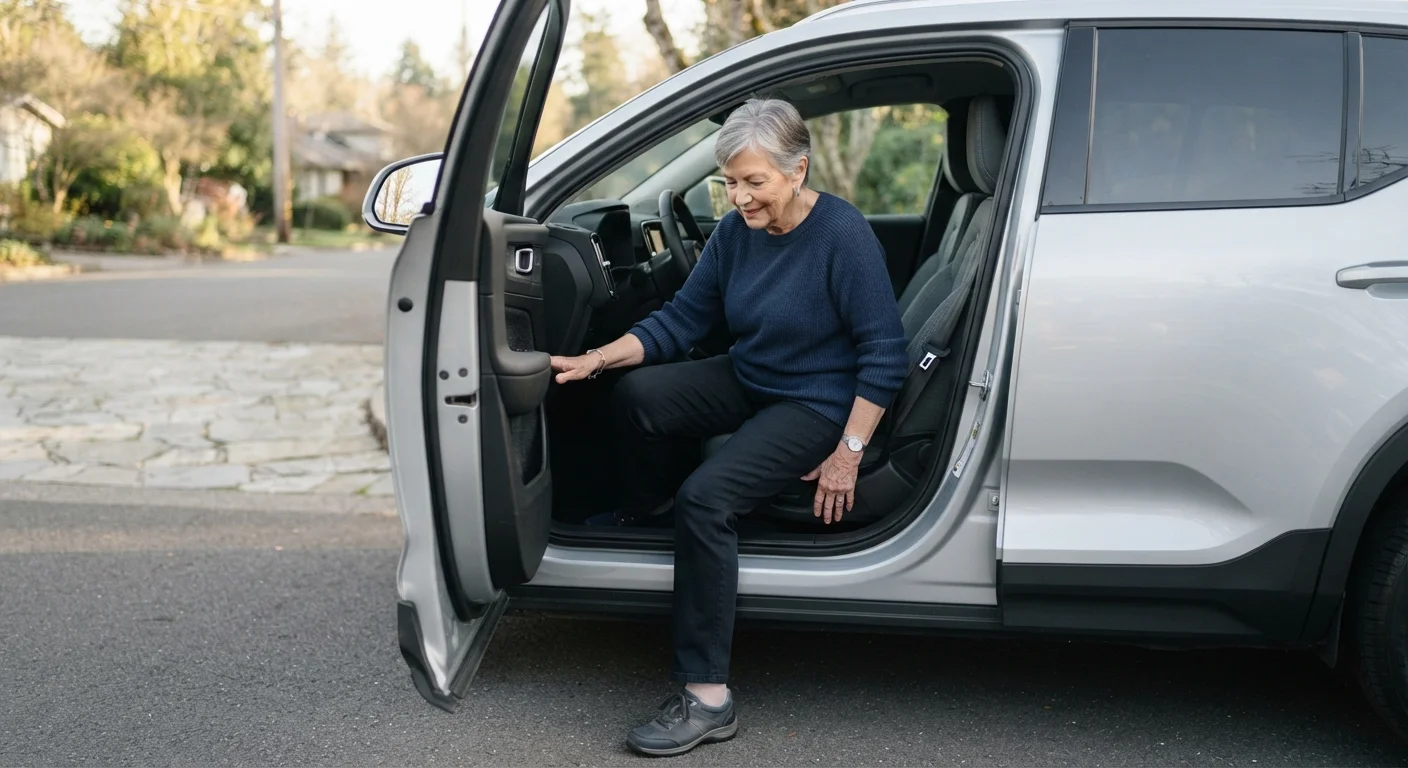
Why Ergonomics Should Drive Your Search
For many older drivers, physical comfort and ease of access aren't optional extras — they're deciding factors. Arthritis, reduced flexibility, and changes in balance can make what seems like a minor design detail feel significant after just a few weeks of ownership. A car that looked appealing on paper may become a daily frustration if the seat is too low, the door aperture too narrow, or the controls too small to operate comfortably.
The good news is that ergonomic design has improved considerably across vehicle segments. Crossovers, in particular, offer a seated height that many seniors find easier to manage than low-slung sedans. That said, body style alone doesn't guarantee comfort — cabin layout, seat adjustment range, and control placement matter just as much. See our comparison of compact cars and crossovers on ease of entry for a detailed look at how these vehicle types differ for older adults.
“The best vehicle for an older driver isn't necessarily the one with the most features — it's the one that fits their body and their habits without requiring them to adapt uncomfortably.”
— Occupational Therapy Perspective on Driver Rehabilitation, Widely documented principle in driver rehabilitation literature
Key Features to Evaluate Before You Commit
Shopping with a structured checklist prevents you from being swayed by features that look impressive but don't address your day-to-day needs. Focus your evaluation on the following areas:
Test seat height with your own body — not a salesperson's description.
Seat height determines whether you lower yourself down or step in at a natural angle. A seat positioned between 20 and 25 inches from the ground tends to suit most seniors well, reducing knee and hip strain. The right height varies by individual, so sitting in the vehicle is the only reliable test.
Measure door opening width and assess the roof line height before entering.
A wide door aperture and a high roof line allow a more upright entry motion, reducing the need to duck or twist. Narrow openings force awkward body angles that can aggravate back and hip conditions over time.
Verify the full range of seat and steering column adjustments.
Adjustable lumbar support, telescoping steering columns, and power seat controls let you dial in a driving position that keeps your spine neutral and arms relaxed. A vehicle with limited adjustment range may feel acceptable at first but cause fatigue on longer trips.
Evaluate control size, placement, and tactile feedback for all primary functions.
Touchscreen-only controls require sustained visual attention away from the road and can be difficult to operate for drivers with reduced finger dexterity. Physical knobs and large buttons allow adjustment by feel, which is both safer and more accessible.
Check visibility in all directions, including over the hood and through side pillars.
Thick A-pillars (the structural supports beside the windshield) create blind spots that make lane changes and turns more demanding. High hood lines further limit forward visibility, compounding the challenge for drivers with reduced neck mobility.
For a comprehensive in-dealership walkthrough, our showroom walkthrough guide covers seat height, pedal reach, mirror placement, and infotainment usability in one practical checklist.
Quick Wins You Can Act on Today
If you're already in the research phase — or preparing for a dealer visit — these immediate steps will focus your time and help you avoid common oversights.
Working Within a Budget
Ergonomic features don't have to come at a premium. Many practical comfort and access features — power adjustable seats, large-button controls, and adequate door openings — appear across a wide range of price points. Our guide to features worth prioritising on a tight budget can help you decide where to focus when trade-offs are unavoidable.
Don't overlook small details that compound over time. Our article on overlooked details that make new cars harder to live with highlights minor annoyances — glaring dashboards, awkward cup holders, stiff key fobs — that deserve attention before you sign anything.
When the Vehicle Alone Isn't Enough
Even a well-designed vehicle may benefit from supplemental adaptive equipment for some drivers. Swivel seat cushions, grab handles, and pedal extenders can bridge the gap between a vehicle's baseline design and an individual's specific mobility needs. However, it's important to assess vehicle fit first — accessories work best as targeted supplements, not primary solutions.
Before adding any aftermarket equipment, review our checklist for fitting mobility aids to your car, which covers compatibility and installation safety. For a broader overview of what's available, the adaptive car accessories quick-reference guide organizes the main categories and what each one does. If you're considering running boards to ease entry into a taller vehicle, weigh the options using our guide to portable car steps and running boards.
For complex needs, a certified mobility equipment dealer can assess your situation professionally. Learn more in our article on working with a certified mobility equipment dealer.
1 in 5
U.S. drivers aged 70 or older
According to the Federal Highway Administration, drivers aged 70 and older represent a growing share of licensed drivers on American roads, underscoring the importance of age-appropriate vehicle design.
~3 inches
Typical seat height difference between sedans and crossovers
Industry measurements generally show crossover SUVs offer seated heights several inches higher than traditional sedans, which many seniors find meaningfully easier to enter and exit.
This article is for general informational purposes only and does not constitute professional medical, financial, or legal advice. Vehicle suitability varies by individual; consult a qualified occupational therapist or certified mobility equipment dealer for personalized guidance.
The content on this site is for informational purposes only and is not a substitute for professional advice. Always consult a qualified professional for guidance specific to your situation.