

Our Verdict
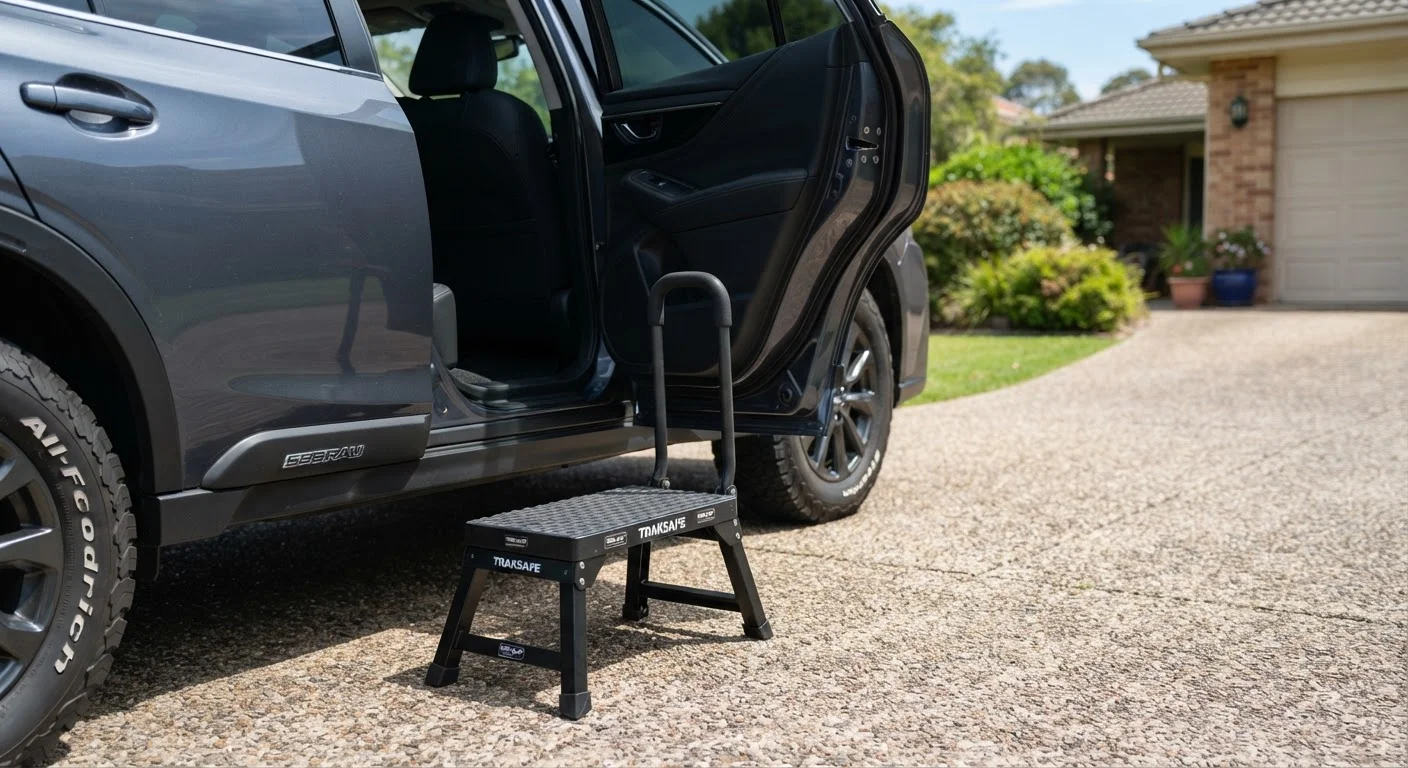
Portable steps and running boards address a real, practical challenge for seniors who drive taller vehicles. When chosen carefully and used correctly, they can meaningfully reduce the physical effort and fall risk involved in boarding. However, they work best as part of a broader approach to vehicle accessibility rather than a standalone fix.
Older drivers who regularly use an SUV or truck and experience noticeable difficulty stepping up into the cabin, particularly those with reduced leg strength, limited hip flexibility, or balance concerns.
Why Vehicle Entry Height Is a Real Concern for Seniors
SUVs, crossovers, and trucks have become increasingly popular vehicles across all age groups — but their higher cabin floors can create a genuine physical challenge for older adults. The average floor height of a midsize SUV sits roughly 20 to 24 inches off the ground, compared to around 14 to 16 inches for a typical sedan. That difference may seem small, but for someone managing arthritis, reduced hip mobility, or balance concerns, it can represent a meaningful daily obstacle.
Falling during vehicle entry or exit is a recognized hazard for older adults. A misjudged step, wet pavement, or weakened grip on the door frame can each contribute to a stumble or fall. Portable steps and running boards are among the accessories designed to address this specific problem — but like any adaptive tool, they come with trade-offs worth understanding before purchasing.
For a broader look at how vehicle body style affects entry ease, see our comparison of sedan, hatchback, and small SUV options for seniors.
The Case For: Key Advantages
When the fit is right, these accessories offer tangible benefits for older drivers and passengers.
Reduces effective step height into taller vehicles
A well-chosen step can cut the entry height by four to eight inches, making the motion closer to climbing a standard stair than a large jump up. This can noticeably reduce the strain on knees and hips.
Lowers fall risk during entry and exit
By providing a stable intermediate platform, these accessories give seniors a moment to redistribute their weight before fully committing to the cabin — reducing the chance of a stumble or loss of balance.
Portable versions are vehicle-agnostic and convenient to store
Folding portable steps can be used with different vehicles and stored in a trunk or garage when not needed, making them flexible for seniors who travel with family members or occasionally use other cars.
Many options support substantial weight loads
Well-constructed portable steps are typically rated for 300 lbs or more, providing a stable and reliable surface for a range of users without wobbling underfoot.
Can extend the usability of a preferred vehicle
Rather than trading in a reliable vehicle simply because entry has become difficult, a step or running board can extend the practical life of an existing SUV or truck for its owner.
20–24 in
Typical SUV cabin floor height off ground
Standard midsize SUVs generally sit 20 to 24 inches off the ground, compared to roughly 14 to 16 inches for a sedan — a meaningful difference for seniors managing mobility limitations.
4–8 in
Approximate step height reduction from a portable step
A typical portable car step platform reduces the effective entry height by roughly four to eight inches, depending on platform height and vehicle type.
The Case Against: Limitations to Consider
No accessibility aid is without drawbacks, and portable steps or running boards are no exception. Understanding these limitations helps set realistic expectations.
Setup and retrieval adds physical steps
Portable steps need to be placed and collected each use, which involves bending, carrying, and stowing — tasks that may themselves be difficult for seniors with limited mobility or back pain.
Risk of slipping on wet or icy surfaces
Even textured non-slip surfaces can become hazardous in rain, snow, or frost. Most portable steps are not designed for use in poor weather conditions without additional precautions.
Fixed running boards require professional installation
Mounting a permanent running board to a vehicle's frame is not typically a DIY task. Improper installation can affect vehicle safety systems, ground clearance, or structural integrity.
Instability on uneven ground
Freestanding steps placed on sloped driveways, gravel, or soft surfaces can rock or shift underfoot. Most are rated for level, hard surfaces only.
Does not address all entry challenges
A reduced step height helps, but seniors who also struggle with twisting into the seat, limited shoulder reach, or low grip strength may find that a step alone is insufficient without complementary aids.
Fixed boards can accumulate mud, ice, and debris
Running boards that aren't regularly cleaned can develop slick surfaces that are more hazardous than no board at all. Maintenance is an ongoing requirement.
Portable Steps vs. Fixed Running Boards: What's the Difference?
These two categories solve the same problem differently, and the right choice depends on how and where you use your vehicle.
Portable folding steps are freestanding units that you place on the ground beside the vehicle door. They typically fold flat for storage in the trunk when not in use. Their main advantage is flexibility — you can use them with any vehicle and store them away when they're not needed. The trade-off is that they must be retrieved, positioned, and stowed every time, which requires bending and carrying that some seniors may find inconvenient or physically taxing.
Fixed running boards attach permanently to the vehicle's undercarriage and provide a continuous foothold along the side of the vehicle. They eliminate the setup step entirely and are always in place when needed. However, they typically require professional installation, may affect the vehicle's ground clearance, and can accumulate mud, ice, or debris that reduces their slip resistance over time.
Check Vehicle Compatibility Before Buying
Not all running boards are compatible with every vehicle make or model. Mounting points, rocker panel shape, and door sill design vary widely. Before purchasing a fixed running board, confirm compatibility with your specific vehicle year and trim level — ideally by consulting a qualified installer or the vehicle manufacturer's guidance. For portable steps, check that the weight rating and platform dimensions are appropriate for your needs.
For a fuller picture of which vehicle entry features matter most when shopping, our guide on evaluating comfort and access features walks through what to look for in person.
Using Steps Safely: What Else Matters
The physical aid is only part of the picture. How it's used matters just as much as the product itself.
- Footwear: Non-slip soles significantly reduce the risk of slipping off a step surface, regardless of how good the grip texture is.
- Door frame grip: Always maintaining at least one hand on a stable point — the door frame, an assist handle, or an overhead grab bar — while stepping up or down adds an important safety margin.
- Surface conditions: Rain, frost, and mud all reduce traction on any step surface. Many portable steps are not rated for use on slopes or soft ground.
- Weight distribution: Centering your weight over the step and avoiding leaning to one side reduces the chance of tipping a freestanding unit.
Portable steps and running boards work best alongside other mobility aids. Our article on getting in and out of the car with less strain covers complementary tools such as grab handles and swivel seat cushions that can work together with a step for a more complete solution.
It's also worth considering whether the vehicle itself could be a better fit for your needs. Our overview of SUVs versus sedans for older drivers compares entry heights and cabin access across newer models.
The content on this site is for informational purposes only and is not a substitute for professional advice. Always consult a qualified professional for guidance specific to your situation.