

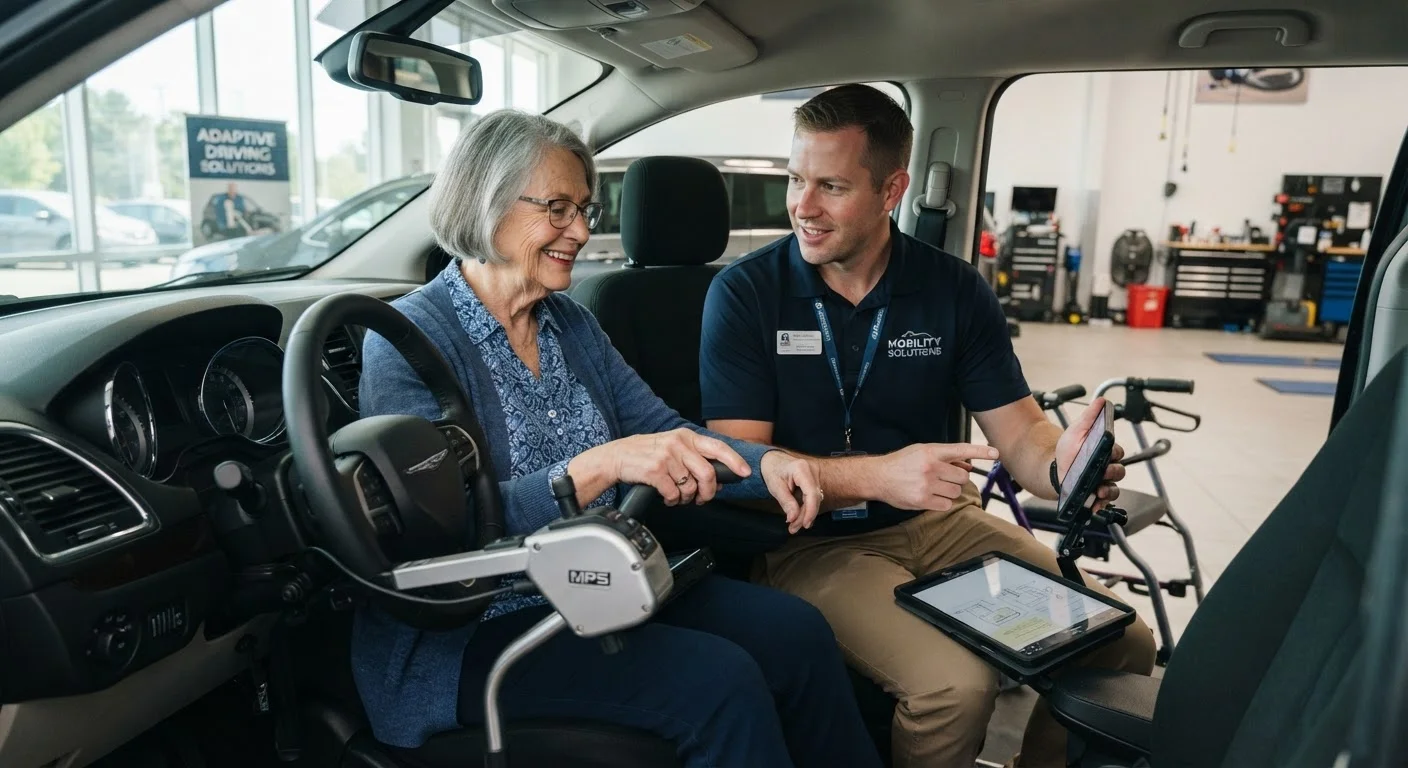
What Is a Certified Mobility Equipment Dealer?
A Certified Mobility Equipment Dealer (CMED) is a trained professional who specializes in evaluating, recommending, supplying, and installing adaptive vehicle equipment for individuals with physical limitations — including many older adults navigating age-related changes in mobility, strength, or flexibility.
CMEDs are typically accredited through the NMEDA, the primary industry body in the United States that sets quality and safety standards for adaptive vehicle modification. Dealers who hold NMEDA's Quality Assurance Program (QAP) designation have met rigorous requirements covering training, equipment quality, and customer care protocols.
Unlike a general auto parts retailer, a CMED provides a professional consultation process. They consider your specific physical abilities, the type of vehicle you drive, and which adaptive solutions are both safe and appropriate for your needs. For seniors exploring options like hand controls, swivel seats, or pedal extenders, this personalized approach can make a meaningful difference. See our quick-reference guide to adaptive car accessories for an overview of the main categories of available equipment.
How CMEDs Differ from General Accessory Retailers
Purchasing a comfort item — like a seat cushion or a grab handle — from a general retailer is straightforward for many low-complexity needs. However, when an older adult requires modifications that affect vehicle control or safety systems, a general retailer is rarely equipped to help.
CMEDs Work Alongside Medical Professionals
Many CMEDs collaborate closely with occupational therapists and certified driver rehabilitation specialists (CDRSs) who can conduct formal driving evaluations. If you have a complex condition affecting your mobility, your CMED may recommend — or require — that you complete a driving evaluation before equipment is prescribed. This collaboration helps ensure that the equipment chosen aligns with your actual functional abilities, not just a general description of your condition.
CMEDs go beyond selling equipment. Their role typically includes:
- Needs assessment: Evaluating how your physical condition affects your ability to operate a vehicle safely.
- Equipment matching: Identifying which specific devices are compatible with your vehicle's make and model.
- Professional installation: Ensuring modifications meet safety standards and do not interfere with airbags, seatbelts, or other critical systems.
- Follow-up support: Training you in correct use of installed equipment and checking in after installation.
This structured process is especially important for modifications that interact with a vehicle's mechanical or electronic systems. For a detailed checklist of what to verify before adding any mobility aid, see what to check before fitting any mobility aid to your car.
Best Practices for Working with a CMED
Getting the most from a CMED relationship takes some preparation on your part. Following these practices will help ensure a safe, appropriate outcome.
Request a formal needs assessment before selecting any equipment.
Adaptive equipment is not one-size-fits-all. A formal assessment — ideally conducted alongside a driver rehabilitation specialist or occupational therapist — identifies the precise limitations and capabilities that should guide equipment choices. Skipping this step risks purchasing items that are ill-suited or even unsafe for your situation.
Verify the dealer's NMEDA credentials before committing to any work.
The mobility equipment industry includes both certified professionals and general vendors who may lack specialized training. Checking that a dealer holds current NMEDA QAP accreditation gives you meaningful assurance that they meet established standards for training, equipment, and after-sale support.
Ask about insurance, Medicare, or state funding program eligibility upfront.
Some adaptive equipment may qualify for partial coverage through Medicare, Medicaid, Veterans Affairs programs, or state vocational rehabilitation agencies, depending on your individual circumstances. A knowledgeable CMED can identify which documentation is typically required and help you navigate the process, though outcomes vary by plan and eligibility.
Bring your vehicle — and ideally a family member or caregiver — to the initial consultation.
Equipment compatibility depends on your specific vehicle's make, model, year, and interior layout. Having your car present allows the dealer to take accurate measurements and identify any constraints. A trusted companion can also help you recall details discussed and ask follow-up questions.
Request a hands-on demonstration and training session after installation.
Even well-matched equipment provides limited benefit if the user is unsure how to operate it correctly or safely. A reputable CMED will schedule time to walk you through correct use, answer questions, and confirm that you feel confident before you drive independently.
For a broader understanding of why adaptive equipment matters for older drivers, our article on comfort and mobility aids for senior drivers provides useful background.
Getting Started: Quick Actions for Seniors
If you're ready to explore adaptive equipment but aren't sure where to begin, these actions can help you move forward with confidence.
Your vehicle choice can also influence which adaptive tools work best. If you're still in the process of selecting a car, our guide to evaluating comfort and access features when shopping for a senior-friendly car can help you think through vehicle compatibility from the start.
This article is for general informational purposes only and does not constitute medical, legal, or professional advice. Adaptive equipment needs vary by individual; consult a qualified occupational therapist and a certified mobility equipment dealer for guidance tailored to your situation.
The content on this site is for informational purposes only and is not a substitute for professional advice. Always consult a qualified professional for guidance specific to your situation.