

Summary
22 items · 30–60 minutes
Why a Pre-Installation Checklist Matters
Adding a mobility aid to your car — whether a swivel seat cushion, grab handle, hand control, or wheelchair hoist — can significantly improve your independence and comfort. But fitting the wrong product, or fitting the right product incorrectly, can introduce new hazards rather than remove existing ones.
This checklist is designed to help you slow down and verify the essentials before anything is installed. It applies to the full range of adaptive accessories covered in our quick-reference guide to adaptive car accessories, and works alongside a professional assessment when one is required.
If you are still at the stage of understanding what adaptive aids exist and why they help, see our introductory article on comfort and mobility aids for senior drivers before returning here.
Vehicle Compatibility
Warranty and Legal Checks
Professional Assessment
Post-Installation Verification
Tools and Resources You May Need
Before working through the checklist, gather the following. Not every item applies to every aid — use this as a starting reference.
Vehicle owner's manual
Used to check seat dimensions, airbag locations, and any manufacturer guidance on aftermarket fittings.
Tape measure
Needed to measure door opening width, seat height, and floor clearance to confirm physical compatibility.
Vehicle warranty documents
Required to review modification clauses before any installation proceeds.
Certified Mobility Equipment Dealer (CMED)
A trained professional who assesses your needs, recommends appropriate aids, and installs load-bearing or complex equipment safely.
Auto insurance policy documents
Needed to check whether the modification must be declared and whether coverage is affected.
Torque wrench or basic hand tools
Used for simple non-load-bearing fittings where the manufacturer explicitly permits owner installation.
For more complex adaptive equipment — hand controls, wheelchair lifts, or power transfer seats — professional assessment by a certified mobility equipment dealer is strongly recommended rather than optional. Our guide on working with a certified mobility equipment dealer explains how the process works and what to expect.
Installation Safety and Protecting Your Vehicle
Even well-chosen mobility aids can cause damage or void warranties if fitted incorrectly. This is not a reason to avoid them — it is a reason to be methodical.
Load-Bearing Aids Require Professional Installation
Transfer seats, vehicle lifts, hand controls, and any aid that bears body weight during entry or exit must be installed by a qualified professional. Incorrect mounting can cause the aid to fail at a critical moment, resulting in falls or injury. Do not rely on general handyman or auto-accessory installation for these items — seek a certified mobility equipment dealer or a driver rehabilitation specialist.
For guidance on fitting accessories without affecting your vehicle warranty or causing structural damage, see our article on fitting safety accessories without voiding warranties. If you are also evaluating general safety accessories beyond mobility aids, the pre-installation checklist for safety accessories covers complementary ground.
Modifying Airbag Zones Carries Serious Risk
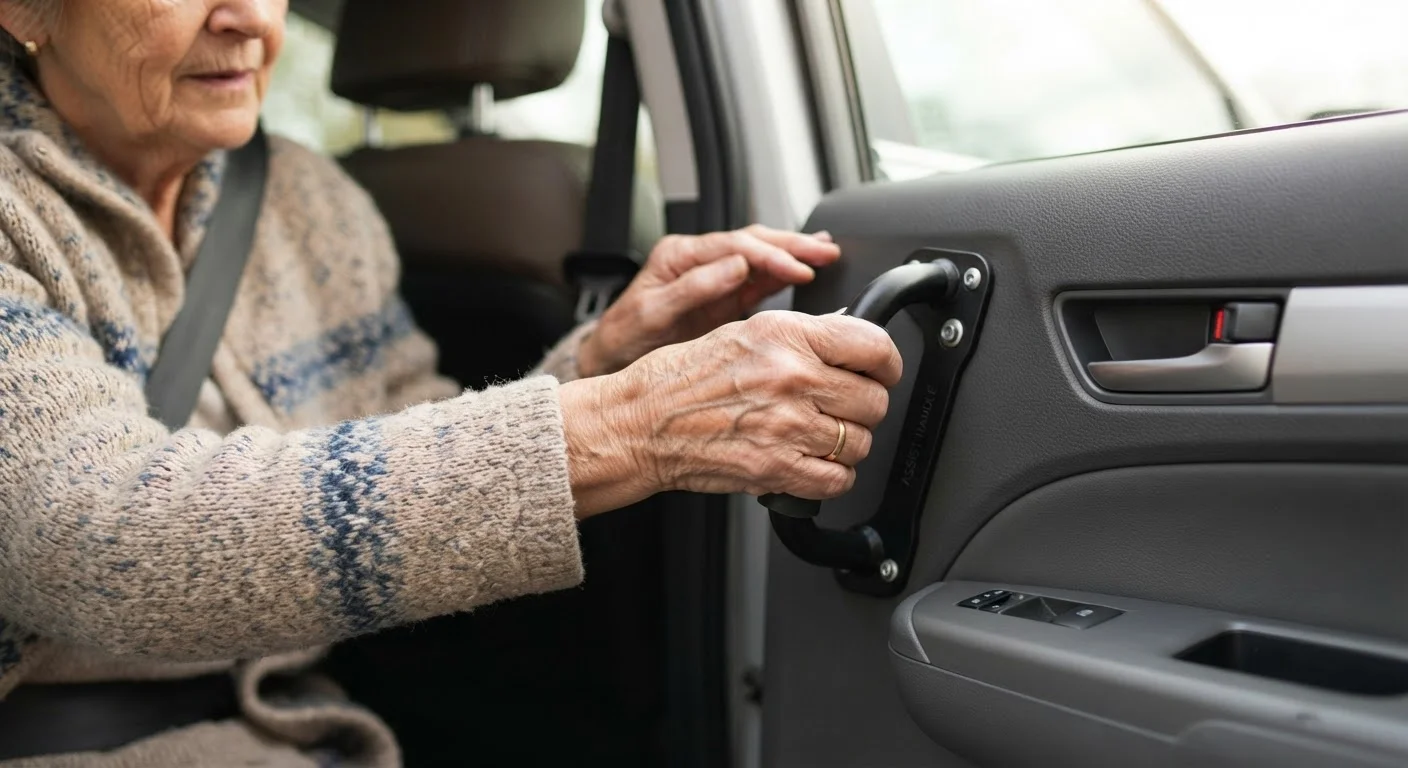
Some door-frame grab handles and seat-mounted aids attach in areas close to side-impact airbag sensors or curtain airbag deployment zones. Interference with these systems can prevent airbags from deploying correctly — or cause unintended deployment. Always confirm airbag locations in your owner's manual and discuss placement with a qualified installer before fitting anything in these zones.
If you are shopping for a new vehicle and want to factor in adaptive needs from the outset, our showroom walkthrough for senior comfort and the guide on evaluating comfort and access features will help you choose a vehicle that accommodates adaptive equipment more easily from the start.
The content on this site is for informational purposes only and is not a substitute for professional advice. Always consult a qualified professional for guidance specific to your situation.