

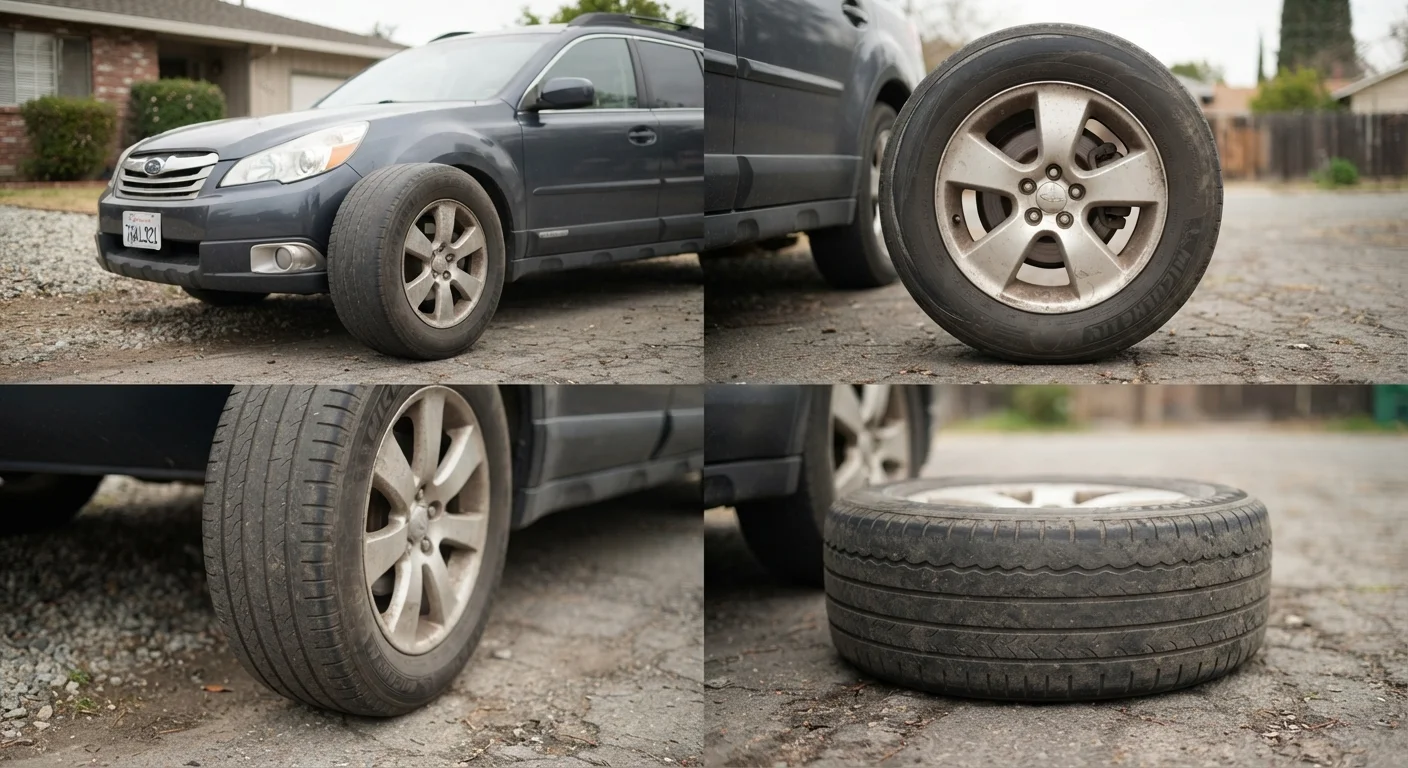
Why Tyres Are the Car's Honest Record
A seller can clean a car, touch up paint, and detail the interior — but they rarely think to disguise what the tyres are saying. The four patches of rubber that contact the road accumulate a physical record of how the car was driven, how well it was maintained, and whether mechanical problems went unaddressed.
For seniors buying a used car, a five-minute tyre inspection is one of the most practical tools available. You don't need a mechanic's training to spot patterns that warrant a closer look — you just need to know what to look for. For a broader picture of what physical clues can tell you, see our interior inspection guide, which covers similar detective work inside the cabin.
1 in 4
Vehicles inspected found with tyre defects
National Highway Traffic Safety Administration (NHTSA) roadside survey data has consistently found a significant share of inspected vehicles with at least one tyre issue, including under-inflation, low tread, or visible damage.
~$150
Typical cost of a wheel alignment service
A standard two-wheel alignment at a US repair shop generally costs in the range of $100–$200, though prices vary by region and vehicle type — one reason uneven wear is worth identifying before purchase.
The Main Wear Patterns and What They Signal
Not all wear is equal. Here's how to read the most common patterns:
- Center wear (worn down the middle): The tyre was consistently overinflated. Too much pressure causes the center of the tread to bear most of the load. This is a maintenance habit issue — relatively minor on its own, but worth noting.
- Edge wear (worn on both outer edges): The tyre ran underinflated for extended periods. Chronic underinflation also weakens the tyre's internal structure, even if it still looks usable. Our article on why tyre pressure changes explains how easy it is for pressure to drop without obvious signs.
- One-sided wear (worn on just one edge): This is a stronger warning sign. It usually points to a wheel alignment problem — specifically an incorrect camber angle — or worn suspension components. Left unresolved, it causes rapid tyre wear and affects how the car handles in corners or emergency braking.
- Patchy or cupped wear (random scalloped dips): Cupping, also called scalloping, often indicates worn shock absorbers or struts. The tyre bounces slightly rather than maintaining steady road contact, causing it to wear in an irregular pattern. Suspension repairs can be expensive, so this pattern deserves serious attention.
- Feathering (angled wear across tread blocks): Running your hand across the tread at an angle and feeling sharp edges on one side, smooth on the other, suggests a toe alignment problem. Toe refers to whether the fronts of the tyres point slightly inward or outward.
For a more detailed breakdown of each pattern, our dedicated tire wear patterns guide covers alignment, pressure, and suspension causes in depth.
“Tyres are the one component that connects every mechanical input — steering, braking, suspension — to the road. What happens to them over time reflects the whole vehicle's history.”
— Used Cars Explained Editorial Team, Automotive consumer education writers
What Mismatched or Replaced Tyres Tell You
Look at all four tyres together, not just one. If you see different brands, different tread depths, or visibly newer tyres on one axle than the other, ask why. Replacing tyres one at a time — rather than in pairs or sets — often indicates the owner addressed immediate problems without maintaining the car proactively.
Mismatched tyres on the same axle (front-left versus front-right, for example) is a safety and handling concern. A car with very new rear tyres and significantly worn fronts may have had a recent inspection where the seller only did the minimum to pass. Our article on tyre rotation, balancing, and alignment explains why rotating tyres on a regular schedule keeps wear even across all four positions — and sellers who skipped this step often show uneven results.
Also check the tyre sidewalls for cracks, bulges, or discoloration. Sidewall cracking, even on tyres with plenty of tread, signals rubber degradation from age or UV exposure. Tyre age matters even when tread looks fine — and a DOT date code on the sidewall will tell you exactly how old each tyre is.
Using Tyre Findings in Your Buying Decision
No single tyre observation should make or break a purchase on its own — context matters. A car with slightly uneven front wear but a clean service record and a willing seller may simply need a wheel alignment, which is a modest cost. A car with cupped rear tyres, mismatched brands, and no maintenance records is a different story.
Use what you find to ask informed questions and, most importantly, to justify requesting a pre-purchase inspection from an independent mechanic. A qualified technician can put the car on a lift and check the alignment, suspension components, and tyre condition together. That inspection turns your tyre observations into confirmed findings — or rules them out.
For regular checks after you buy, our routine car checks hub covers the inspections every senior driver should perform on an ongoing basis, including keeping an eye on how your tyres are wearing over time.
This article provides general educational information about used car inspection and is not a substitute for a professional mechanical assessment. Tyre and vehicle condition varies widely; always consult a qualified mechanic before making a purchase decision.
Frequently Asked Questions
Wear on both outer edges typically indicates the tyre was run underinflated for an extended period. Underinflation causes the tyre's sidewalls to flex too much, putting more contact pressure on the edges than the center. This stresses internal tyre structure and suggests the car may not have been regularly maintained.
New tyres can replace worn ones, but that doesn't fix the root cause. If alignment, suspension, or inflation habits caused the wear, those problems remain after new tyres are fitted. Always ask what mechanical work was done alongside any tyre replacement.
Look at the sidewall for a four-digit DOT code — the last four digits indicate the week and year of manufacture (e.g., 2419 means the 24th week of 2019). Many safety authorities suggest replacing tyres older than six to ten years regardless of remaining tread.
Mixed brands across all four positions can indicate the owner replaced tyres one at a time as they failed, rather than following a maintenance schedule. Mismatched tyres on the same axle is a bigger concern, as it can affect handling balance and braking.
Not necessarily — but you should factor the cost of new tyres and any needed mechanical repairs into your offer or decision. Have a qualified mechanic inspect the alignment and suspension before committing, so you understand the full picture.
The content on this site is for informational purposes only and is not a substitute for professional advice. Always consult a qualified professional for guidance specific to your situation.