

The Gap Between Appearance and Safety
Most drivers are taught to check tyre tread depth as the primary indicator of when tyres need replacing. That instinct is reasonable — worn tread genuinely does reduce grip and extend braking distances. But tread depth tells only part of the story. The rubber compounds that give tyres their grip, flexibility, and structural integrity break down gradually over time due to oxidation, heat cycling, and UV exposure, regardless of how many miles the tyre has covered.
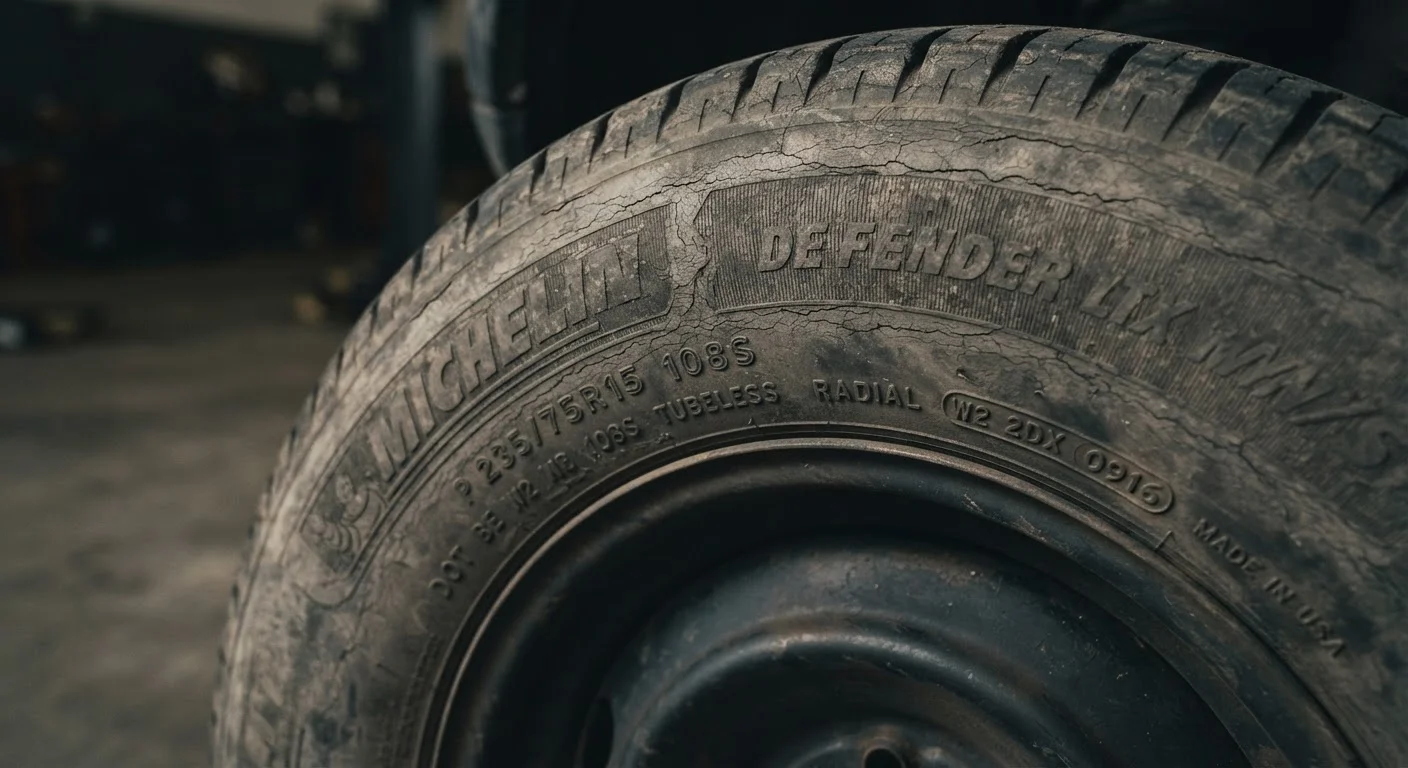
A tyre that has spent six years on a lightly-used car may still show 7mm or 8mm of tread — well above legal minimums in every US state — yet the rubber itself may be significantly degraded. Internal belts can weaken, and the sidewall can develop micro-cracks that are invisible to a casual glance. The result is a tyre that looks ready for another few years of service but carries a meaningfully elevated risk of sudden failure.
Understanding tyre age as a separate safety variable from tread depth is particularly important for seniors who may drive fewer miles annually and keep vehicles for longer periods. Monthly tyre and brake safety checks are a sensible habit, but they need to include an age assessment, not just a visual tread inspection.
Common Myths — and What the Evidence Shows
Several widely held beliefs about tyre longevity lead drivers to hold onto tyres longer than is safe. The myth-and-fact pairs below address the most consequential of these misconceptions.
Myth
If there's still plenty of tread left, the tyre is safe to keep using no matter how old it is.
Fact
Tread depth and tyre age are independent safety factors. A tyre can have adequate tread and still be structurally compromised by rubber degradation.
Rubber is a polymer that oxidizes continuously when exposed to air, heat, and UV light. This process hardens the compound and can cause internal micro-cracking that is not visible on the surface. The tread blocks — the raised rubber you can measure with a gauge — are often the last part of the tyre to show visible deterioration. Relying on tread depth alone to judge safety ignores the structural integrity of the carcass and sidewall, which are the components most affected by age-related degradation.
Myth
A tyre that has barely been driven is almost like new, so age doesn't apply to lightly used tyres.
Fact
Low mileage does not slow rubber aging. The chemical degradation process occurs regardless of how much the tyre has been driven.
Oxidation and UV degradation happen whether a tyre is rolling down the highway or sitting in a garage. In fact, a tyre that sits stationary for long periods may degrade faster in certain respects because it misses the slight flexing and heat generated during normal driving that helps distribute the tyre's internal lubricants. Ozone — present in ordinary air — is particularly damaging to rubber compounds over time, making age a genuine concern even for a spare tyre or a vehicle driven only occasionally.
Myth
You'll be able to see and feel it when a tyre gets dangerously old — it will crack visibly or feel different.
Fact
Significant internal degradation can occur before surface cracking becomes obvious, and tyre failures from age-related causes can happen with little warning.
Surface sidewall cracking — sometimes called weather checking or crazing — is a real symptom of aging, but it tends to appear after the rubber has already lost meaningful elasticity. Tread surface cracking, belt separation, and loss of adhesion between the tyre's layers are internal processes that standard visual inspections cannot reliably detect. Tyre blowouts related to age-related failure can occur suddenly at highway speeds, making early, proactive replacement far safer than waiting for visible warning signs.
Myth
The tyre manufacturer's replacement recommendation is just a sales tactic to get you to buy new tyres sooner.
Fact
Replacement timeframes reflect genuine material science about rubber compound degradation and are supported by safety research, not marketing motives.
The National Highway Traffic Safety Administration (NHTSA) has published guidance acknowledging that tyre aging is a legitimate safety concern, and many tyre manufacturers independently recommend replacement at six to ten years from the date of manufacture. These recommendations emerged from research into real-world tyre failures, not sales targets. While individual driving conditions, storage, and climate can affect the rate of aging, the underlying chemistry of polymer degradation is consistent enough that time-based guidelines carry meaningful safety weight. Treating manufacturer guidance as arbitrary is a risk not worth taking.
How to Find Your Tyre's Manufacture Date
Every tyre sold in the United States carries a DOT (Department of Transportation) code on its sidewall. The last four digits of this code indicate the week and year of manufacture. For example, 2319 means the tyre was made in the 23rd week of 2019. Decoding the full sidewall number string gives you a complete picture of a tyre's specifications, but the date code alone is the most safety-critical piece of information for age assessment.
6–10 yrs
Recommended maximum tyre service life
Most tyre manufacturers and the U.S. National Highway Traffic Safety Administration cite six to ten years from manufacture as the outer limit for tyre use, regardless of tread depth.
4 digits
DOT date code length to check
The final four digits of a tyre's DOT code (week and year) give you the exact manufacture date — essential for an accurate age assessment on any vehicle.
Check all four tyres independently — it is common for a vehicle to carry tyres from different production batches, particularly if one or two have been replaced after a puncture. Spare tyres should also be checked; a compact spare stored in a trunk can age just as quickly as road-mounted tyres and is often overlooked entirely.
If you are evaluating a used vehicle purchase, the tyre manufacture dates can also reveal important history. What tyre condition reveals about a car's hidden history explains how to use this information alongside wear patterns to make a more informed assessment.
Practical Steps to Take Now
If you are unsure of your tyres' age, locate the DOT code on each sidewall and note the four-digit date stamp. Any tyre manufactured more than six years ago warrants a professional inspection, even if tread depth appears adequate. A qualified tyre technician can assess sidewall condition, check for internal belt separation, and advise whether replacement is warranted.
Don't Overlook the Spare Tyre
Spare tyres — particularly compact 'donut' spares stored under the trunk floor — are frequently forgotten during routine checks. They age at the same rate as road-mounted tyres and are sometimes never inspected from one decade to the next. Check the DOT date code on your spare and confirm it is inflated to the pressure listed in your owner's manual. A failed spare at the roadside is a serious safety situation.
Storage conditions matter too. Tyres exposed to direct sunlight, ozone sources such as electric motors, or extreme heat age faster than those kept in cool, dark environments. If a vehicle sits unused for extended periods — a common situation for seniors with a secondary or seasonal car — aging may be accelerated compared with a tyre that sees regular use and maintains proper inflation pressure. How tire pressure shifts with the seasons is relevant here, as chronic under-inflation also stresses the sidewall and can compound age-related degradation.
Finally, when assessing an older or used vehicle overall, remember that tyre age is just one of several time-sensitive factors. How mileage and age interact in a used car's condition offers a broader framework for understanding how time affects mechanical reliability beyond the tyres alone.
This article provides general educational information about tyre maintenance and safety. It is not a substitute for a professional inspection by a qualified tyre technician. Always consult a licensed mechanic or tyre specialist for advice specific to your vehicle and driving conditions.
The content on this site is for informational purposes only and is not a substitute for professional advice. Always consult a qualified professional for guidance specific to your situation.