

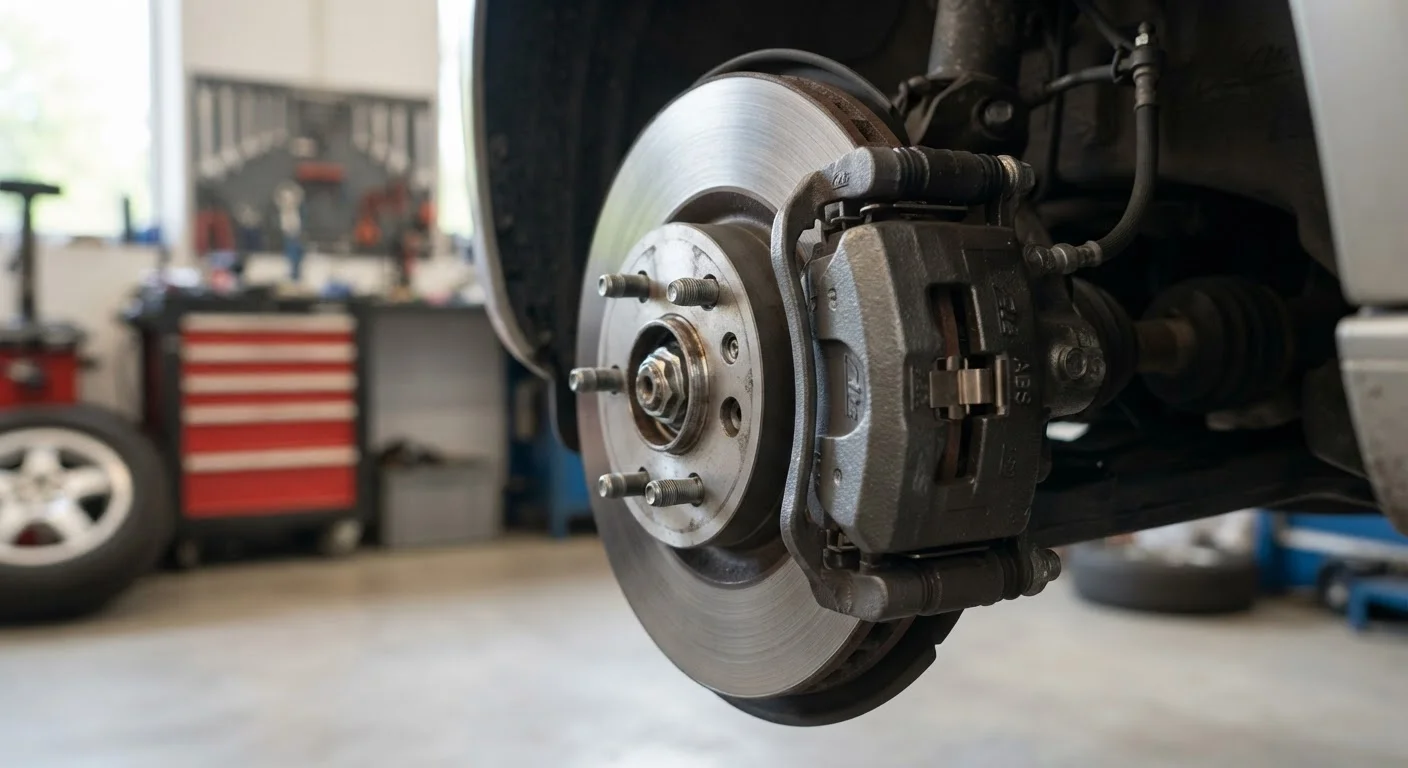
The Four Components That Work Together to Stop Your Car
When a mechanic tells you that you need a brake job, the conversation should rarely stop at pads. Your braking system is made up of several interconnected parts, and each one contributes to how reliably and safely your vehicle stops. Understanding what each component does helps you make informed decisions — and ask better questions.
The four main components in a disc brake system are:
- Brake pads: Friction material that presses against the rotor to slow the wheel. They wear down gradually with use.
- Rotors (also called brake discs): The large metal discs that the pads clamp against. They can warp, score, or wear thin over time.
- Calipers: The hydraulic clamps that squeeze the pads against the rotor. A caliper that sticks or leaks can compromise braking on one side of the vehicle.
- Brake fluid: The hydraulic fluid that transmits pressure from your foot on the pedal to the calipers. It absorbs moisture over time, which can reduce its effectiveness.
For more on how these terms fit into the bigger picture, see the plain-language braking glossary that covers common system terminology every car owner should know.
~20%
Brake-related crashes linked to maintenance neglect
The National Highway Traffic Safety Administration has attributed a portion of brake-related crashes to vehicles with worn or poorly maintained braking components.
2–3 years
Typical brake fluid replacement interval
Many vehicle manufacturers and brake system specialists recommend replacing brake fluid on a two-to-three-year cycle to maintain hydraulic effectiveness.
12,000 mi
Recommended brake inspection frequency
Many mechanics suggest a full brake inspection at least once per year or every 12,000 miles, whichever comes first, to catch wear before it becomes a safety issue.
When Rotors Need More Than a Wipe-Down
Rotors are often where a brake job gets more involved — and more expensive. When pads wear unevenly or are left too long, they can score grooves into the rotor surface. Heat from braking can also cause rotors to warp slightly, which you may feel as a pulsating or vibrating sensation when pressing the brake pedal.
A mechanic can measure rotor thickness with a special tool called a micrometer. Every rotor has a minimum safe thickness stamped on its edge or listed in your vehicle's service manual. If the rotor is above that minimum and the surface is not deeply damaged, a technician may resurface it by cutting a thin layer off to restore a smooth face. If the rotor is too thin or too damaged, replacement is the appropriate step.
Ask About Rotor Measurements
When a mechanic recommends new rotors, it is reasonable to ask for the actual thickness measurement alongside the minimum specification. This gives you a factual basis for the recommendation and helps you understand whether replacement is urgent or precautionary.
Driving on warped or deeply worn rotors — even with brand-new pads installed — will not restore full braking performance. The pad needs a smooth, flat rotor surface to create effective friction.
The Role of Calipers and Brake Fluid
Calipers are the hydraulic clamps that do the actual squeezing. Each caliper contains one or more pistons that extend when you press the brake pedal, pushing the pads firmly against the rotor. If a caliper piston seizes in the extended position, the pad stays in contact with the rotor even when you're not braking. This creates excess heat, accelerates pad wear, and can cause the vehicle to pull to one side.
Brake fluid is the often-overlooked partner in all of this. It is a hydraulic fluid that transfers the force of your foot pressing the pedal through the brake lines to each caliper. Over time, brake fluid absorbs moisture from the air — a process called hygroscopic absorption. Moisture lowers the fluid's boiling point, which can cause braking to feel spongy or less responsive under hard use.
For a more thorough look at this topic, the article Brake Fluid: The Quiet Safety Partner Most Drivers Overlook explains how to check the fluid level and what to watch for. Most manufacturers recommend replacing brake fluid every two to three years, regardless of mileage.
If you are also comparing how different brake system types handle these same components, drum brakes vs. disc brakes offers a useful side-by-side look.
Brake Fluid Color Can Be Misleading
Fresh brake fluid is typically clear to light amber, but darkening alone does not always indicate it needs replacement. Moisture content is the more important factor, which requires a test tool to measure accurately. Rely on your vehicle's recommended service interval and a mechanic's assessment rather than color alone.
What to Expect During a Full Brake Inspection
When you bring your vehicle in for a brake concern, a thorough inspection should cover all four components — not just the pads. A qualified technician will typically remove the wheels, measure pad thickness and rotor thickness, check caliper movement and look for fluid leaks, and examine the brake lines for corrosion or damage.
After the inspection, you should receive a clear explanation of what needs attention now and what can wait. If anything is unclear, do not hesitate to ask for specifics — such as the actual rotor measurement versus the minimum spec, or how much pad life remains. Being an informed participant in this conversation protects both your safety and your wallet.
For guidance on navigating these conversations with confidence, Talking to a Mechanic About Tyres and Brakes Without Getting Lost offers practical language and questions you can bring to the appointment.
Brakes are a safety-critical system. All brake service — beyond a simple visual check — should be performed by a qualified mechanic. Do not attempt to replace pads, rotors, or calipers without the proper tools, training, and safety precautions.
This article is part of A Senior Driver's Complete Introduction to Tyre and Brake Maintenance, a full overview of what seniors need to know about keeping brakes and tyres in safe condition.
This article is for general informational purposes only and does not constitute professional mechanical advice. Always consult a qualified mechanic for diagnosis and repair of your vehicle's braking system.
Frequently Asked Questions
Not always. Rotors can sometimes be resurfaced if they still meet minimum thickness specifications. However, if they are too thin, warped, or deeply grooved, replacement is the safer option. A mechanic will measure rotor thickness to make this determination.
Brake fluid that has absorbed significant moisture may appear dark or cloudy rather than clear or light amber. Most manufacturers recommend replacing it every two to three years, though your owner's manual will list the interval for your specific vehicle. A mechanic can test fluid moisture content with an inexpensive tool.
A sticking caliper often causes the car to pull to one side when braking, or you may notice one wheel area feeling unusually hot after a short drive. Uneven pad wear on one side is another common sign. This should be inspected promptly, as it affects both safety and tire wear.
Grinding typically means the brake pads have worn completely through and metal is contacting metal. This significantly reduces stopping ability and can rapidly damage rotors. Driving in this condition is not safe — schedule a mechanic inspection as soon as possible.
Most mechanics recommend having brakes visually inspected at least once a year or every 12,000 miles, whichever comes first. Many tire shops will check brake pad thickness during routine tire rotations at no extra charge.
The content on this site is for informational purposes only and is not a substitute for professional advice. Always consult a qualified professional for guidance specific to your situation.