

Why the Language Gap Matters
Walking into a garage without knowing the terminology can feel like arriving in a country where you don't speak the language. Mechanics use shorthand born from years of daily practice, and what sounds routine to them can feel confusing — or even alarming — if you're hearing it for the first time. This puts some drivers in the uncomfortable position of either nodding along without understanding, or agreeing to services they can't evaluate.
For seniors who drive regularly, tyres and brakes are the two systems most worth understanding. They are directly tied to safe stopping, and they are also among the most commonly recommended services at routine appointments. Being able to follow the conversation — and ask the right questions — helps you make informed decisions rather than guessing.
This guide won't turn you into a mechanic. It will give you enough working knowledge to communicate clearly, recognize when an explanation makes sense, and push back politely when something doesn't add up. If you'd also like to separate fact from fiction about these systems, our article on tyre and brake myths that could put drivers at risk is worth reading alongside this one.
What you will need
How to Have a Productive Garage Conversation
Preparation makes the single biggest difference in how smoothly a garage appointment goes. Mechanics work efficiently when they have clear information, and you get better outcomes when you understand what they're recommending.
Bring a Notebook or Use Your Phone
Jot down any unusual sounds, sensations, or dashboard warning lights before you arrive. Mechanics rely heavily on symptom descriptions to diagnose problems efficiently, and a clear account of what you noticed — and when — can save time and reduce diagnostic guesswork.
Written symptom list
Helps you describe brake and tyre problems clearly before the mechanic inspects the vehicle.
Pen and notepad (or phone notes app)
Used to record the mechanic's findings, service names, and cost estimates during the appointment.
Vehicle owner's manual
Contains the manufacturer's recommended service intervals for tyre rotation and brake inspections.
Learn the core terms before you go
You don't need to become an expert — but a working knowledge of a few key words will help you follow the conversation and ask meaningful follow-up questions. Here are the terms that come up most often:
- Tread depth: The grooves in your tyre that channel water away. When tread wears down too far, stopping distances increase, especially on wet roads.
- Tyre pressure (PSI): Pounds per square inch — the amount of air in the tyre. Under- or over-inflation affects handling and tyre life.
- Brake pads: The friction material that presses against the brake disc (rotor) to slow the car. Pads wear down over time and must be replaced.
- Rotors: The metal discs that brake pads grip. They can warp or wear unevenly and may need resurfacing or replacement.
- Brake fluid: A hydraulic fluid that transmits pressure from your foot to the brakes. It absorbs moisture over time and should be checked periodically.
- Wheel alignment: The angle at which your tyres meet the road. Poor alignment causes uneven tyre wear and can pull the car to one side.
For a broader look at these systems, see our complete introduction to tyre and brake maintenance.
Describe your symptoms clearly and specifically
A mechanic's ability to find the right problem quickly depends heavily on what you tell them. Vague descriptions like "something feels off" are hard to act on. Specific ones — like "there's a high-pitched squeal when I press the brake pedal at low speed" — point directly to likely causes.
Before your appointment, note:
- Where the symptom appears (front, rear, left, right, or whole car)
- When it happens (braking, turning, highway speed, cold starts)
- How long it has been occurring
- Whether it is getting worse
If you've heard unusual brake noises, our article on brake warning sounds and what each one means can help you describe them more precisely before you arrive.
Ask the mechanic to show you, not just tell you
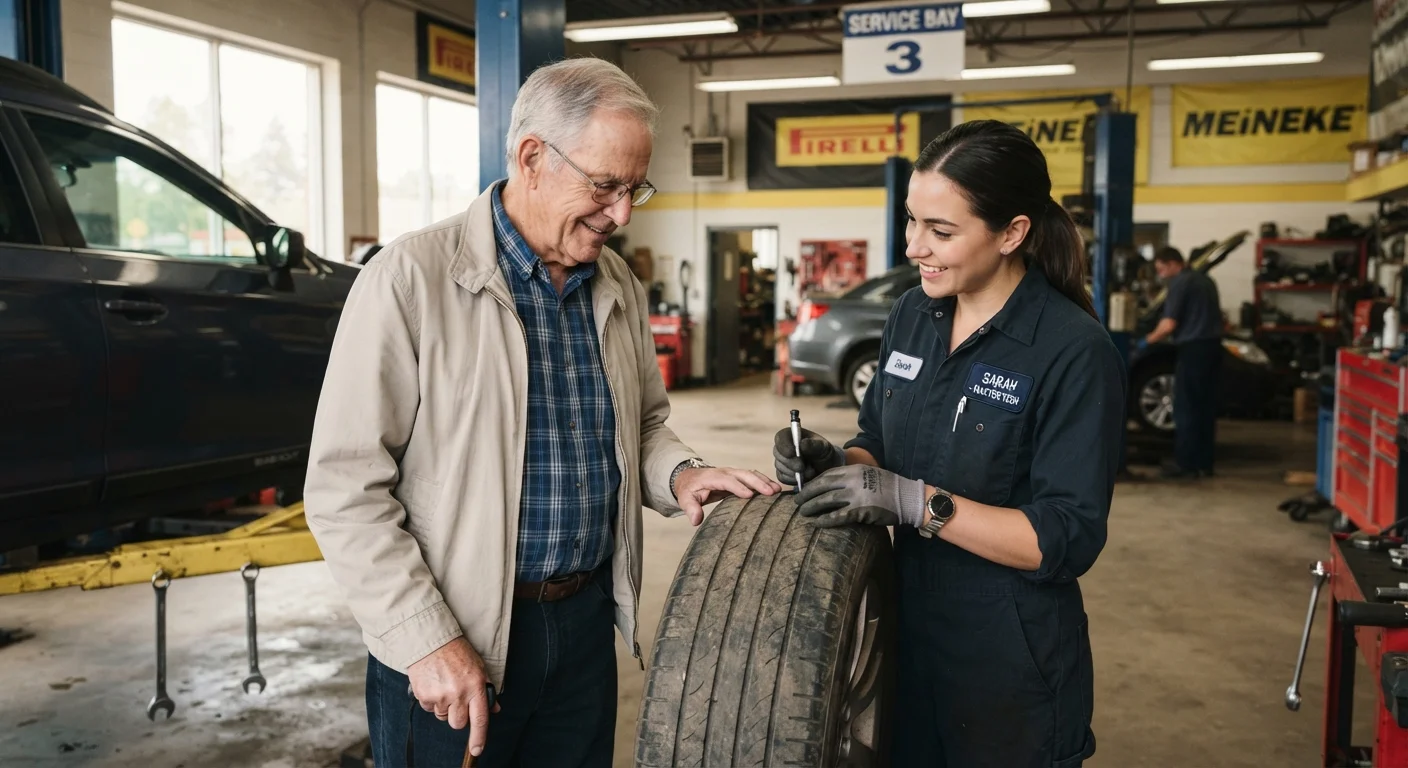
You are entitled to understand what is being done to your vehicle. Most reputable mechanics are happy to walk you through their findings. Asking to see the worn part — whether a tyre with low tread or a brake pad that has thinned down — gives you concrete evidence rather than just a recommendation.
Useful questions to ask:
- "Can you show me where the wear is?"
- "What measurement did the tread depth come in at?"
- "How much pad thickness is left?"
- "Is this something that needs fixing now, or can it wait until my next service?"
Get the recommended service in writing
Before any work begins, ask for a written estimate that breaks down parts and labor separately. This gives you something concrete to review and compare. A clear estimate should include:
- The name of each service or part being replaced
- The cost of parts and labor listed separately
- Any additional checks included at no charge
If the estimate mentions services you don't recognize — such as a distinction between tyre rotation, balancing, and alignment — our article explaining those three services separately can help you understand what each one does before you approve the work.
Know when to seek a second opinion
If a repair recommendation surprises you — especially if it involves significant cost or was not mentioned at your last service — it is entirely reasonable to pause and consult another garage. This is not rude; it is responsible car ownership.
Signs that a second opinion may be worthwhile:
- The repair was flagged as urgent without a clear explanation
- The mechanic cannot show you the worn or damaged component
- The recommended work contradicts what your owner's manual says about service intervals
To understand which checks you could realistically carry out yourself before heading to the shop, see our guide on when to check it yourself and when to call a mechanic.
Safety Comes Before Cost Concerns
Tyres and brakes are the two systems most directly tied to your ability to stop safely. If a mechanic flags a safety-critical issue — such as brake pads worn to the metal or a tyre with visible cord damage — prioritize getting it addressed promptly. Delaying safety repairs to save money can create far greater risks on the road.
Verbal Estimates Are Not Binding
Always ask for a written estimate before authorizing any work. A verbal quote given on the phone or at the counter may differ from the final invoice. In many US states, repair shops are required by law to provide written estimates above a certain dollar amount — knowing this protects you.
The content on this site is for informational purposes only and is not a substitute for professional advice. Always consult a qualified professional for guidance specific to your situation.