

What Brake Fluid Actually Does
Every time you press the brake pedal, you are activating a hydraulic system — and brake fluid is what makes that system work. The pedal compresses a master cylinder, which pushes fluid through a network of metal and rubber brake lines to each wheel. That pressure squeezes brake pads against rotors (or brake shoes against drums), creating the friction that slows your car.
Because the system is sealed and operates entirely by fluid pressure, any drop in fluid quality or quantity directly affects how reliably your car stops. It is a quiet, invisible process — but it happens every single time you brake. For more on how the components at each wheel work together, see what a complete brake job involves.
“The hydraulic brake system is one of the most safety-critical on any vehicle. Fluid condition is not a cosmetic concern — it directly affects the reliability of every stop the driver makes.”
— National Highway Traffic Safety Administration (NHTSA) vehicle safety guidance, U.S. Federal Vehicle Safety Agency
Why Brake Fluid Degrades — Even If You Never Open the Hood
The most important thing to understand about brake fluid is that it absorbs moisture from the surrounding air over time — even in a properly sealed system. This happens through microscopic permeation in rubber brake hoses and around seals. It is gradual, but unavoidable.
As moisture content increases, the fluid's boiling point drops. During hard or repeated braking — on a long downhill stretch, for example — brake components generate significant heat. If the fluid boils, it turns to vapor, and vapor is compressible in a way liquid is not. The result can be a brake pedal that suddenly feels soft or sinks toward the floor. This condition is sometimes called vapor lock, and it is exactly why fluid quality matters, not just fluid level.
3–5%
Moisture content that significantly lowers fluid boiling point
Automotive engineers generally consider brake fluid with 3–5% water content by weight to be compromised, as this can meaningfully reduce its dry boiling point compared to fresh fluid.
2 years
Typical recommended brake fluid replacement interval
Many vehicle manufacturers recommend replacing brake fluid every two years as a precaution against moisture accumulation, regardless of how the brakes feel in normal use.
Drivers who frequently navigate hills or rural roads may encounter this risk more than average. Braking habits on hilly roads deserve extra attention for this reason.
How to Check Brake Fluid Without Any Tools
Checking your brake fluid requires no tools and takes under two minutes. Here is what to do:
- Park on level ground and turn off the engine. Let the car cool if you have been driving.
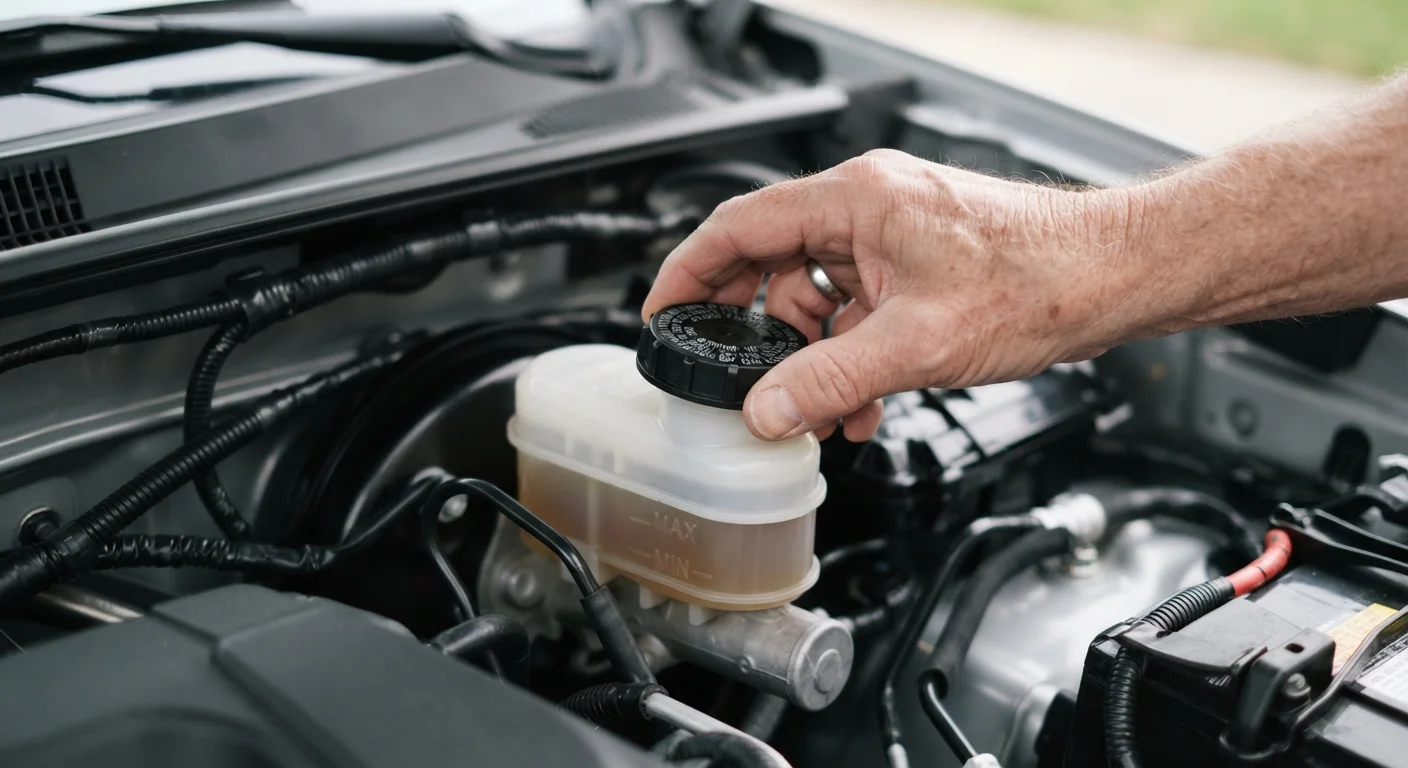
- Locate the brake fluid reservoir. It is a small, translucent plastic container near the back of the engine bay, usually labeled with a brake symbol or the words "Brake Fluid." Consult your owner's manual if you are unsure.
- Check the level without opening the cap. Most reservoirs have MIN and MAX markings visible through the side. The fluid should sit between those two lines.
- Look at the color. Pale yellow or clear is healthy. Dark brown or black fluid has likely absorbed significant moisture and may need replacing.
Check It Monthly Takes Seconds
Building a habit of glancing at your brake fluid reservoir once a month — when you check tire pressure or wash the car — is one of the easiest safety habits you can develop. You do not need to open the cap; just look at the level and color through the translucent reservoir wall. If anything looks off, mention it at your next service appointment.
If the level is below the MIN line, do not simply top it up without investigating further. Low brake fluid can indicate a slow leak in the system or that your brake pads are worn down enough to expose the low-fluid sensor. Either situation calls for a mechanic's inspection.
For a broader view of which fluids are easy to overlook, see the fluids and filters most drivers forget.
When Brake Fluid Should Be Replaced
Unlike oil, brake fluid does not get consumed during normal driving — so many drivers assume it never needs replacing. That assumption is worth revisiting. Most vehicle manufacturers recommend replacing brake fluid every two years, regardless of mileage. Some recommend an interval based on miles driven instead; check your owner's manual for the specific guidance for your vehicle.
A mechanic can test moisture content in the fluid using an inexpensive probe during a routine visit — a quick check worth requesting if you are unsure how long it has been since the fluid was last changed. Seasonal fluid checks are a practical time to include brake fluid on the inspection list.
Brake fluid replacement itself is a job for a qualified mechanic. It involves bleeding the brake system — removing old fluid and air from the lines — and requires proper equipment and technique. Attempting it without experience can introduce air into the system, which is the opposite of what you want.
If you have any doubts about common beliefs around brakes, brake and tyre myths worth correcting offers a useful reality check.
This article is for general informational purposes only. Brake system work should be performed or supervised by a qualified automotive technician. Always consult your vehicle's owner's manual and a licensed mechanic before making decisions about maintenance or repairs.
Frequently Asked Questions
Most vehicle manufacturers recommend replacing brake fluid every two years, though some specify mileage intervals instead. Your owner's manual is the most reliable guide. A mechanic can also test moisture content in the fluid with an inexpensive probe during a routine service visit.
A spongy or soft pedal often indicates air or moisture in the brake lines, both of which compromise hydraulic pressure. This is a safety concern that warrants a prompt inspection by a qualified mechanic — do not delay having it checked.
Visually checking the reservoir level is straightforward and safe. However, a low fluid level can signal a leak or worn brake pads, not just evaporation. Adding fluid without identifying the cause may mask a real problem, so consult a mechanic if the level is noticeably low.
Fresh brake fluid is typically pale yellow or nearly clear. As it ages and absorbs moisture, it darkens to a amber or brown color. Dark, murky fluid is a reliable visual sign that it may be time for a replacement.
No — they are entirely different fluids with different chemical properties. Using the wrong fluid can seriously damage your braking or steering system. Always check your owner's manual before adding any fluid to your vehicle.
The content on this site is for informational purposes only and is not a substitute for professional advice. Always consult a qualified professional for guidance specific to your situation.