

Start here
Why Tyres and Brakes Matter Most
Next
Tyre Basics: What to Look For
Then
Brake Basics: Signs Your Brakes Need Attention
Apply it
Building a Simple Check Routine
When you're ready
When to See a Mechanic
Why Tyres and Brakes Matter Most
Of all the systems on your vehicle, tyres and brakes are the two most directly responsible for keeping you safe in an emergency. Tyres are the only parts of your car that touch the road, and brakes control whether you can stop in time to avoid a hazard. When either system is compromised, your ability to respond to sudden situations is reduced — regardless of how carefully you drive.
For senior drivers who may be covering shorter distances at lower speeds, it can be tempting to assume these components are less of a concern. In practice, the opposite is often true: shorter trips mean engines and tyres warm up and cool down repeatedly, which can accelerate wear. Understanding what to look for — and knowing when something is not right — is a practical safety skill, not a mechanical one.
This guide connects directly to the broader routine car checks that every senior driver should carry out regularly.
Start With What You Can See and Hear
You do not need mechanical expertise to spot the most common tyre and brake warning signs. Visible damage, unusual sounds, and changes in how the vehicle feels underfoot are all things any driver can monitor. Building this awareness is the first and most important step.
Tyre Basics: What to Look For
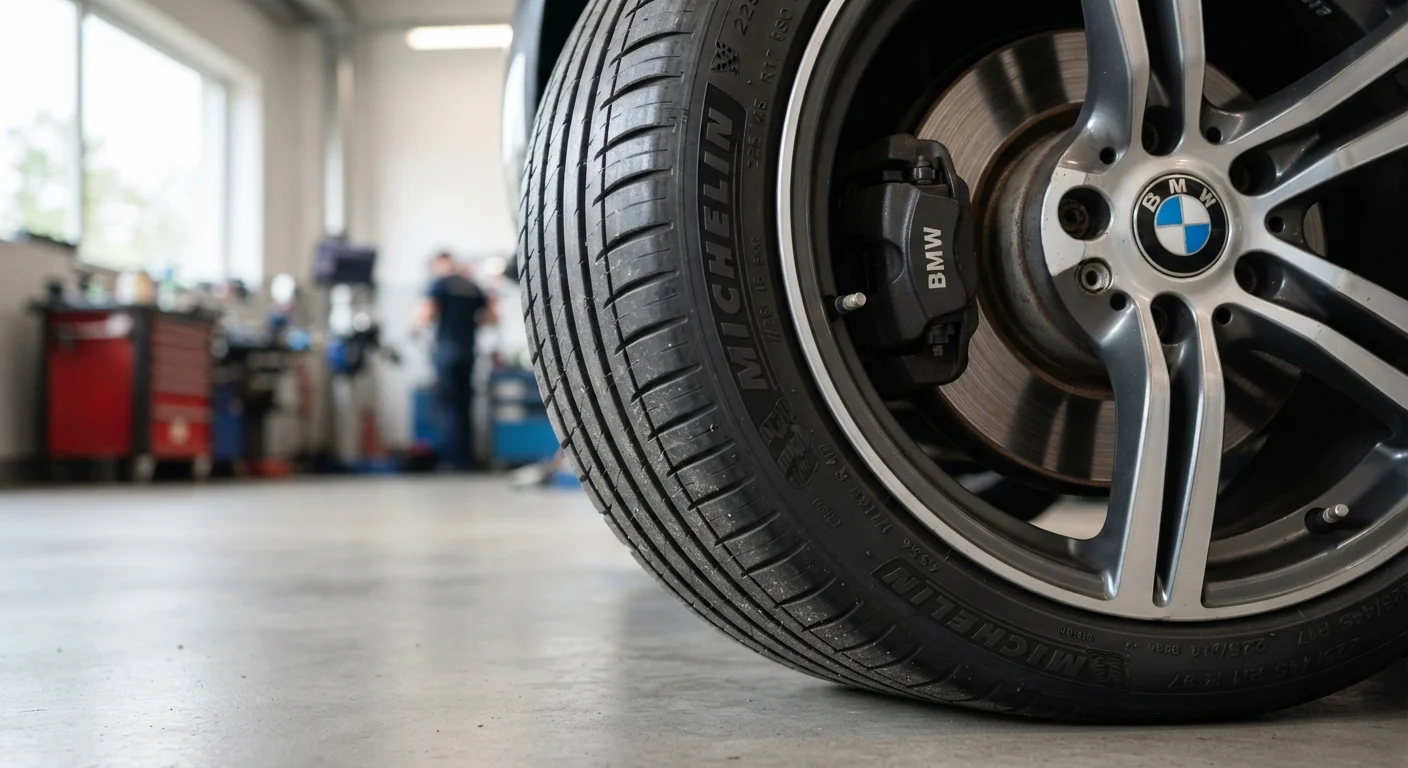
You do not need any tools to carry out a basic tyre inspection. A visual walkaround every few weeks can reveal most common problems before they become dangerous.
Tread depth
The measurement of the grooves in your tyre surface. Deeper grooves channel water away more effectively, improving grip on wet roads.
Tyre pressure
The amount of air inside a tyre, measured in PSI (pounds per square inch). Correct pressure keeps the tyre performing as designed.
Brake pad
A flat component pressed against the brake rotor to create friction and slow the vehicle. Pads wear down over time and need periodic replacement.
Brake rotor
A disc attached to the wheel that rotates with it. The brake pads clamp against the rotor to slow the vehicle.
Sidewall
The vertical side of a tyre between the tread and the wheel rim. Cracks or bulges here indicate serious structural damage.
Wear indicator
A small raised bar moulded into the tyre tread groove. When the tread wears level with this bar, the tyre has reached its minimum safe depth.
Tread Depth
The grooves in your tyre tread channel water away from the contact patch, helping your car grip the road in wet conditions. As tread wears down, this ability reduces. In the US, the legal minimum tread depth is 2/32 of an inch — but many safety experts suggest replacing tyres at 4/32 of an inch, especially in areas with regular rain. A simple way to check: insert a quarter into the tread groove with Washington's head pointing down. If you can see the top of his head, tread depth is getting low.
Tyre Pressure
Under-inflated tyres wear unevenly, handle poorly, and reduce fuel efficiency. Over-inflated tyres provide a harsh ride and less road contact. The correct pressure for your vehicle is printed on a sticker inside the driver's door jamb — not on the tyre itself. Check pressure when tyres are cold (before driving more than a mile) for the most accurate reading.
Visual Damage
Look for cracks along the sidewall, bulges or bubbles in the tyre surface, and any objects embedded in the tread. A bulge in the sidewall indicates internal structural damage and means the tyre should be replaced promptly. For a broader picture of how tyre care fits across the calendar year, see the full-year vehicle check calendar for senior drivers.
Brake Basics: Signs Your Brakes Need Attention
Brakes are a closed system — you cannot see most of the working parts without lifting the vehicle. What you can do is pay attention to how the brakes feel and sound, which provides reliable early warning of most common problems.
Do Not Ignore Grinding Brake Sounds
A grinding or metallic growling noise during braking means brake pad material has likely worn through entirely, and metal components may be contacting each other. Continuing to drive in this condition can damage the brake rotor — a more costly repair — and reduces stopping ability. Have the vehicle inspected without delay.
Sounds
A high-pitched squealing when you apply the brakes is often a built-in wear indicator — a small metal tab that contacts the rotor when pad thickness drops to a certain level. This is a signal to have the pads inspected soon. A grinding or growling sound, however, means the pad material has worn through and metal is contacting metal. This requires immediate attention.
Feel and Response
A brake pedal that sinks closer to the floor than usual, or that feels soft or spongy, can indicate low brake fluid or air in the brake lines. If your car pulls noticeably to one side when braking, one brake may be applying more force than the other — a condition that should be assessed by a mechanic. Vibration through the pedal often points to warped brake rotors.
Warning Lights
Most modern vehicles have a brake warning light on the dashboard. If it illuminates, do not ignore it. It may indicate a fluid level issue, worn pads, or a system fault. Have the vehicle inspected before driving further than necessary. It is also worth reviewing common tyre and brake myths to separate fact from misconception.
Building a Simple Check Routine
Consistency matters more than depth of knowledge. A brief monthly habit is far more effective than an occasional thorough inspection. Here is a straightforward routine that takes under ten minutes:
- Walk around the vehicle before a longer drive and look at each tyre for visible damage, obvious deflation, or anything embedded in the tread.
- Check tyre pressure once a month using a handheld gauge. Note the recommended pressure from your door jamb sticker, and add air if needed at a petrol station or with a home compressor.
- Listen during the first few stops after starting the car — brakes are more likely to produce warning sounds when they are cold.
- Note any changes in feel — a pedal that feels different from usual, pulling when braking, or any new vibration.
Keeping a simple notebook in the glovebox to record dates and observations means you have useful information ready when you visit a mechanic. The routine car checks hub covers additional checks you can incorporate alongside this tyre and brake routine.
When to See a Mechanic
Some observations warrant a professional inspection rather than a wait-and-see approach. Contact a qualified mechanic if you notice any of the following:
- Grinding or growling sounds when braking
- A brake pedal that sinks unusually low or feels spongy
- The vehicle pulling to one side under braking
- A brake warning light that remains on
- A tyre sidewall bulge, deep crack, or embedded object that cannot be safely removed
- Tread wear indicators showing the tread is at or near the minimum
Knowing how to describe these observations clearly makes the conversation at the garage far more productive. For guidance on communicating effectively with mechanics, the article talking to a mechanic about tyres and brakes walks through common terminology and useful questions to ask.
For a wider view of how tyre and brake health connects to overall vehicle safety for senior drivers, see the complete overview of senior safety features.
This article provides general educational information about vehicle maintenance. It is not a substitute for professional mechanical inspection or advice. Always consult a qualified mechanic for concerns about your specific vehicle.
Frequently Asked Questions
Checking tyre pressure once a month is a widely recommended habit for all drivers. Tyres lose pressure naturally over time, and temperature changes — common in seasonal climates — can accelerate this. Use a simple handheld tyre gauge, which is inexpensive and available at most auto parts stores.
A worn tyre will have shallow grooves that appear smooth or nearly flat compared to a new tyre. Many tyres include built-in tread wear indicators — small raised bars running across the tread grooves. When the tread is level with these bars, the tyre needs replacing.
A brake warning light should not be ignored. It can indicate low brake fluid, worn brake pads, or a system fault. If the light appears, have the car inspected by a qualified mechanic as soon as reasonably possible — avoid driving long distances until the cause is identified.
Brake pad lifespan varies widely depending on driving habits, vehicle type, and the quality of the pads. Many drivers find pads last somewhere between 25,000 and 65,000 miles, but city driving with frequent stops shortens that range. A mechanic can measure pad thickness during a routine service.
You can watch and listen for warning signs — squealing, grinding, pulling to one side, or a soft brake pedal — without any tools. Visual inspection of the tyres around the wheel is also straightforward. However, assessing the actual thickness of brake pads or the condition of rotors requires professional inspection.
The correct pressure for your specific vehicle is listed on a sticker inside the driver's door jamb or in the owner's manual. Do not use the maximum pressure printed on the tyre sidewall — that is the tyre's limit, not the car manufacturer's recommendation.
The content on this site is for informational purposes only and is not a substitute for professional advice. Always consult a qualified professional for guidance specific to your situation.