

Why Brake Terminology Matters for Everyday Drivers
When a mechanic tells you your rotors have runout, or that your brake fade is caused by glazed pads, it can feel like a foreign language. For seniors who drive daily — navigating traffic, hills, and wet roads — knowing what these terms mean is more than academic. It helps you ask the right questions, recognize warning signs early, and avoid unnecessary repairs.
This reference guide covers the braking terms you are most likely to encounter at the garage or in your owner's manual. Use it to look up unfamiliar words before or after a service appointment. If you ever hear unusual sounds when braking, our guide to brake warning sounds explains what each noise typically signals.
| Brake pad lifespan (typical) | 25,000 – 70,000 miles (Range varies by driving style, pad type, and vehicle weight) |
| Brake fluid change interval (general guidance) | Every 2 years or per owner's manual (Consult your vehicle's specific maintenance schedule) |
| ABS availability | Standard on all new U.S. passenger vehicles since 2013 (National Highway Traffic Safety Administration (NHTSA)) |
| Rotor minimum thickness | Stamped on each rotor by manufacturer (A mechanic can measure this during routine inspection) |
| Most common brake complaint | Squealing or squeaking noise (Often indicates worn pad indicators or glazed surfaces) |
Core Braking Terms Explained
The terms below cover the components and conditions your mechanic is most likely to mention. They are arranged to build understanding from the ground up.
Brake Fade
A temporary reduction in braking effectiveness caused by excessive heat buildup in the pads, rotors, or brake fluid. It most commonly occurs after repeated hard stops, such as descending a long hill. The brake pedal may feel soft or less responsive than usual.
Brake Dust
Fine particles shed by brake pads as they wear against the rotor during normal use. It appears as dark residue on wheel rims. While mostly cosmetic, unusually heavy dust buildup can sometimes indicate aggressive pad compounds or uneven wear.
Rotor Runout
A slight wobble or warp in a brake rotor that causes it to rotate unevenly. Drivers typically feel it as a pulsing or vibrating sensation through the brake pedal when slowing down. Rotors with excessive runout usually need machining or replacement.
Brake Bias
The distribution of braking force between the front and rear axles. Most passenger vehicles apply more force to the front brakes because weight shifts forward during deceleration. An imbalanced brake bias can cause the vehicle to pull to one side when braking.
Caliper
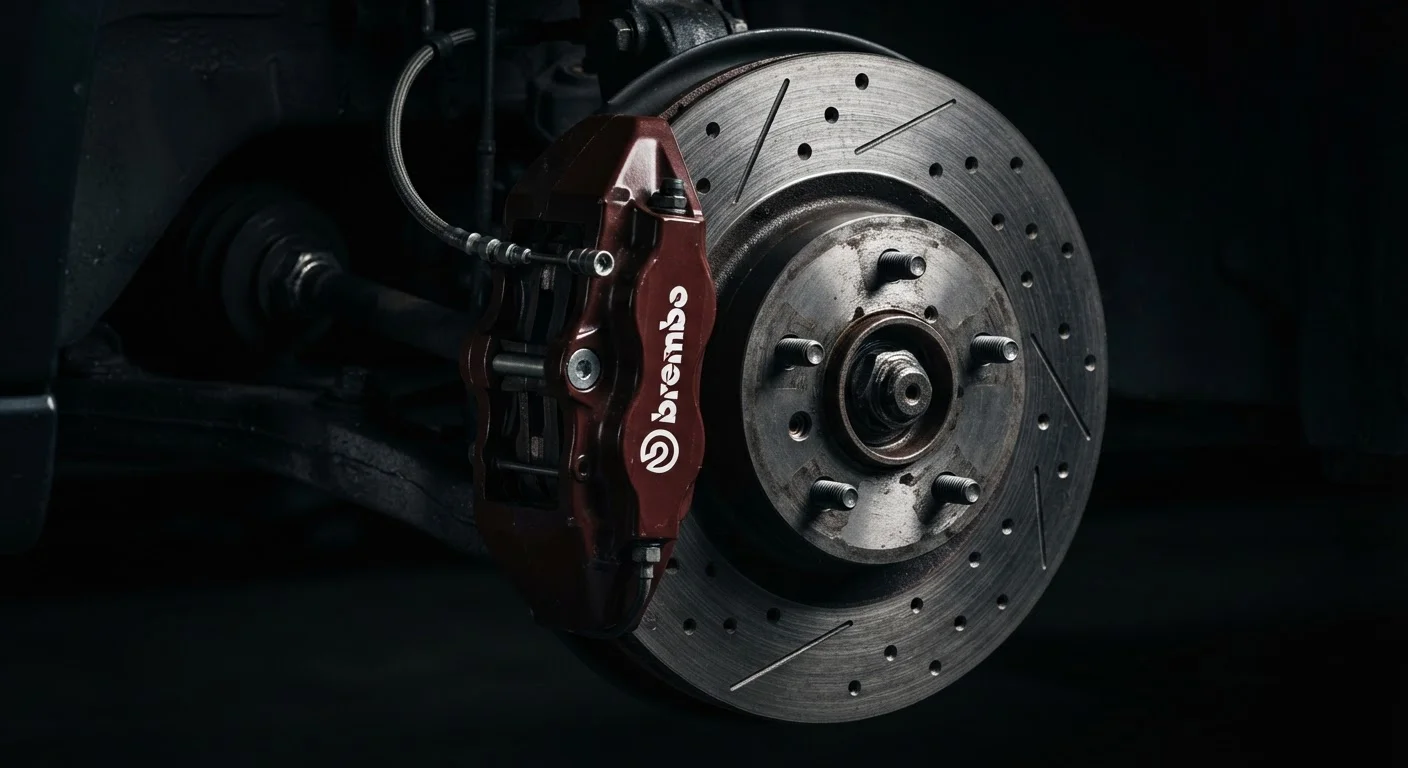
The hydraulic clamp that squeezes brake pads against the rotor when you press the pedal. A seized or sticking caliper can cause uneven braking, premature pad wear, and a pulling sensation while driving or stopping.
Glazing
A hardened, shiny surface that forms on brake pads or rotors when they have been overheated or have been used gently for extended periods without cleaning off residue. Glazed components produce reduced friction, leading to longer stopping distances.
Brake Fluid (DOT Rating)
Brake fluid is rated by the U.S. Department of Transportation (DOT) — such as DOT 3, DOT 4, or DOT 5.1 — based on its boiling point. Higher numbers generally indicate a higher boiling point. Using the wrong rating for your vehicle can affect braking performance and safety.
Pad Wear Indicator
A small metal tab built into the brake pad that contacts the rotor and produces a squealing noise when the pad material wears down to a minimum safe thickness. This sound is a deliberate warning signal, not a defect.
Brake Lines
Metal tubes and flexible rubber hoses that carry brake fluid from the master cylinder to each wheel's caliper or wheel cylinder. Corroded, cracked, or leaking brake lines are a serious safety concern requiring immediate professional attention.
Master Cylinder
The pump, located near the brake pedal under the hood, that converts pedal pressure into hydraulic pressure and distributes it through the brake lines. A failing master cylinder often causes a spongy pedal or a slow sink to the floor under sustained pressure.
Bedding In
A break-in process for new brake pads and rotors involving a series of moderate stops that transfer an even layer of pad material onto the rotor surface. Properly bedded brakes provide more consistent and effective stopping performance.
Parking Brake (Emergency Brake)
A secondary braking mechanism, usually cable-operated, that holds the vehicle stationary when parked. It also serves as a backup in the unlikely event of hydraulic brake failure. Regular use helps keep the cable and mechanism from seizing.
If a mechanic recommends work involving any of these components, our article on brake jobs beyond pad replacement explains what each repair involves and why it may be needed. For help making sense of the full conversation at the garage, see talking to a mechanic about tires and brakes.
Electronic Braking Systems and Modern Safety Terms
Newer vehicles include computerized systems that work alongside traditional braking hardware. These terms appear frequently on window stickers and in safety discussions.
- ABS (Anti-lock Braking System): Prevents wheels from locking during hard braking, allowing the driver to maintain steering control. You may feel a pulsing sensation through the pedal when it activates — that is normal.
- EBD (Electronic Brakeforce Distribution): Automatically adjusts how much braking force goes to each wheel depending on load and road conditions, improving stability.
- Brake Assist: Detects when a driver brakes suddenly but not firmly enough, and supplements pedal pressure to shorten stopping distances.
- Regenerative Braking: Used in hybrid and electric vehicles, this system converts braking energy back into electricity rather than releasing it as heat. Learn how regenerative braking works and why it matters for fuel efficiency.
ABS Does Not Shorten Stopping Distance on All Surfaces
ABS is designed to help you maintain steering control during emergency braking, not necessarily to stop the vehicle in a shorter distance. On loose gravel or deep snow, stopping distances can actually be longer with ABS active. The key benefit is that you can steer around an obstacle while braking hard — something that is not possible with locked wheels. Understanding this distinction helps you use the system correctly.
For a broader look at modern vehicle safety acronyms, our guide to window sticker safety terms is a useful companion reference.
Brake Fluid: The Often-Overlooked Variable
Many braking problems trace back to fluid condition rather than worn hardware. Brake fluid is hygroscopic, meaning it absorbs moisture from the air over time. As water content rises, the fluid's boiling point drops — increasing the risk of brake fade under hard use. Most manufacturers recommend checking fluid condition every two years regardless of mileage.
Our detailed brake fluid guide explains how to check the fluid level and color, and when replacement is warranted. This is one maintenance item where early action prevents a much costlier problem later.
This article provides general automotive information for educational purposes only. Braking systems are safety-critical components. Always have braking concerns assessed by a qualified mechanic before driving. Specific maintenance intervals may vary by vehicle make, model, and driving conditions — consult your owner's manual or a licensed technician for guidance relevant to your situation.
The content on this site is for informational purposes only and is not a substitute for professional advice. Always consult a qualified professional for guidance specific to your situation.