

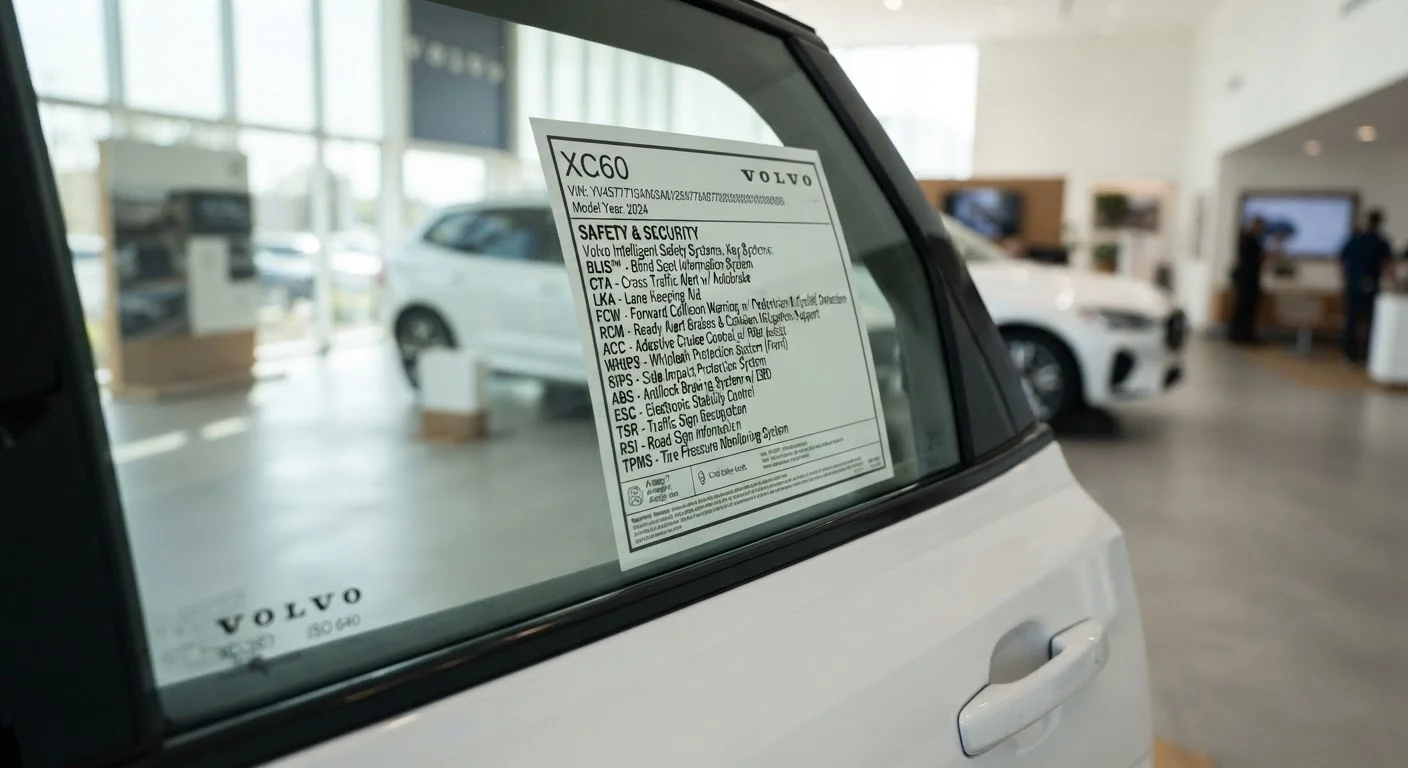
Why Safety Acronyms on Window Stickers Are Worth Decoding
Walk into any dealership and the window sticker — officially called the Monroney label — greets you with a dense column of safety feature names: AEB, LKA, BSM, RCTA, FCW. For many shoppers, these strings of letters blur together. For older drivers, however, understanding exactly what each system does is genuinely consequential. Several of these technologies directly address the driving challenges that tend to increase with age: longer reaction times, reduced peripheral vision, and greater difficulty judging gaps in traffic.
This reference guide translates the most common safety acronyms into plain language, explains what each system actually does inside the vehicle, and highlights which ones tend to offer the greatest practical benefit to drivers over 60. For a broader look at how these technologies fit together, see our complete overview of modern car safety technology.
The Systems That Matter Most for Older Drivers
Not every safety feature on a spec sheet carries equal weight for every driver. Below are the categories where research and real-world data suggest the strongest benefit for seniors.
| Standard safety tech mandate | AEB required on all new passenger vehicles sold in the U.S. by 2029 (NHTSA final rule, 2024) |
| Crash reduction — AEB | Up to 50% reduction in rear-end crashes (IIHS research findings) |
| Common acronym count on one sticker | 10–20 safety abbreviations typical (General industry observation) |
| Seniors most benefiting from BSM | Drivers 65+ show higher blind-spot incident rates (AAA Foundation for Traffic Safety) |
| ADAS umbrella term | Covers all driver-assistance systems collectively (SAE International definition) |
Collision Prevention Systems
AEB and FCW work as a pair. FCW delivers the alert; AEB acts if you don't. Because reaction time naturally slows with age, having AEB engage automatically can compensate for the fraction of a second that makes the difference in a low-speed urban collision. Research from the IIHS consistently shows meaningful crash-reduction figures for vehicles equipped with pedestrian-sensing AEB. You can learn more about related braking technology in our braking terms glossary.
~40%
Reduction in pedestrian fatalities linked to AEB
According to IIHS analysis of vehicles equipped with pedestrian-detecting automatic emergency braking.
65+
Age group with highest crash rate per mile at intersections
AAA Foundation for Traffic Safety research highlights intersection safety as a priority concern for older drivers.
9 in 10
New vehicles now include some form of AEB
Following a voluntary industry commitment, nearly all new light vehicles sold in the U.S. include AEB as standard.
Lane and Blind-Spot Systems
LDW, LKA, and BSM address vision-related challenges. Peripheral vision typically narrows with age, making blind-spot checks and lane tracking harder. BSM, in particular, is cited by AAA research as one of the most valuable driver-assist features for older motorists. For a full explanation of these and related systems, our ADAS glossary covers the terminology in depth.
Same Feature, Different Brand Names
Automakers often use proprietary names for the same underlying technology. For example, one manufacturer may call a system 'Pre-Collision Assist' while another labels it 'Collision Mitigation Braking.' When comparing vehicles, look past the marketing name and ask which underlying function the feature performs — forward collision warning, automatic braking, lane keeping, or another — to make fair comparisons.
Reversing Aids
RCTA and standard rear cameras address a specific hazard: backing out of driveways, parking lots, and garages where cross-traffic may be hidden. These features reduce the physical need to twist sharply, which can be uncomfortable for drivers managing neck or shoulder stiffness.
How to Use This Information When Comparing Vehicles
When reviewing a window sticker or online spec sheet, use the glossary above as a translation layer. Confirm whether each system is standard on the trim you're considering or available only as a paid package — this distinction is not always obvious in the feature list. Additionally, confirm whether the system includes automatic intervention (like AEB) or only a warning (like LDW alone), since those represent meaningfully different levels of protection.
Consumer testing organizations, including IIHS and AAA, publish real-world evaluations of how reliably these systems perform — not just whether a vehicle has them. A system that fails to detect pedestrians in low light offers less protection than its marketing name implies.
If the vehicle's technology features are new to you, it may also be worth exploring related accessories designed to support safe driving. Our safety accessories hub covers supplemental tools that complement built-in systems. And if you're working through other unfamiliar automotive terminology, our new safety features hub provides additional context.
This article is for general informational and educational purposes only. Vehicle safety system performance varies by manufacturer implementation, driving conditions, and vehicle speed. Always consult the vehicle's owner's manual and official third-party testing resources for model-specific details.
The content on this site is for informational purposes only and is not a substitute for professional advice. Always consult a qualified professional for guidance specific to your situation.