

Our Verdict
Most drivers can safely handle simple visual fluid checks at home with minimal tools or risk. However, anything involving the brake system, pressure-sealed components, or an illuminated warning light should be assessed by a qualified mechanic. The goal isn't to do everything yourself — it's to know your limits and act accordingly.
| Best for | Recommended |
|---|---|
| Drivers comfortable with basic under-hood checks | DIY fluid checks (oil, washer fluid, coolant reservoir level) |
| Drivers noticing warning lights, leaks, or unusual odors | Professional mechanic inspection |
| Anyone unsure about brake or transmission fluid condition | Professional mechanic inspection |
| Those building a reliable ongoing maintenance habit | DIY visual checks combined with scheduled mechanic visits |
The Real Question: Risk, Not Skill
Many drivers assume that checking fluids is either entirely a DIY task or something always best left to professionals. The truth sits in between. The deciding factor isn't your experience level — it's the risk involved if something goes wrong during or after the check.
Visual inspections of accessible fluid reservoirs are genuinely low-risk and straightforward. Anything that involves opening pressurized systems, disturbing brake components, or diagnosing warning lights is a different matter entirely. Our guide on when to check it yourself and when to call a mechanic explores this boundary in detail for routine car checks more broadly.
| DIY Check at Home | Professional Mechanic | |
|---|---|---|
| Engine oil level | Safe and straightforward | Can confirm during service |
| Windshield washer fluid | Completely safe, no risk | Not necessary |
| Coolant reservoir level | Safe when engine is cold only | Radiator inspection needs pro |
| Brake fluid condition | Not recommended — safety risk | Required for accurate assessment |
| Transmission fluid | Often not accessible to owners | Necessary on sealed systems |
| Warning light diagnosis | Do not attempt to self-diagnose | Requires diagnostic equipment |
| Fluid leaks | Can observe, not repair | Needed to trace and fix source |
What You Can Safely Check Yourself
Several checks require nothing more than a clean cloth, good lighting, and a few minutes. These are well within reach for any driver:
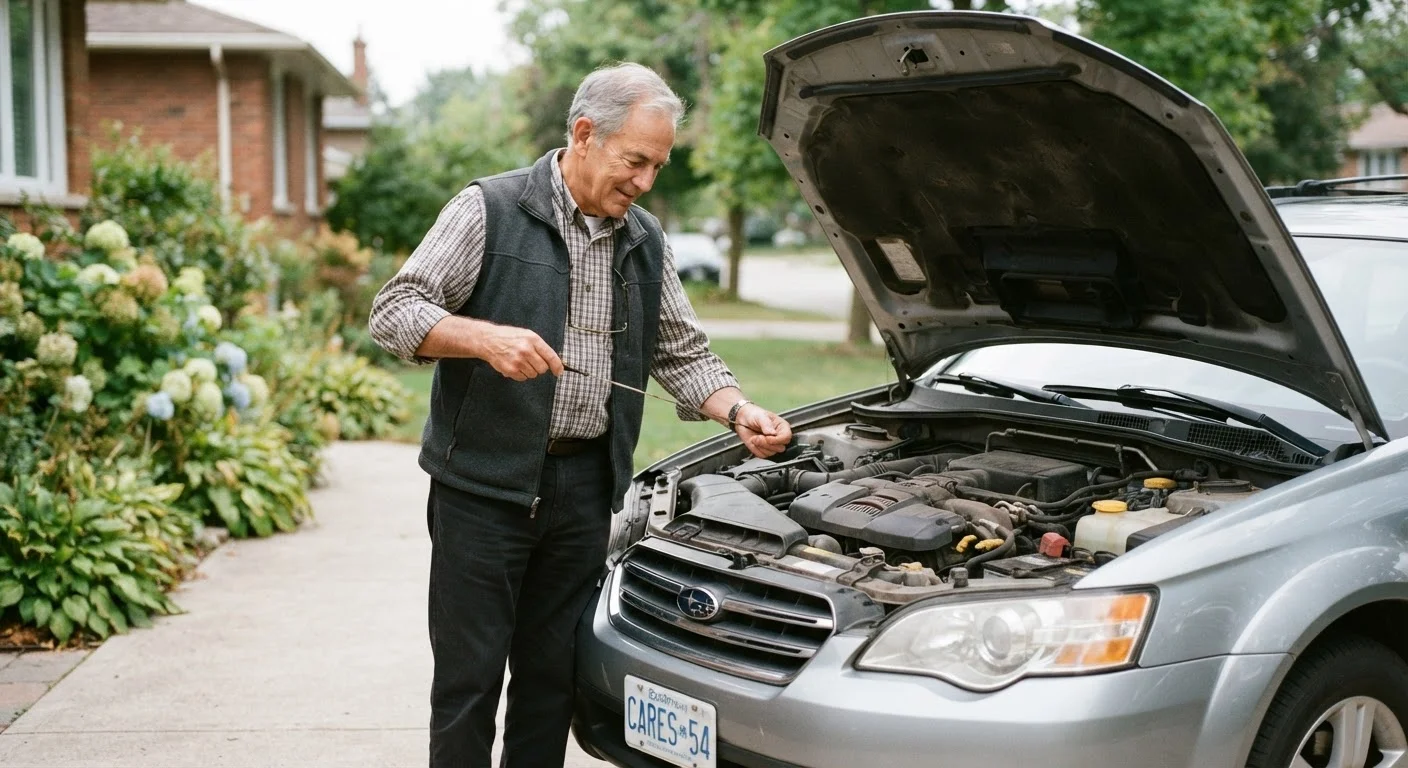
- Engine oil: Pull the dipstick, wipe it clean, reinsert fully, then pull again to read the level and color. For a detailed walkthrough, see our guide on reading your dipstick. A related guide also explains what the dipstick is really telling you about oil condition.
- Windshield washer fluid: The reservoir is clearly marked and safe to open and fill at any time.
- Coolant reservoir level (when engine is cold): Check the translucent reservoir only — never open the radiator cap on a warm engine. The level should sit between the MIN and MAX markings.
- Wiper blades: Run your fingers along the rubber edge and look for cracks or splitting.
Keep a Flashlight in Your Glove Box
Good lighting makes under-hood checks much easier and safer. A small, bright flashlight helps you spot fluid color accurately and notice anything that looks out of place — particularly in shaded engine bays. Check fluid levels on level ground with the engine off and cooled down for the most accurate readings.
For a broader seasonal approach to these checks, seasonal fluid checks walks through what to inspect before weather changes.
When to Call a Mechanic Instead
Some situations look simple on the surface but carry real consequences if mishandled. Always consult a qualified mechanic when:
- A warning light appears on your dashboard. These signals indicate a system has flagged a problem the car's computer detected — not something to diagnose with a visual check alone.
- You notice a leak under your car. Fluid color can help identify the source (red often means transmission fluid; clear may be air conditioning condensate), but tracing and repairing a leak requires proper tools and training.
- Brake fluid needs inspection. Brake fluid is hygroscopic — it absorbs moisture over time, which degrades its performance. Checking its condition accurately requires a test strip or professional assessment. Never experiment with brake components.
- Transmission fluid is a concern. Many modern vehicles have sealed transmission systems not designed for owner access. Even on older vehicles, incorrect fluid type or level can cause serious damage.
- You detect a burning smell or steam. These are signs of active overheating or a leak reaching hot engine parts — stop driving and seek help.
Never Open the Radiator Cap on a Hot Engine
Coolant in a hot engine is under significant pressure. Opening the radiator cap — as opposed to the separate coolant reservoir cap — while the engine is warm can cause scalding fluid to spray out suddenly. Always wait at least 30 minutes after the engine has been running before checking near the radiator, and check only the translucent reservoir with its own cap.
Don't overlook less obvious fluids either. Our article on fluids and filters drivers forget covers the ones that often go unchecked until a repair bill arrives.
Building a Routine That Works for Both
The most practical approach combines regular home checks with scheduled professional inspections. At home, plan a quick under-hood check monthly — engine oil level and color, coolant reservoir level (cold engine only), and washer fluid. These take under five minutes and cost nothing.
At each oil change visit — typically every 5,000 to 7,500 miles for most modern vehicles, though your owner's manual is the authoritative source — ask your mechanic to inspect brake fluid, transmission fluid, and belt condition. Many shops include a multi-point inspection at no added cost.
Building a simple fluid and filter maintenance routine offers a practical framework for making this habit easy to sustain. Routine checks, combined with professional oversight at the right intervals, give your car the best chance of staying reliable — and you the best chance of avoiding an unexpected repair.
~40%
Roadside breakdowns linked to maintenance neglect
Industry estimates suggest a significant share of roadside breakdowns involve issues that regular fluid and maintenance checks could have identified earlier.
5 min
Time needed for a basic under-hood fluid check
A quick monthly check of oil level, coolant reservoir, and washer fluid typically takes five minutes or less with no special tools required.
The content on this site is for informational purposes only and is not a substitute for professional advice. Always consult a qualified professional for guidance specific to your situation.