

Summary
18 items · 20–45 minutes
Why Seasons Change What Your Fluids Need to Do
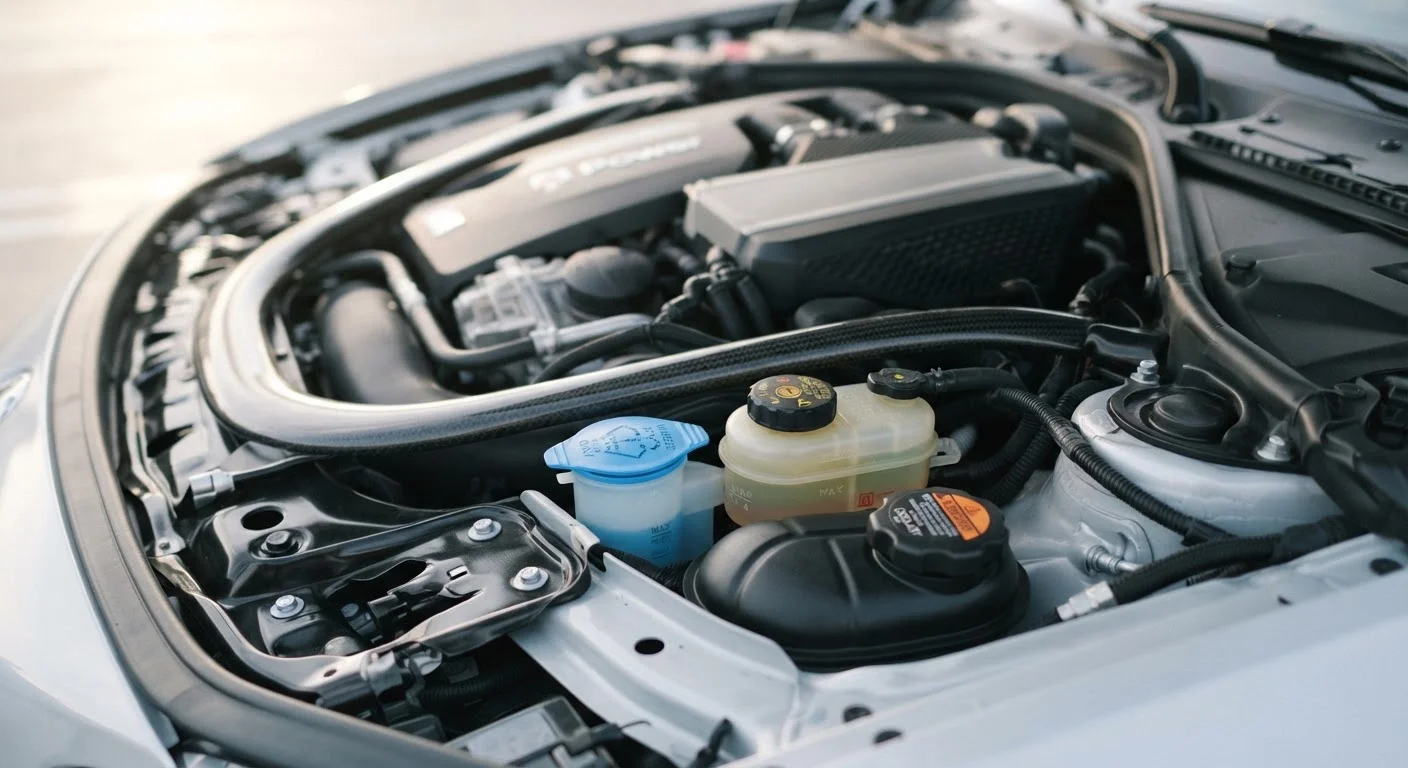
Temperature swings — from freezing winter mornings to sweltering summer afternoons — place different demands on every fluid in your vehicle. Engine oil thickens in cold weather and thins under high heat. Coolant (antifreeze) must prevent both freezing and boiling. Brake fluid absorbs moisture gradually and becomes less reliable over time. Even windshield washer fluid can freeze solid in the reservoir if it lacks the right formulation for your climate.
The good news is that most visual checks are straightforward and take only a few minutes. You don't need mechanical training to open a reservoir cap, check a dipstick, or spot a discolored fluid. What you do need is a consistent habit — and this checklist gives you exactly that.
For a broader overview of every fluid in your car, see Your Car's Fluids at a Glance before working through this checklist. And if you'd like to fit these checks into a year-round schedule, A Full-Year Vehicle Check Calendar for Senior Drivers organises every inspection month by month.
Brake Fluid Is a Safety-Critical Item
Brake fluid degrades over time by absorbing moisture from the air, which lowers its boiling point and reduces braking effectiveness. Because of this, it is one fluid where visual checks alone are not enough — the moisture content can only be tested properly with a tool. Have a qualified mechanic assess and replace your brake fluid according to your manufacturer's schedule. For more background, see Brake Fluid: The Quiet Safety Partner Most Drivers Overlook.
Tools and Supplies You'll Want Nearby
You don't need a full toolkit for fluid checks — just a few basics to make the job easier and safer. Always perform checks on a flat surface with the engine off and cool unless your owner's manual states otherwise.
Clean lint-free rags or paper towels
Used to wipe dipsticks clean before re-inserting for an accurate fluid level reading.
Flashlight or torch
Helps you see fluid colours and reservoir markings clearly in a dim engine bay.
Vehicle owner's manual
Identifies the correct fluid types, reservoir locations, and acceptable level ranges for your specific vehicle.
Disposable gloves
Protects your hands from coolant and brake fluid, both of which can irritate skin.
Funnel
Prevents spills when topping up any fluid reservoir — particularly useful for narrow filler openings.
Your Seasonal Fluid Checklist
Work through these items at each seasonal change — a useful rhythm is spring (before summer heat), fall (before cold sets in), and any time you notice a warning light or unusual vehicle behaviour. Check your owner's manual for the correct fluid specifications for your specific vehicle; using the wrong type can cause damage.
Engine and Cooling System
Braking and Transmission
Visibility and Safety Fluids
Final Review and Follow-Up
Never Check Coolant on a Hot Engine
Opening the coolant reservoir or radiator cap on a warm or hot engine can cause pressurised steam and fluid to escape rapidly, causing serious burns. Always wait at least 30 minutes after driving before inspecting the cooling system. If you're unsure whether the engine is cool enough, leave it longer.
Low Fluid With No Clear Cause Is a Warning Sign
If a fluid is consistently running low between checks and you haven't noticed any leaks, do not simply keep topping it up. A gradual loss — especially with engine oil, coolant, or brake fluid — can indicate an internal leak or other problem that requires a mechanic's diagnosis.
For guidance on which checks are safe to do yourself versus which warrant a trip to a mechanic, see When to Trust a Mechanic and When to Check It Yourself. You may also find it helpful to review The Fluids and Filters Drivers Forget Until Something Goes Wrong — several commonly neglected items are covered there in more detail.
The content on this site is for informational purposes only and is not a substitute for professional advice. Always consult a qualified professional for guidance specific to your situation.