

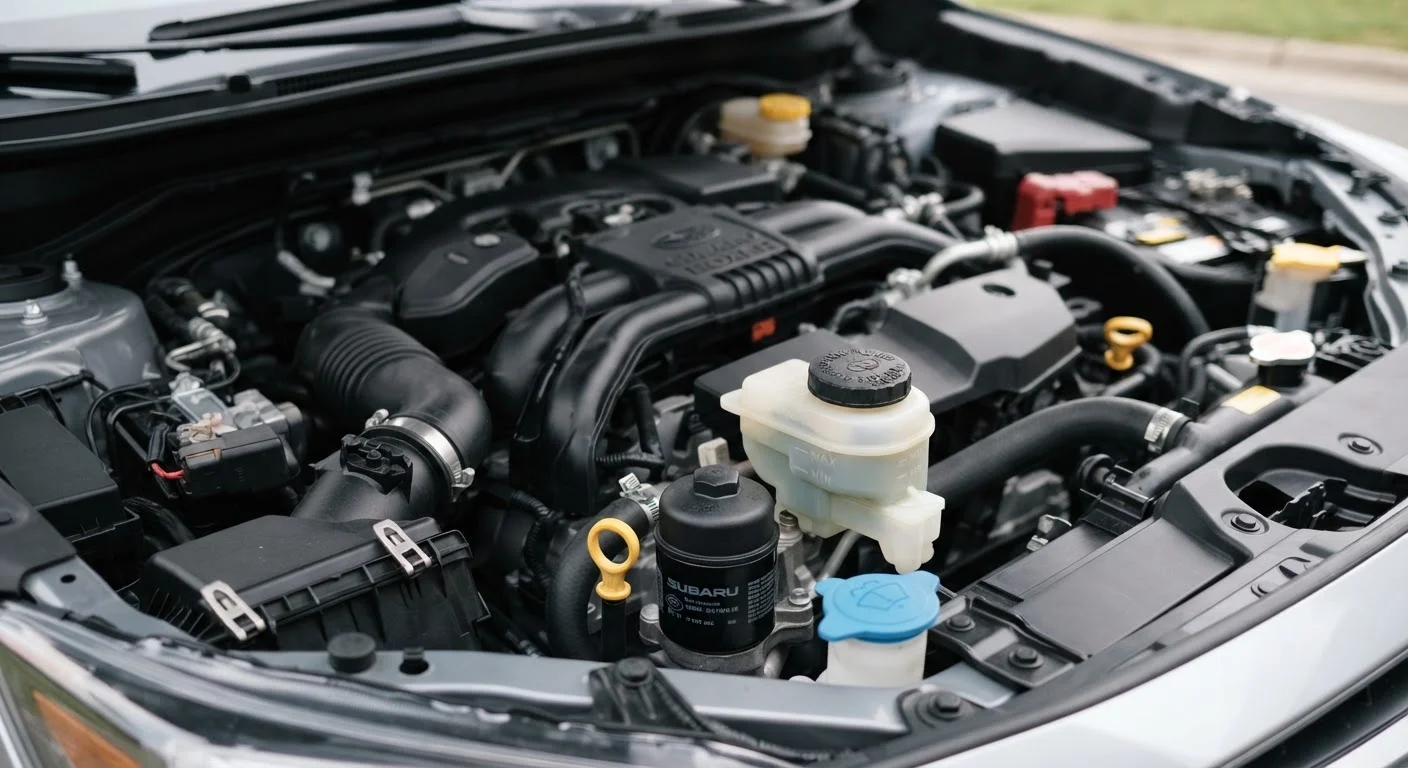
Why These Fluids and Filters Go Unnoticed
Oil changes get the most attention in routine car maintenance — and for good reason. But your vehicle depends on several other fluids and filters that quietly do critical work in the background. Unlike engine oil, many of these have no dedicated warning light, no obvious visual cue, and no reminder sticker on the windshield.
The result is that drivers go months or years without checking them. When something finally goes wrong — a rough transmission, a failed cooling system, weakened braking — the repair cost is often far higher than the simple service that could have prevented it. For a fuller picture of every fluid your car carries, see our simple reference guide to car fluids.
No Warning Light Doesn't Mean No Problem
Most of the fluids covered in this article have no dedicated dashboard warning light. By the time a general warning illuminates, damage may already be occurring. Periodic manual checks — or asking your mechanic to inspect these fluids at each oil change — are the most reliable safeguard.
Six Fluids and Filters That Deserve More Attention
Transmission Fluid
Transmission fluid lubricates the complex set of gears that transfer engine power to the wheels. Over time it breaks down, darkens, and loses its protective qualities — yet it rarely comes up during routine service unless you specifically ask about it.
Unlike engine oil, transmission fluid doesn't have a dipstick in every vehicle. On many modern cars, checking it requires a lift and a qualified mechanic. However, you can watch for warning signs: delayed gear engagement, rough or jerky shifting, or a faint burning smell. These are signals the fluid may be overdue for inspection. Consult your owner's manual for the recommended service interval, which typically ranges from 30,000 to 60,000 miles depending on vehicle type and driving conditions.
Delayed shifting or a burning smell often means transmission fluid has been neglected too long.
Coolant (Antifreeze)
Coolant keeps your engine from overheating in summer and freezing in winter. It also prevents internal corrosion. Many drivers assume it never needs changing — that's a common and costly misconception.
Coolant degrades chemically over time. Additives that prevent rust and scale break down, leaving metal components vulnerable. Visually, deteriorated coolant may appear rusty or contain visible particles. Most manufacturers recommend a coolant flush every two to five years, though your owner's manual is the definitive guide. Checking the level is simple — the translucent reservoir near the radiator has clear MIN and MAX markings. Never open the radiator cap when the engine is hot, as pressurized coolant can cause serious burns.
Coolant degrades chemically over time, even when the level looks fine in the reservoir.
Brake Fluid
Brake fluid transmits the pressure from your foot on the pedal to the brakes themselves. It's hygroscopic — meaning it absorbs moisture from the air over time — and that absorbed water lowers its boiling point, which can reduce braking effectiveness under hard use.
Brake fluid rarely gets checked unless a mechanic opens the hood unprompted. The reservoir is usually a small translucent container near the back of the engine bay. The fluid should appear clear to slightly yellow; dark or murky fluid is a sign it needs attention. Many manufacturers suggest testing or replacing brake fluid every two years regardless of mileage. Because brakes are a direct safety system, any concerns should be addressed by a qualified mechanic promptly.
Brake fluid absorbs moisture over time, which can quietly reduce your stopping power.
Cabin Air Filter
The cabin air filter cleans the air entering your car through the heating and air conditioning system. It catches dust, pollen, and debris — a real benefit for anyone with allergies or respiratory sensitivities. When clogged, it forces the blower motor to work harder, strains the HVAC system, and reduces airflow noticeably.
Most cabin filters are located behind the glove box or under the dashboard and can be replaced without tools. They're inexpensive and replacement is typically straightforward enough for many drivers to handle themselves — though if you're unsure, any service shop can do it quickly. A general guideline is replacement every 15,000 to 25,000 miles, or annually if you drive in dusty conditions.
A clogged cabin air filter strains your HVAC system and degrades the air you breathe while driving.
Power Steering Fluid
Power steering fluid makes turning the wheel easier, especially at low speeds. On vehicles with hydraulic power steering systems (as opposed to electric), this fluid circulates under pressure and can degrade or leak gradually. Low fluid often announces itself through a whining or groaning sound when turning.
The reservoir is usually labeled and visible in the engine bay. The fluid level is easy to check — some reservoirs have MIN/MAX markings, while others have a dipstick on the cap. If you notice the steering feeling heavier than usual or hear noises when turning, have a mechanic inspect the system. Running a power steering pump low on fluid can cause expensive pump damage.
A whining noise when turning is often the first sign power steering fluid has been neglected.
Differential and Transfer Case Fluid
Drivers of trucks, SUVs, and all-wheel-drive vehicles have additional fluid systems — the differential and, if equipped, a transfer case — that most people never think about. These components distribute power between wheels and require their own lubricating fluid.
These fluids are completely out of sight and have no warning lights in most vehicles. Failure to service them can lead to gear wear and, eventually, costly component replacement. Inspection and fluid changes on these systems require a lift and are strictly a job for a qualified mechanic. Check your owner's manual for service intervals — they often fall between 30,000 and 60,000 miles depending on driving conditions, with towing and off-road use shortening that window.
AWD and truck owners carry extra fluid systems that most service checklists never mention.
Make Your Owner's Manual Your First Stop
Every vehicle has its own service intervals for fluids and filters, and manufacturer guidelines are the most reliable source. Your owner's manual lists exactly which fluids your car uses, where to check them, and how often to service them. Keeping it in your glove box means the answer is always within reach.
Building the Habit Before Something Goes Wrong
Staying ahead of these overlooked items doesn't require mechanical expertise — it mainly requires asking. At your next oil change, request that the service technician check transmission fluid, brake fluid, coolant condition, and power steering fluid alongside the standard inspection. For cabin air filters and differential fluid, simply ask when they were last serviced.
If you'd like to understand which of these checks you can safely do yourself versus which need a professional, our article on knowing when to call a mechanic is a practical next step. And if you want to turn these one-off checks into a reliable routine, building a simple maintenance routine offers a straightforward framework any driver can follow.
Checking fluids at seasonal transitions also makes sense — temperature changes affect fluid performance in ways that can go unnoticed. Our seasonal fluid check guide covers what to look for before weather shifts.
This article is for general informational purposes only. Always consult your vehicle's owner's manual and a qualified mechanic for guidance specific to your car's make, model, and condition. Do not attempt repairs or fluid work that exceed your comfort level or skill — some tasks require professional equipment and training.
The content on this site is for informational purposes only and is not a substitute for professional advice. Always consult a qualified professional for guidance specific to your situation.