

Why Transmission Fluid Matters More Than Most Drivers Realize
Transmission fluid does several jobs at once: it lubricates the hundreds of moving parts inside your transmission, helps regulate heat, and provides the hydraulic pressure that allows gear changes to happen smoothly. Without clean, adequate fluid, those parts grind against one another, generate excessive heat, and wear out far sooner than they should.
For drivers of automatic vehicles — which describes most seniors on the road today — this fluid is especially critical. The automatic transmission is one of the most mechanically complex and expensive systems in any car, often costing several thousand dollars to rebuild or replace. Keeping the fluid in good condition is one of the most cost-effective ways to protect that investment.
To understand how transmission fluid fits into your car's broader fluid picture, the simple fluid reference guide covers every major fluid in plain language. You may also find it useful to review fluids and filters drivers commonly overlook — transmission fluid regularly appears on that list.
Check Your Owner's Manual First
Every vehicle has specific recommendations for transmission fluid type and change intervals. Using the wrong fluid grade can reduce protection and may void your warranty. Your owner's manual is the most reliable source for this information — keep it in your glove compartment for easy reference.
Warning Signs Your Transmission Fluid Needs Attention
You don't need to be a mechanic to spot early trouble. These are the most common signals that your fluid may be degraded or low:
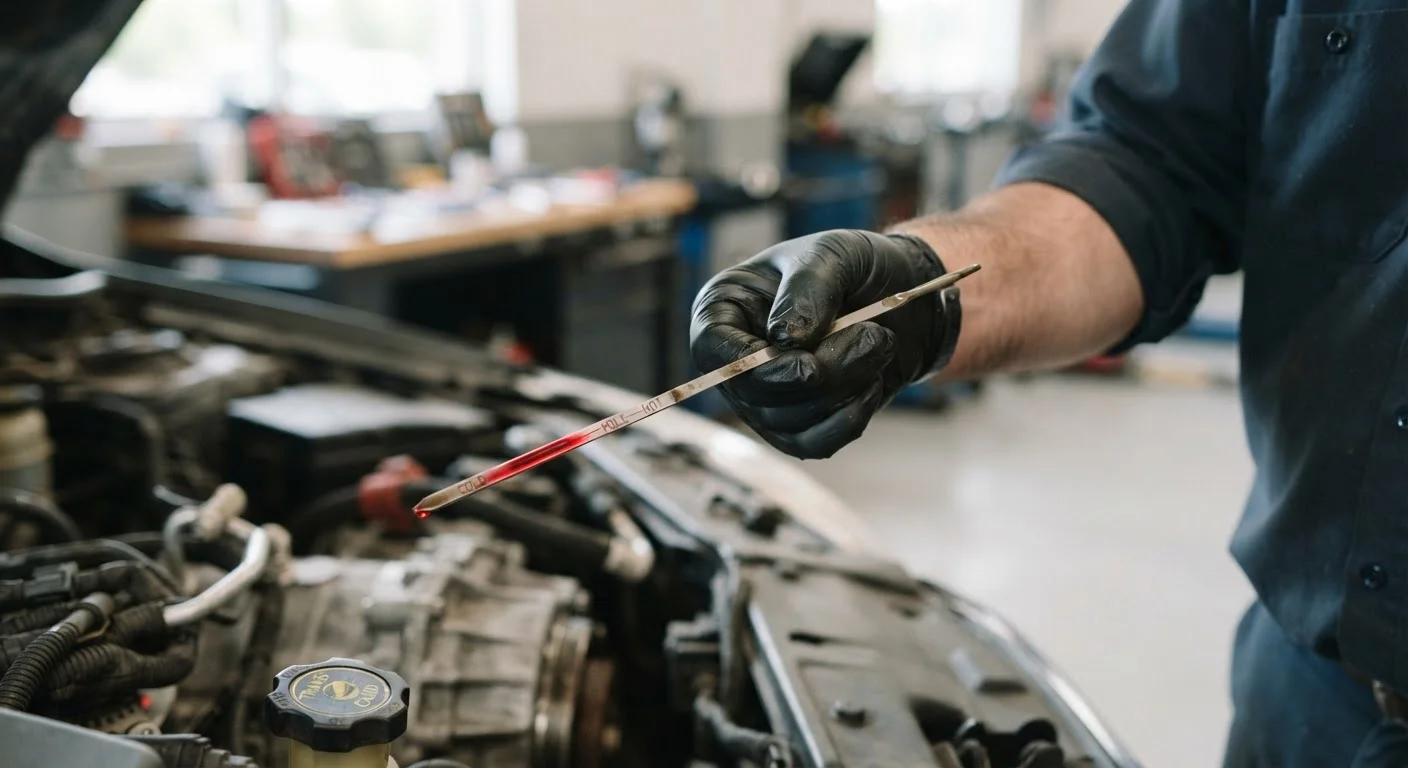
- Color change: Healthy transmission fluid is typically bright red or pink and translucent. When it darkens to a deep brown or black, it has broken down and is no longer protecting parts effectively.
- Burnt smell: If the fluid smells like something is scorching when you check it, the fluid has been overheated and needs to be replaced.
- Slipping gears: If your car hesitates, lurches, or seems to slip between gears unexpectedly, low or degraded fluid may be reducing the hydraulic pressure needed for smooth shifts.
- Delayed engagement: A noticeable pause after moving the gear selector from Park to Drive or Reverse can indicate a fluid problem.
- Transmission warning light: Some modern vehicles display a dedicated warning. Even a general check-engine light warrants investigation.
- Visible leak: Red or pink fluid pooling beneath the center of your car is a strong indicator of a transmission fluid leak.
Don't Wait for Symptoms to Become Severe
Transmission repairs are among the most expensive in automotive maintenance, often running into the thousands of dollars. If you notice any of the warning signs listed here, have the vehicle inspected promptly rather than waiting to see if the symptom worsens. Early intervention almost always costs less than delayed repair.
Unlike some other maintenance issues, transmission problems can escalate quickly once symptoms appear. Early action is much less expensive than waiting. Transmission concerns share some urgency with other fluid-related issues — just as brake fluid degradation affects safety gradually, transmission fluid decline can creep up unnoticed.
How to Check Your Transmission Fluid
Before following these steps, confirm that your vehicle has a transmission dipstick. Many newer models — particularly those with continuously variable transmissions (CVTs) or certain European designs — have sealed transmissions and require dealer or mechanic inspection. Check your owner's manual first.
What you will need
Park on level ground and warm up the engine
Drive the car briefly (around 5–10 minutes) so the transmission reaches operating temperature, then park on a flat surface. Most dipstick readings are most accurate when the engine is running and the transmission is warm — but check your owner's manual, as some vehicles specify checking with the engine off.
Locate the transmission dipstick
Open the hood and look for the transmission dipstick handle — it is usually toward the rear of the engine compartment and often has a red or pink handle to distinguish it from the engine oil dipstick (which is typically yellow or orange). If you are unsure, your owner's manual will show its exact location with a diagram.
Pull out the dipstick and wipe it clean
Using a clean, lint-free cloth or paper towel, wipe the dipstick completely clean. This removes any fluid that has settled unevenly during driving, which could give you a misleading reading.
Reinsert and remove the dipstick to read the level
Push the dipstick all the way back into the tube until it seats fully, then pull it out again. Hold it horizontally and look at where the fluid line falls relative to the MIN and MAX (or Cold/Hot) markers on the stick. The fluid should sit within the acceptable range marked for warm operation.
Inspect the fluid's color and smell
With fluid on the cloth you used to wipe the dipstick, examine its color and hold it near your nose carefully. Healthy fluid is translucent and red or pink. Dark brown or black fluid, or any burnt smell, signals that the fluid has degraded and needs professional attention. Particles or a gritty texture may indicate internal wear.
If your vehicle does not have a dipstick, the steps above do not apply. Take the car to a qualified technician who has the right equipment for a sealed-unit inspection. Temperature extremes can also affect fluid performance — seasonal fluid checks are worth building into your routine to stay ahead of weather-related issues.
What to Do If the Fluid Needs Attention
If your fluid check reveals any of the warning signs above, the appropriate next step depends on what you found:
- Low level with clean-looking fluid
- A small top-up may be appropriate, but a drop in level usually signals a leak somewhere. Have a mechanic inspect the transmission pan gasket, seals, and cooler lines before simply refilling.
- Dark or burnt fluid
- This calls for a fluid drain and refill, or in some cases a flush — a more thorough process that clears old fluid from the cooler and lines. This is a job for a qualified mechanic. Using the wrong fluid type or performing the procedure incorrectly can cause further damage.
- Visible leak
- Do not continue driving the vehicle until the source is identified and repaired. Running a transmission low on fluid can cause rapid and irreversible internal damage.
For broader context on how your transmission type affects long-term running costs and maintenance needs, see transmission considerations for senior drivers. Routine fluid awareness also fits naturally into the routine car checks every driver should perform regularly.
Leave Fluid Changes to a Qualified Mechanic
Unlike checking the fluid yourself, draining and refilling transmission fluid involves working under the vehicle, removing a drain plug or pan, and using the correct fluid specification exactly. An error in this process can cause immediate or delayed transmission damage. This is a task to delegate to a licensed automotive technician.
This article is for general informational and educational purposes only. Always consult your vehicle's owner's manual and, when in doubt, a qualified automotive technician before performing or authorising any maintenance procedure.
The content on this site is for informational purposes only and is not a substitute for professional advice. Always consult a qualified professional for guidance specific to your situation.