

Why Brake Fluid Gets Skipped
Oil gets changed. Tires get rotated. Washer fluid gets topped off. But brake fluid? For most drivers, it rarely appears on the mental checklist — and that's exactly the problem.
Unlike engine oil, brake fluid doesn't look dirty or smell burned when it degrades. It sits quietly in a small reservoir under the hood, and unless the dashboard warning light illuminates, most people never think about it. That invisibility is what makes it one of the most commonly overlooked fluids in routine maintenance.
For a broader look at which fluids tend to fall through the cracks, see the fluids and filters drivers forget.
~2–3 years
Typical brake fluid replacement interval
Many vehicle manufacturers recommend replacing brake fluid every two to three years, though exact intervals vary by make and model.
3%+
Moisture content that signals degraded fluid
Industry guidelines generally consider brake fluid with more than 3% water content by weight to be degraded and in need of replacement.
Up to 50°F
Drop in boiling point from moisture absorption
As brake fluid absorbs moisture, its boiling point can fall significantly, increasing the risk of vapor lock under heavy braking conditions.
How Brake Fluid Works — and Why It Degrades
Your brake system is hydraulic, meaning it relies on pressurized fluid to transfer force. When you press the pedal, that pressure travels through brake lines and causes the brake pads or shoes to clamp down and slow the vehicle. Brake fluid is the medium that carries that force.
The challenge is that glycol-based brake fluids are hygroscopic — meaning they naturally absorb moisture from the surrounding air over time. As water content builds up, the fluid's boiling point drops. Under hard braking, overheated fluid can vaporize, creating air bubbles that compress instead of transmitting force. The result is a spongy pedal or, in severe cases, noticeably reduced stopping ability.
This degradation happens gradually and silently, which is why regular inspection matters — not waiting for something to feel wrong. Understanding how this fits into the full braking picture is helpful; our article on stopping distance and braking physics covers what else affects how quickly your car can stop.
Build It Into a Seasonal Habit
A quick brake fluid check takes less than a minute and pairs naturally with other under-hood inspections. Consider adding it to a seasonal checklist alongside coolant, oil, and windshield washer fluid. Our guide on seasonal fluid checks offers a practical starting point.
How to Check Brake Fluid Without Tools
You don't need mechanical experience to perform a basic visual inspection. Here's what to look for:
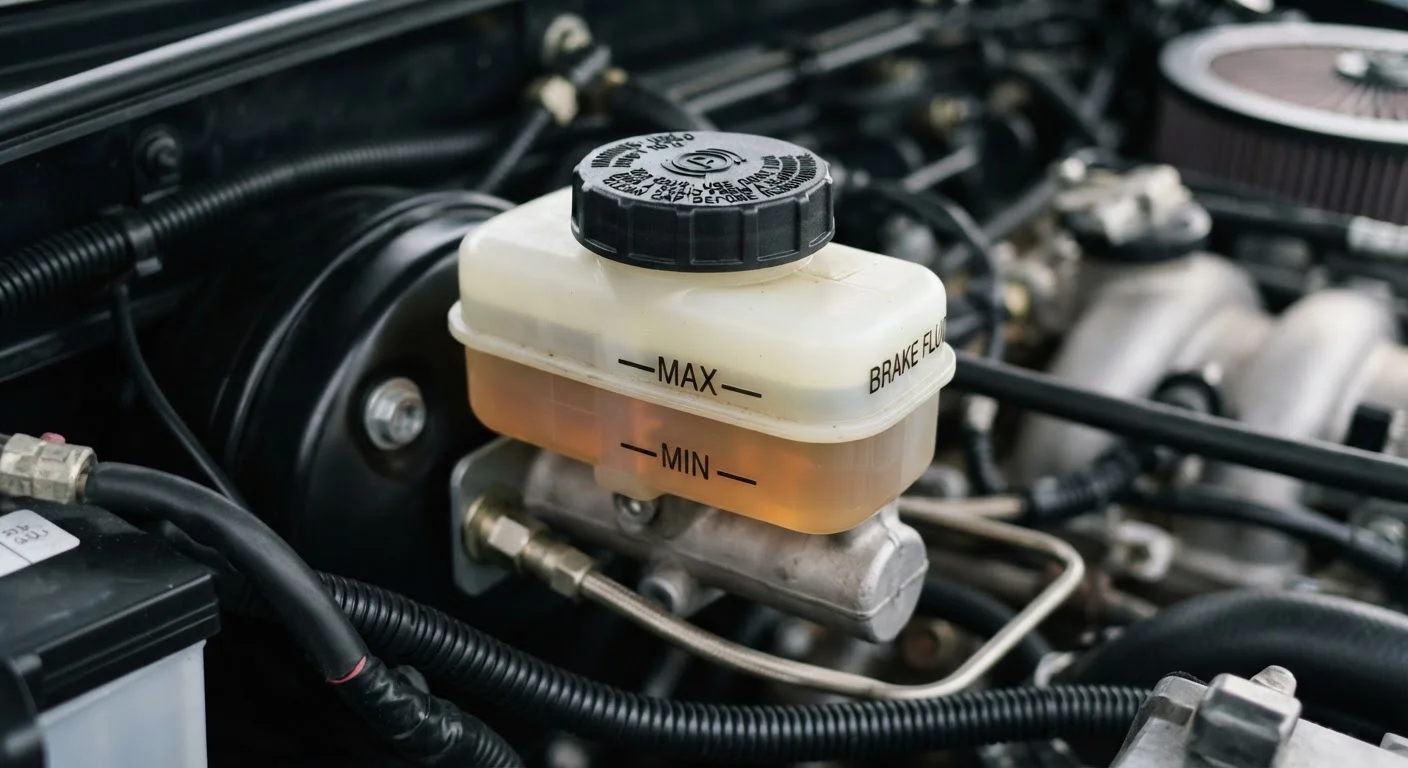
- Locate the reservoir. It's a small translucent plastic container near the back of the engine bay, usually labeled with a brake symbol or the word "brake." Your owner's manual will show the exact location.
- Check the fluid level. The reservoir has MIN and MAX lines. The level should fall between them. A level near or below MIN warrants a mechanic's attention — it may indicate normal pad wear or a leak.
- Check the color. Without opening the cap, look through the plastic. Pale yellow or clear fluid is healthy. Dark brown or murky fluid suggests it's time for a professional evaluation.
Opening the reservoir cap unnecessarily introduces air and moisture, so limit this to situations where a mechanic directs you to. For a deeper dive into what a full brake service involves, when a brake job is more than just pads explains how brake fluid fits into the larger picture.
When to Involve a Mechanic
Visual checks are useful, but certain situations call for a professional:
- The brake warning light comes on
- The brake pedal feels spongy, soft, or sinks closer to the floor than usual
- The fluid level has dropped noticeably since your last check
- You notice a small puddle of clear or light-colored fluid near a wheel
- It's been more than two years since the fluid was last replaced
A mechanic can test the moisture content of your brake fluid using an inexpensive probe, giving an objective read on whether replacement is needed. This is worth requesting during routine service appointments even if no warning signs are present.
Brake fluid replacement is not a DIY task for most drivers — the system must be bled properly to remove air, and improper handling can introduce contaminants. Leave it to a qualified technician.
This article provides general educational information about vehicle maintenance. It is not a substitute for professional mechanical advice. Always consult a licensed mechanic for inspections, diagnostics, and repairs specific to your vehicle.
Frequently Asked Questions
Most manufacturers suggest replacing brake fluid every two to three years, though recommendations vary by vehicle. Check your owner's manual for the interval specific to your car. A mechanic can also test moisture content with an inexpensive tool.
Fresh brake fluid is typically clear to light yellow. As it degrades, it turns dark brown or appears murky. If your fluid looks significantly darker than a pale golden color, it's worth having a mechanic evaluate it.
Yes — you can visually inspect the level and color through the translucent reservoir without opening it. However, adding or replacing brake fluid should be done by a mechanic to avoid introducing moisture or air into the system.
Low brake fluid can reduce hydraulic pressure in the system, making braking feel soft, spongy, or less responsive. It may also indicate a leak somewhere in the brake lines, which requires prompt professional attention.
No — they are different fluids with different chemical compositions and purposes. Using the wrong fluid in either system can cause serious damage. Always consult your owner's manual to identify the correct fluid for each reservoir.
Temperature extremes can affect brake fluid performance, so checking it as part of a seasonal routine is a sound habit. See our guide on <a href="/auto-maintenance-basics/fluids-and-filters/seasonal-fluid-checks-preparing-your-car-for-weather-changes">seasonal fluid checks</a> for a full checklist.
The content on this site is for informational purposes only and is not a substitute for professional advice. Always consult a qualified professional for guidance specific to your situation.