

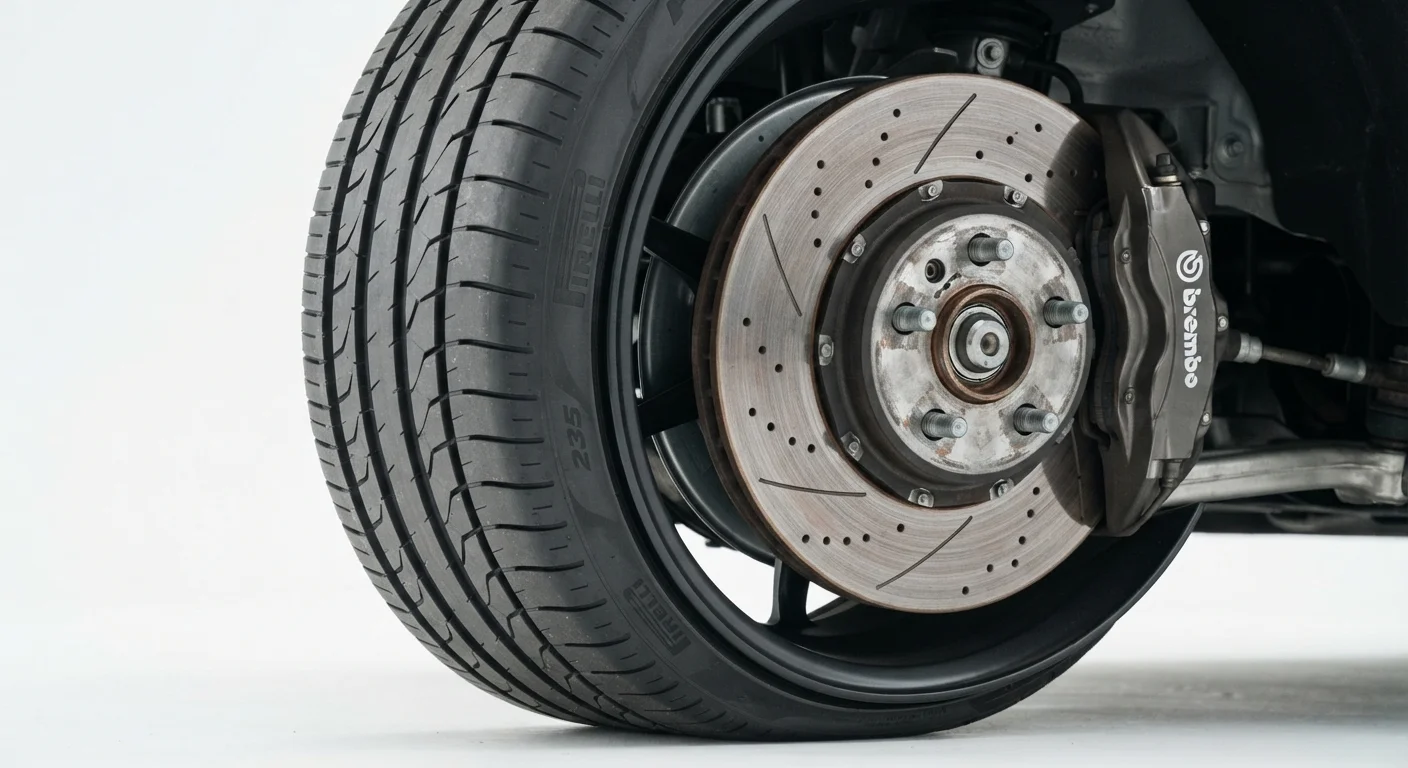
Why Tyre and Brake Myths Are Especially Risky
Of all the systems on a vehicle, tyres and brakes are the most directly tied to your ability to avoid a collision. Misinformation about how they work — or how to care for them — can quietly erode your safety margin without any obvious warning sign.
Many long-held beliefs about these components are simply wrong, and some have become more outdated as vehicles have evolved. Whether you've been driving for decades or recently returned to the road, it's worth revisiting what you think you know. For a broader look at how maintenance myths cause real-world problems, see our guide to common car maintenance assumptions.
Myth
You should pump the brakes rapidly when you need to stop in an emergency.
Fact
On vehicles with ABS (Anti-lock Braking System), you should press the brake pedal firmly and hold it down — pumping it defeats the system's purpose.
ABS — which stands for Anti-lock Braking System — was specifically designed to prevent wheel lock-up during hard braking. It does this by automatically modulating brake pressure many times per second, far faster than any driver can manually pump. When a driver pumps the pedal, they interrupt this process and can significantly extend stopping distance. Most vehicles built after the mid-1990s have ABS as standard. Press firmly, steer around the obstacle if needed, and let the system do its job. You may feel a pulsing sensation in the pedal — this is normal and means ABS is active.
Myth
If a tyre looks fine and hasn't gone flat, the pressure is probably acceptable.
Fact
Tyres can be significantly under-inflated and still appear visually normal to the naked eye. Only a pressure gauge gives you an accurate reading.
Tyres naturally lose a small amount of pressure over time — roughly 1–2 PSI per month — even without any puncture or damage. Temperature changes accelerate this: for approximately every 10°F drop in ambient temperature, tyre pressure falls by around 1 PSI. An under-inflated tyre increases rolling resistance, reduces fuel efficiency, wears unevenly, and — critically — handles less predictably in an emergency. Check pressure with a gauge at least once a month and before any long trip. The correct pressure is found on a sticker inside the driver's door jamb, not on the tyre sidewall. See also: tyre tread depth and the penny test.
Myth
A squealing noise when braking is normal and nothing to worry about.
Fact
Persistent squealing during braking is usually a deliberate wear indicator built into the brake pad — it's a signal to have the brakes inspected, not something to ignore.
Most brake pads contain a small metal tab that contacts the rotor when the friction material wears down to a low level. The resulting high-pitched squeal is intentional: it's an early warning system. Ignoring it typically leads to metal-on-metal contact between the pad backing plate and the rotor, which causes damage to the rotor itself and raises repair costs considerably. If squealing is accompanied by a grinding noise, pulling to one side, or a longer stopping distance, have the vehicle inspected by a qualified mechanic promptly. Occasional brief squealing in damp conditions first thing in the morning is generally less concerning, but any consistent noise warrants attention. Brake fluid condition is another factor that affects stopping performance and is often overlooked alongside pad wear.
Myth
A new or nearly new car doesn't need tyre or brake checks for the first year or two.
Fact
All vehicles require regular tyre pressure checks and brake monitoring from the start; age of the car is not a reliable indicator of component condition.
New vehicles can leave the dealership or sit on a lot with tyres that have already lost pressure. Brake pads on new vehicles may also be bedded-in unevenly depending on how the car was driven initially. Driving style, road conditions, and load weight all affect how quickly tyres and brakes wear — regardless of vehicle age. Newer cars may also carry a higher risk of over-confidence: drivers assume everything is fine because the car is new. Establishing routine car checks early creates habits that protect the vehicle throughout its life.
Myth
All four tyres wear at the same rate, so you only need to replace them as a full set.
Fact
Tyre wear is uneven by design: front tyres generally wear faster on front-wheel-drive vehicles, and all four tyres can wear differently depending on alignment and driving habits.
On a front-wheel-drive car, the front tyres handle both steering and power delivery, which causes them to wear more quickly than the rears. Even on all-wheel-drive vehicles, differences in wear patterns emerge over time. This is why regular tyre rotation — moving tyres between axle positions — is recommended, typically every 5,000 to 7,500 miles. Replacing only the most worn tyres without rotating the others can create imbalanced handling. Consult our explainer on tyre rotation, balancing, and alignment to understand how these three separate services each contribute to even wear and safer handling.
What the Numbers Actually Tell You
Facts about stopping distance and tyre condition are often more dramatic than drivers expect. The data below reflects why these myths carry real consequences on public roads.
40%
Increase in wet braking distance with worn tyres
Research by tyre safety organisations has found that tyres at the legal minimum tread depth of 2/32" can require up to 40% more distance to stop on wet roads compared to new tyres.
1–2 PSI
Natural monthly pressure loss per tyre
Tyres lose approximately 1–2 PSI of pressure per month through normal permeation, independent of any puncture or valve leak.
~1 PSI
Pressure drop per 10°F temperature fall
The U.S. Department of Transportation notes that tyre pressure decreases by roughly 1 PSI for every 10-degree Fahrenheit drop in ambient temperature.
If you want to go deeper on how physical forces influence stopping, our article on stopping distance and braking physics explains what happens between the moment you react and the moment the car actually stops.
Turning Correct Knowledge Into Safe Habits
Correcting a myth is only useful if it changes your behaviour. The most practical step is establishing a routine. Monthly visual checks of tyre condition and brake response take only a few minutes and can catch problems before they become dangerous. Our monthly tyre and brake safety checklist walks through exactly what to look for.
When it comes to tyre pressure specifically, seasonal changes cause more fluctuation than most drivers realise. Tyre pressure and why it changes is a practical explainer on this overlooked pattern.
And if you're unsure how to discuss findings with a mechanic, talking to a mechanic about tyres and brakes can help you ask the right questions and understand the answers you receive.
When to Stop Driving and Call a Mechanic
If you notice grinding or scraping sounds when braking, the vehicle pulling sharply to one side, a brake pedal that feels spongy or sinks toward the floor, or a tyre that repeatedly loses pressure, stop driving and seek inspection before continuing. These are not issues that can safely wait. A qualified mechanic should assess the vehicle before it is driven again.
The content on this site is for informational purposes only and is not a substitute for professional advice. Always consult a qualified professional for guidance specific to your situation.