

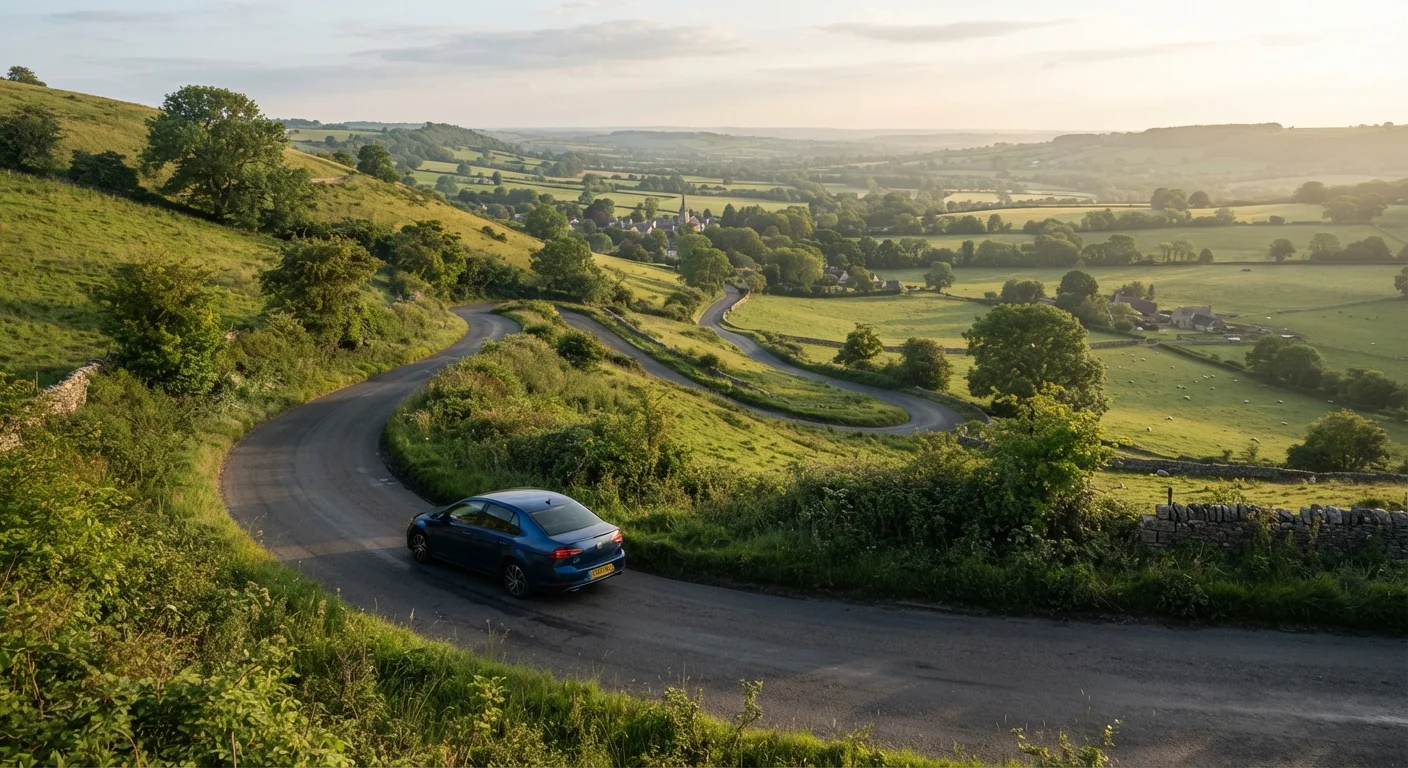
Why Hilly and Rural Roads Are Harder on Brakes
Most brake systems are engineered with everyday suburban or highway driving in mind. When you add steep descents, loose gravel, unpaved surfaces, or winding mountain roads to the mix, your brakes are asked to work significantly harder than they normally would.
On a long downhill grade, brakes convert your vehicle's motion into heat. If that heat builds up faster than it can escape, the pads and rotors reach a point where friction temporarily drops — a condition called brake fade. You may notice the pedal requires more pressure or feels less responsive. This is a safety concern, not just a comfort issue.
Rural roads also expose brake components to grit, dust, mud, and moisture far more than city driving does. These contaminants wear pads unevenly, cause rotors to rust more quickly, and can work their way into brake hardware. Understanding these extra demands is the first step toward managing them. See our complete introduction to tyre and brake maintenance for broader context on how these systems work together.
Best Practices for Protecting Your Brakes on Descents and Rural Roads
The habits below are straightforward adjustments that can meaningfully extend brake life and keep stopping power reliable in demanding driving conditions.
Use engine braking on long downhill stretches instead of riding the brake pedal.
Continuously pressing the brake pedal on a descent generates sustained heat that can lead to brake fade. Shifting to a lower gear (or using the 'L' or engine-braking mode on automatic transmissions) lets the engine slow the vehicle, giving brake components time to cool between applications.
Slow down before entering gravel or unpaved sections of road.
Braking heavily on loose surfaces reduces stopping effectiveness and kicks debris into brake components. Reducing speed while still on pavement means you rely less on the brakes once conditions are unpredictable underfoot.
Give your brakes time to cool after a demanding descent before parking.
Parking immediately after heavy brake use traps heat in the system. Brake fluid and rotor metal expand under heat; gradual cooling prevents warping and fluid degradation. A short level drive at low speed allows heat to dissipate naturally.
Inspect brake fluid condition at least once a year if you drive rural roads regularly.
Brake fluid absorbs moisture over time, which lowers its boiling point and makes it more vulnerable to fade under the extra heat that hilly driving creates. Dark or murky fluid is a sign it may need changing. Learn more in our guide to brake fluid.
Have brake pads, rotors, and hardware professionally inspected at least annually.
Visual checks from outside the wheel can miss worn pad material, hairline rotor cracks, or seized caliper hardware — all of which are more common when driving in demanding terrain. A mechanic can measure pad depth and rotor thickness directly.
Quick Checks You Can Do Before and After a Hilly Drive
You don't need a mechanic's toolkit to catch early warning signs. A few simple observations before and after a demanding drive can reveal a lot.
For a structured monthly routine, our monthly tyre and brake safety checklist walks through each check step by step. And if you notice anything unusual during these checks — grinding, a soft pedal, or visible fluid leaks — it's worth reading about what a full brake job can involve before your mechanic appointment.
When to Skip DIY and Call a Mechanic
If your brake pedal pulses underfoot when you stop, the vehicle pulls to one side during braking, or you hear grinding rather than squealing, these are signs that pads may be fully worn or a rotor could be damaged. Do not delay having these symptoms evaluated by a qualified mechanic. Driving on compromised brakes — especially on rural or hilly roads — significantly increases stopping distance and risk.
This article provides general educational information about brake care and is not a substitute for a professional vehicle inspection. Always consult a qualified mechanic for concerns about your specific vehicle's braking system.
The content on this site is for informational purposes only and is not a substitute for professional advice. Always consult a qualified professional for guidance specific to your situation.