

Why the Engine Bay Tells You So Much
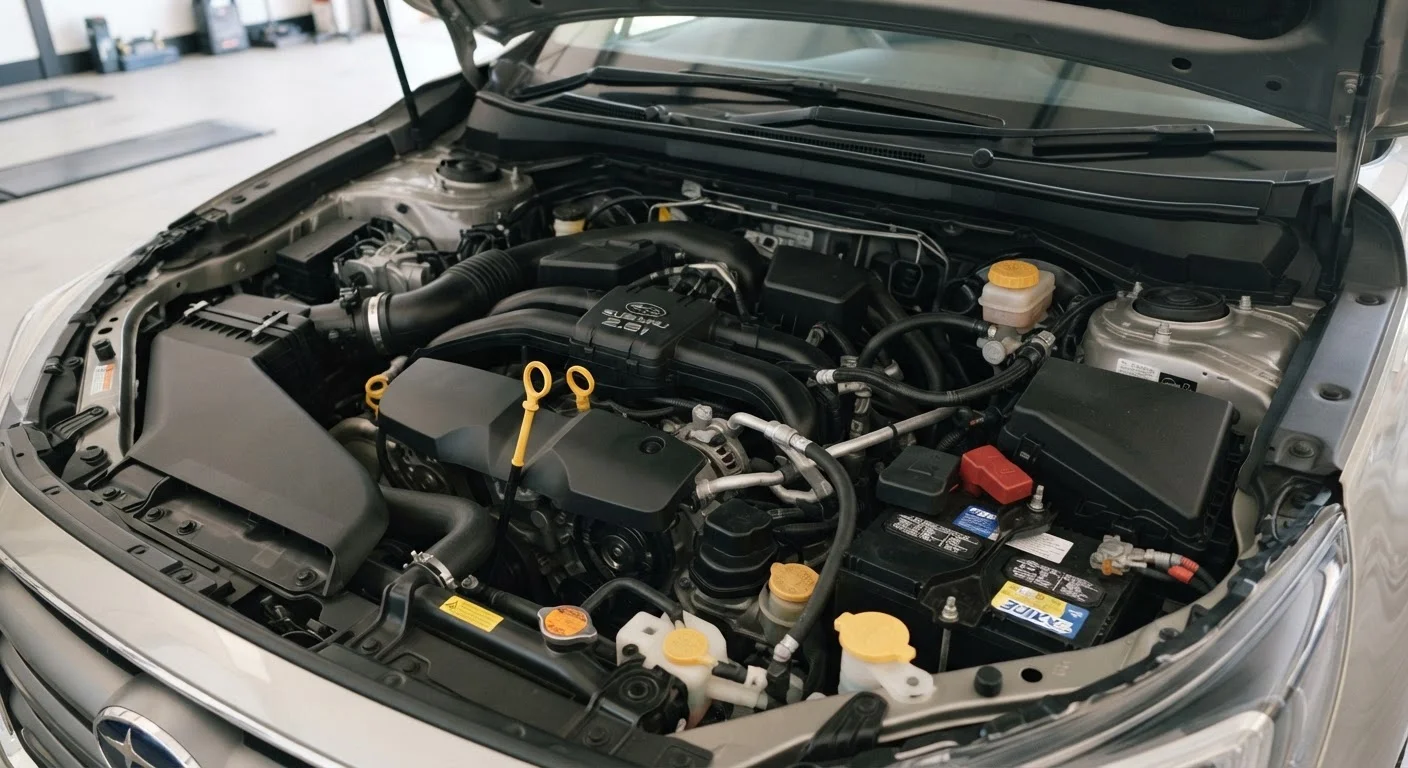
The engine bay is one of the most honest parts of any used car. Unlike a freshly vacuumed interior or a new coat of wax on the outside, what's under the hood is harder to disguise quickly. Neglected maintenance, old leaks, and worn components tend to leave visible evidence — if you know where to look.
This isn't about diagnosing complex mechanical faults. It's about doing a confident visual scan that helps you decide whether a car has been reasonably cared for. Paired with a walk-around exterior check and an interior inspection, an engine bay look-over gives you a much fuller picture of what you're actually buying.
Always start with the engine off and fully cooled. Pop the hood, prop it open securely, and give yourself a few minutes of good light — a small flashlight helps.
The Four Things Worth Checking First
Most of what matters in an engine bay can be grouped into four areas: fluids, belts and hoses, the battery, and general cleanliness.
~$4,000
Average cost of a head gasket repair
Head gasket failures — often detectable by milky oil — are among the most expensive repairs a used car buyer can inherit, with typical US repair costs ranging from $1,500 to over $4,000 depending on the vehicle.
30+ min
Cooling time before safe engine inspection
Industry safety guidance consistently recommends waiting at least 30 minutes after engine shutdown before opening the radiator cap or touching engine components, to avoid burns from pressurized coolant.
1. Fluid Levels and Color
Every car has clearly marked reservoirs for engine oil, coolant, brake fluid, power steering fluid (on older vehicles), and windshield washer fluid. On most cars these are translucent plastic containers with min/max lines on the side — you can check levels at a glance.
Pull the oil dipstick (usually a brightly colored loop or handle), wipe it clean, reinsert it fully, then pull it out again to read the level. The oil should sit between the two markers. Color matters too: light amber is healthy; jet black and gritty suggests overdue oil changes; milky or foamy points to a potential head gasket issue — a costly repair.
Coolant (antifreeze) sits in its own reservoir and should be at the correct fill line. It's usually green, orange, or pink. A low coolant level with no obvious explanation is worth querying with the seller.
2. Belts and Hoses
Look for any rubber belts or hoses you can see without moving anything. They should look firm and smooth — not cracked, frayed, or brittle. Squeeze an accessible hose gently; it should feel slightly firm, not mushy or rock-hard. Worn belts and perished hoses are relatively inexpensive to replace, but they signal that other maintenance may have been skipped too. For more on what routine fluid and filter upkeep involves, see the Fluids & Filters maintenance guide.
3. The Battery
Look at the battery terminals — the metal connectors attached to the two posts. A little surface grime is common, but heavy white or blue-green crust (corrosion) suggests the battery is aging or has been leaking. Check that the battery is held down securely in its tray. A loose battery is both a mechanical and safety concern.
4. General Cleanliness and Leaks
A reasonably maintained engine won't be spotless, but it shouldn't be caked in grease either. Look at the underside of the engine block and around hose connections for wet, oily patches — these suggest active leaks. Be cautious if the engine looks suspiciously steam-cleaned; sellers sometimes do this before a sale to hide leak evidence.
Bring a Flashlight and an Old Rag
A small LED flashlight makes a huge difference when checking dark corners of the engine bay. An old rag is handy for wiping the dipstick cleanly before re-reading the oil level. Neither item costs anything to bring, and both make your inspection noticeably more effective.
When to Step Back and Bring in a Professional
A visual check is valuable, but it has limits. You can't assess internal engine wear, transmission condition, or emissions system health without diagnostic tools. If anything you've seen gives you pause — unusual fluid colors, obvious leaks, corrosion, or a seller who discourages close inspection — it's worth arranging a pre-purchase inspection by a qualified mechanic before you hand over any money.
This isn't excessive caution; it's standard practice for informed buyers. Our full guide to used car inspection preparation walks through how to set that up and what to ask. For a handy summary of which checks you can handle yourself versus which need a professional, the when to check it yourself guide is a useful reference.
The engine bay check isn't meant to replace expert assessment — it's meant to help you walk in informed and walk away if something looks seriously wrong before you've committed to anything.
This article is for general informational purposes only. It does not constitute mechanical, financial, or legal advice. Always consult a qualified mechanic before making a vehicle purchase decision based on a visual inspection.
Frequently Asked Questions
No. A basic visual check is well within reach for anyone who knows what to look for. You're not diagnosing problems — you're spotting visible warning signs like low fluid, corrosion, or worn belts. A qualified mechanic should handle anything that needs a closer look.
Inspect the engine after it has been sitting for at least 30 minutes and has fully cooled down. A cold engine is safer to be near and makes it easier to spot fresh oil leaks, which show up as wet spots on the engine block or underneath the car.
Engine oil darkens naturally with use, so some discoloration is normal. Very black, gritty oil suggests the oil hasn't been changed on schedule — a sign of deferred maintenance. Milky or foamy oil is more serious and can indicate coolant mixing with oil, which points to a head gasket problem.
Surface grime isn't automatically a dealbreaker, but a heavily soiled engine bay can hide leaks and damage. Be cautious if a bay looks suspiciously steam-cleaned — sellers sometimes do this to mask oil leaks before a sale.
Yes, on virtually all conventional gasoline and diesel cars. Electric vehicles have a different layout with fewer fluid reservoirs, but still have a frunk or service area worth inspecting. The same general principle applies: look for anything that appears unusual, damaged, or leaking.
The content on this site is for informational purposes only and is not a substitute for professional advice. Always consult a qualified professional for guidance specific to your situation.