

Start here
Why Preparation Makes All the Difference
Get ready
What to Bring to a Used Car Viewing
Before you go
Questions to Ask Before You Arrive
On the day
What to Look For During the Inspection
Final step
When to Walk Away — and What to Do Next
Why Preparation Makes All the Difference
Walking into a used car viewing without a plan puts you at a disadvantage. Sellers — private or commercial — are familiar with the car's history. You are not. The gap between what they know and what you know can be expensive if left unaddressed.
Preparation levels that playing field. Seniors, in particular, benefit from a structured approach: having a checklist, knowing which questions to ask, and understanding the basic warning signs means you spend your time at the viewing gathering useful information rather than feeling rushed or uncertain.
Before you even schedule a viewing, it's worth reviewing key terms every senior should know when searching for a used car so that phrases like 'as-is sale' or 'salvage title' don't catch you off guard.
VIN
Vehicle Identification Number — a unique 17-character code assigned to every car that can be used to look up its history, ownership records, and accident reports.
Clean title
A title that shows the vehicle has never been declared a total loss by an insurer. A 'salvage' or 'rebuilt' title means the car was previously damaged severely enough that the insurer wrote it off.
As-is sale
A sale in which the buyer agrees to accept the vehicle in its current condition with no warranty or guarantee from the seller. Any problems discovered after purchase become the buyer's responsibility.
Pre-purchase inspection (PPI)
An examination of a used vehicle by an independent, licensed mechanic before the buyer completes the purchase. It is designed to identify mechanical problems the buyer might not otherwise detect.
Lien
A legal claim a lender holds on a vehicle when money is still owed on it. Buying a car with an unresolved lien can create serious legal complications for the new owner.
Service records
Documentation of maintenance and repairs performed on a vehicle over time, such as oil changes, brake work, or recalls. A complete service history gives buyers greater confidence in how the car was maintained.
What to Bring to a Used Car Viewing
Showing up with the right tools makes your inspection more thorough and less stressful. Here's what experienced buyers typically bring:
- A printed checklist: A step-by-step reference keeps you from forgetting key areas under pressure. The pre-purchase used car inspection checklist covers exterior, interior, engine, tires, and the test drive in printable format.
- A flashlight: Even in daylight, a flashlight helps you see under the hood, beneath the car, and inside the trunk corners where rust often hides.
- A notepad or phone: Write down what you observe. Photos are especially useful for documenting scratches, rust spots, or anything you want to research later.
- A trusted companion: A second set of eyes is invaluable. A friend or family member can watch for things you miss and help you stay calm if a seller applies pressure.
- The vehicle listing and VIN: Cross-check the VIN on the listing against the one on the dashboard and the title. Discrepancies are a serious red flag.
Schedule Viewings in Daylight Hours
Artificial lighting masks paint inconsistencies, rust, and body repairs that are easy to spot in natural daylight. Aim to schedule your viewing between mid-morning and early afternoon for the best visibility. If a seller is only available at night or in a poorly lit location, ask to reschedule.
Questions to Ask Before You Arrive
Calling or emailing the seller before your visit saves you a wasted trip — and reveals a lot about how forthcoming they're willing to be. Key questions to ask in advance include:
- Why is the vehicle being sold?
- How many previous owners has it had?
- Has it been in any accidents? Was any bodywork done?
- Are service records available?
- Is the title clean, or is there a lien on the vehicle?
- Will you share the VIN so I can run a vehicle history report?
Vague or evasive answers to straightforward questions are worth noting. For a fuller breakdown of what each answer should tell you, see questions worth asking a seller before committing to a used car.
The inspection experience also differs depending on whether you're dealing with a dealer or a private individual. Adjusting your approach for each can help you set the right expectations before you go.
What to Look For During the Inspection
Arrive in daylight — poor lighting hides paint imperfections, rust, and body damage. Start outside the car and work your way in methodically.
Exterior
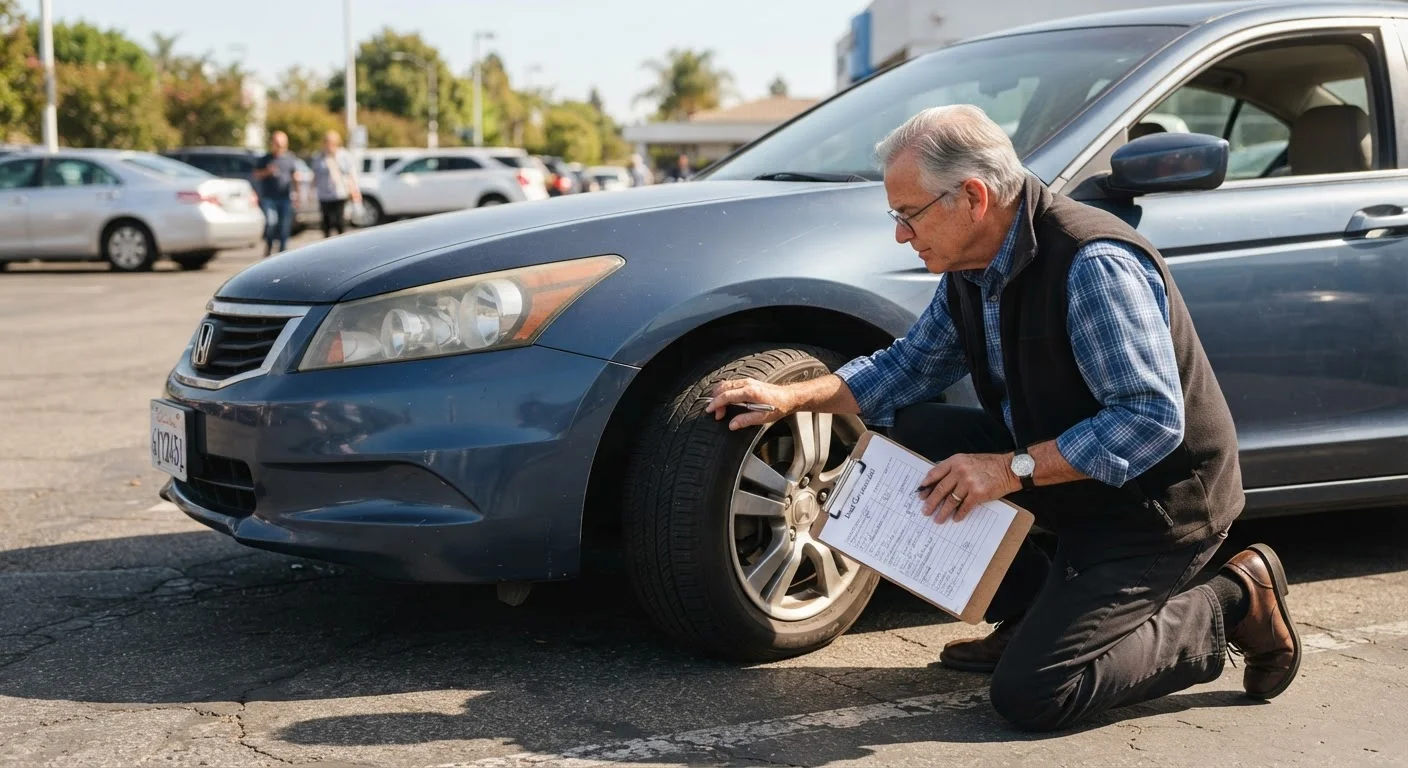
Walk slowly around the car, looking along each panel from a low angle. Uneven panel gaps, mismatched paint shades, or rippled metal may indicate prior collision repairs. Check the wheel arches and door sills for surface rust, which can spread quickly. Reading a used car's exterior before you open the door offers a detailed breakdown of this process.
Interior
Check that all controls — windows, mirrors, seat adjustments, air conditioning, and audio — work as expected. Look for water stains on the ceiling fabric or carpet, which can indicate a leak. Confirm that all safety belts latch and retract properly.
Under the Hood
You don't need to be a mechanic to spot basic problems. Look for oil residue on the outside of the engine, corroded battery terminals, and hoses that are cracked or soft. Check that fluid levels are within their marked ranges.
Dashboard Warning Lights
Turn the ignition to the 'on' position before starting the engine — warning lights should illuminate briefly, then go out. Any light that stays on after the engine starts should be investigated. Don't accept a seller's reassurance without verification.
The Test Drive
Drive on different road types if possible. Notice whether the car pulls to one side, vibrates at speed, or hesitates during acceleration. Brakes should feel firm and responsive. Unusual sounds — knocking, rattling, or grinding — deserve follow-up.
Never Skip the Paperwork Check
Physical condition matters, but paperwork problems can be even costlier. Always verify that the VIN on the dashboard matches the one on the title and the seller's listing. A mismatched or altered VIN is a serious legal and financial risk. Common oversights like skipping the paperwork review are detailed in inspection mistakes that cost buyers later.
For a safety-specific focus, safety features to confirm before finalising a used car purchase walks through driver-assist systems worth verifying on any used vehicle you're seriously considering.
When to Walk Away — and What to Do Next
Not every car is worth pursuing further, and recognising that is a skill. Walk away — or at minimum, pause — if you encounter: a seller who refuses a mechanic inspection, a VIN that doesn't match across documents, dashboard warning lights that can't be explained, or obvious signs of flood or fire damage inside the vehicle.
If the car passes your initial review, the next step is arranging a professional pre-purchase inspection. Why a pre-purchase inspection by a mechanic is worth the cost explains what this typically involves and why it's considered a standard protective step, not an optional extra.
Once you've completed both the viewing and the mechanic's report, you'll be in a strong position to move forward. The pre-purchase checklist for seniors covers the final steps before committing to any vehicle.
This article is for general informational purposes only and does not constitute financial, legal, or professional mechanical advice. Vehicle condition, pricing, and regulations vary widely. Consult a qualified mechanic and, where appropriate, a licensed adviser before making a purchase decision.
Frequently Asked Questions
Bring a printed inspection checklist, a flashlight, and a notepad to record your observations. It also helps to bring a trusted friend or family member for a second opinion. Having the seller's contact details, the vehicle's listing, and any prior communication on hand is useful too.
Yes, and it's strongly encouraged. A reputable seller — whether a dealer or private individual — should have no objection to you arranging an independent pre-purchase inspection. If a seller refuses this request, that itself is a reason for caution.
Mismatched paint panels, rust around door seams or wheel arches, dashboard warning lights that won't clear, and a vehicle that has difficulty starting are all common warning signs. Inconsistent service records or a VIN that doesn't match the title are serious paperwork red flags.
Yes. A test drive reveals issues that a stationary inspection cannot, such as pulling to one side, unusual engine sounds under load, or difficulty shifting gears. Drive it on both surface streets and at highway speeds if possible.
You can request a vehicle history report using the car's VIN (Vehicle Identification Number). These reports are available from several providers and can show accident history, title status, odometer readings, and previous owners. The seller should be willing to share the VIN in advance.
Each option carries different risks and protections. Dealers are subject to consumer protection regulations and may offer limited warranties, while private sellers typically sell 'as-is.' Your inspection approach should be adjusted depending on the source. For more detail, see guidance on how each scenario differs.
The content on this site is for informational purposes only and is not a substitute for professional advice. Always consult a qualified professional for guidance specific to your situation.