

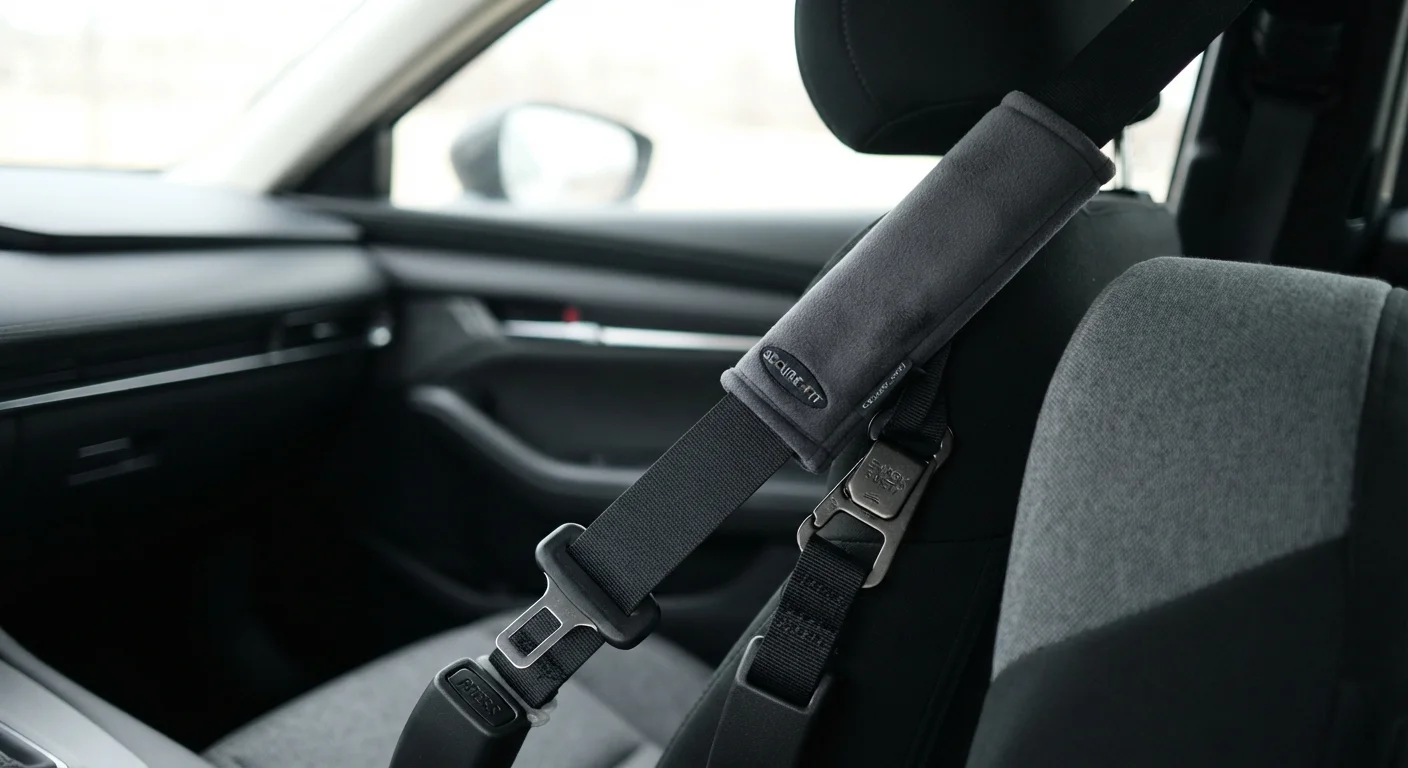
What These Accessories Are and Why They Matter
Seat belts are the single most effective restraint system in a passenger vehicle, yet a poor fit can make them genuinely uncomfortable — or in some cases, cause older drivers to wear them incorrectly. Seat belt extenders and shoulder pad guides are two low-cost accessories designed to address this mismatch between a standard belt geometry and the physical reality of many older or larger drivers.
This reference covers what each accessory does, who is most likely to benefit, and the safety considerations you should understand before adding either to your vehicle. For a broader look at adaptive in-cabin aids, see types of adaptive car accessories.
| Accessory category | Seat belt comfort and fit aids |
| Primary users | Older adults, larger-frame drivers, post-surgery passengers |
| Seat belt extender function | Adds 6–12 inches of usable belt length |
| Shoulder pad function | Cushions strap pressure across chest and shoulder |
| Critical fit requirement | Extenders must match specific vehicle buckle type |
| Manufacturer extenders | Some automakers supply certified extenders — contact dealer |
Seat Belt Extenders: Definition and Use
A seat belt extender is a short auxiliary strap that clips into a vehicle's existing buckle receiver and adds usable belt length — typically between 6 and 12 inches. The vehicle's original latch tongue then clicks into the extender's own receiver, completing the buckle connection.
Who typically uses one
- Drivers or passengers with a larger abdominal or chest circumference who find the standard belt too tight or difficult to buckle comfortably.
- People recovering from abdominal surgery who cannot tolerate lap-belt pressure against the midsection.
- Riders with limited shoulder or arm mobility who struggle to reach the retracted belt without an extension.
Key safety considerations
- Extenders must be compatible with your specific vehicle's buckle type. There is no universal standard; latch dimensions vary by manufacturer and model year. Using a mismatched extender can prevent full engagement and create a false sense of security.
- Some automakers supply certified extenders for their own vehicles at no charge — it is worth contacting the manufacturer's customer service line before purchasing a third-party product.
- Extenders should never be used to position the lap belt across the stomach rather than the hip bones. Correct lap-belt positioning over the pelvis is critical for crash protection regardless of belt length.
- Adding an extender changes the geometry of the belt system. If you are uncertain about fit or compatibility, consult a certified occupant protection specialist or a dealership service department.
Before fitting any belt accessory, review the checklist in Before You Add Any Safety Accessory to Your Car, Check This First.
Seat belt extender
A short auxiliary strap that clips into a vehicle's existing buckle receiver to add belt length. The original belt tongue then clips into the extender, completing a longer buckle connection.
Shoulder pad guide
A padded sleeve or cushion that wraps around the diagonal section of a seat belt strap to reduce friction, pressure, and chafing where the belt crosses the chest and shoulder.
Three-point belt
The standard automotive seat belt design that combines a lap belt across the hips with a diagonal shoulder belt across the chest, anchored at three points in the vehicle.
Belt retractor
The spring-loaded spool mechanism inside the seat belt housing that feeds, retracts, and locks the belt webbing. A properly functioning retractor is essential for crash protection.
Occupant protection specialist
A trained professional, often affiliated with a hospital or rehabilitation program, who assesses vehicle fit and adaptive equipment needs for drivers with specific physical requirements.
Shoulder Pad Guides: Definition and Use
A shoulder pad guide — also called a seat belt shoulder pad or strap cover — is a padded sleeve or clip-on cushion that wraps around the diagonal (shoulder) portion of a three-point belt. Its purpose is to reduce friction, pressure, and chafing where the belt crosses the chest and shoulder.
Who typically uses one
- Drivers with bony or prominent clavicles who experience localized pressure from the belt strap during longer trips.
- Older adults with thinner or more sensitive skin who find standard webbing abrasive.
- People whose shoulder belt naturally rides too close to the neck, causing discomfort or leading them to tuck the belt behind their back — an unsafe habit.
Key safety considerations
- A shoulder pad should not reposition the belt away from the chest and onto the neck or face, nor should it cause the belt to sit off the shoulder entirely. If a pad changes the routing of the belt significantly, it is not the right fit for that vehicle's anchor geometry.
- Thick or bulky pads can interfere with the belt's retractor mechanism. Choose a slim, low-profile design and confirm the retractor still feeds and retracts smoothly after fitting.
- Pads that incorporate a strap guide clip — a small plastic or metal anchor that attaches to the seat or clothing — can help hold the shoulder belt in a more comfortable position without altering restraint performance, but fit should still be verified.
- These accessories address comfort, not crash protection directly. A well-positioned belt that the driver actually wears correctly provides more protection than a perfectly padded belt that has been routed incorrectly to avoid the cushion.
For more on how these accessories affect day-to-day comfort, see Seatbelt Extenders and Shoulder Pad Covers: Small Additions with a Real Comfort Impact.
When Discomfort Leads to Unsafe Habits
One of the most common unsafe responses to belt discomfort is tucking the shoulder strap behind the back or under the arm to avoid chest pressure. This effectively eliminates upper-body restraint in a collision. If standard belt geometry causes enough discomfort that you are tempted to modify how you wear it, that is a signal to explore properly fitted accessories — or seek guidance from an occupant protection specialist — rather than to bypass the belt system. No comfort accessory is worth using if it encourages incorrect belt wear.
Comparing the Two Accessories at a Glance
| Feature | Seat Belt Extender | Shoulder Pad Guide |
|---|---|---|
| Primary purpose | Add usable belt length | Reduce strap pressure and chafing |
| Fit requirement | Must match vehicle buckle type exactly | Must not alter belt routing or retraction |
| Who benefits most | Larger body frames; limited shoulder reach | Sensitive or bony shoulders; belt-chafe prone |
| Safety risk if misused | Incomplete buckle engagement; incorrect lap position | Rerouted belt off chest or shoulder |
| Manufacturer option available? | Often yes — check with dealer first | Rarely — typically aftermarket only |
Both accessories are simple in concept but require attention to detail during selection and installation. Older drivers looking for broader comfort solutions may also find value in grab handles, assist grips, and swivel cushions that support entry and exit rather than in-seat comfort alone. For a complete picture of ergonomic vehicle design, see Comfort and Easy Access in Cars: A Complete Overview for Older Drivers.
This article provides general information about vehicle accessories for educational purposes only. It is not a substitute for guidance from a certified occupant protection specialist, a licensed mechanic, or the vehicle manufacturer. Accessory compatibility and safety outcomes vary by vehicle, individual, and product. Always verify fit and function with a qualified professional before use.
The content on this site is for informational purposes only and is not a substitute for professional advice. Always consult a qualified professional for guidance specific to your situation.