

Why Seatbelt Discomfort Is a Real Concern for Older Drivers
Seatbelts are essential safety equipment, but for many older adults, wearing one on every trip can feel genuinely uncomfortable. Skin becomes thinner and more sensitive with age, making the diagonal shoulder strap feel abrasive rather than simply snug. Conditions like osteoporosis, kyphosis (a forward rounding of the spine), or previous chest and abdominal surgeries can also change how a standard belt sits across the torso — sometimes pressing on sensitive areas with every bump in the road.
This discomfort matters beyond simple irritability. If a driver repositions the belt to avoid pressure — tucking the shoulder strap behind their back or under their arm — they substantially reduce the belt's protective effect in a crash. Addressing discomfort properly, rather than working around it in unsafe ways, is exactly the purpose these small accessories serve.
For broader context on how physical changes with age affect the driving experience, the Comfort & Easy Access hub covers a range of adaptive strategies worth exploring.
~90%
U.S. front-seat seatbelt use rate
According to the National Highway Traffic Safety Administration, front-seat belt use in the U.S. consistently exceeds 90%, underlining that belts are worn on virtually every trip — making comfort directly relevant to daily driving.
45%+
Drivers over 65 reporting physical driving discomfort
Research into older driver needs has found that a significant proportion of adults over 65 experience musculoskeletal discomfort during driving, with upper body and shoulder contact points frequently cited.
How Seatbelt Extenders Work — and When They Help
A seatbelt extender is a short strap, typically six to twelve inches long, with a buckle tongue on one end and a buckle receiver on the other. You insert the extender's tongue into the vehicle's existing buckle, then click your regular seatbelt into the extender's receiver. The result is a belt system with added length, which allows the lap and shoulder portions to rest across the body with less tension.
This is particularly useful when the standard belt pulls tightly across the abdomen — a common issue for those with a larger midsection or post-surgical abdominal sensitivity. It can also help the shoulder strap clear the collarbone more comfortably if the built-in shoulder-height adjuster doesn't provide enough range.
Check Buckle Compatibility Before You Buy
Not all seatbelt extenders fit all vehicles. Before selecting one, look at the shape and latch style of your current seatbelt buckle — some use a push-button release, others use a pull-tab. An extender must match your specific buckle type to engage securely. When in doubt, contact your vehicle's dealership service department for guidance on compatible options.
Compatibility is the most important factor to check. Vehicle buckles are not standardized across manufacturers, so an extender that fits a Ford may not engage correctly in a Toyota. When evaluating an extender, confirm that it is designed for your vehicle's specific buckle type and that the connection is firm and audible when clicked in. A loose or partial connection is not safe.
For a detailed practical reference on how extenders and related accessories compare, see the Seat Belt Extenders and Shoulder Pad Guides reference article.
What Shoulder Pad Covers Do Differently
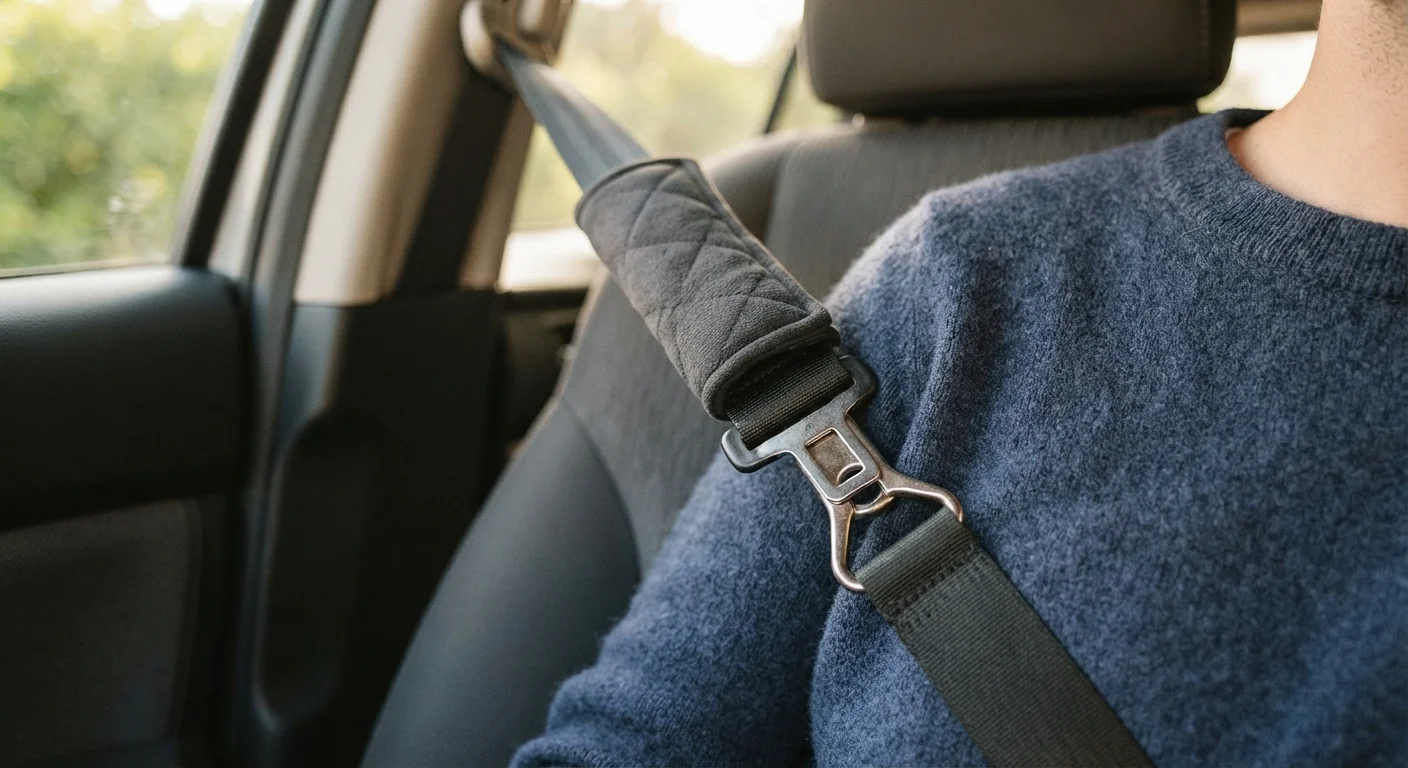
Where an extender addresses belt length and tension, a shoulder pad cover targets friction and pressure at the point of contact. These soft sleeves — commonly made from neoprene, fleece, or memory foam — wrap around the diagonal strap and fasten with a hook-and-loop closure. They create a gentler surface against the neck and chest without altering belt geometry.
For seniors with fragile or easily irritated skin, even a few minutes of belt contact during a short errand can cause redness or bruising. A padded cover distributes that contact pressure more evenly. They are also useful for anyone who finds the hard webbing edge of a belt chafing against the collarbone or neck.
The one caution worth keeping in mind: the cover should hold its position on the strap. A cover that slides toward the neck and pushes the belt inward — away from the shoulder — can compromise how the belt sits in a crash. Choose a cover that grips the strap securely and sits stably during normal driving movement.
If overall seated posture is contributing to belt discomfort, it may be worth reading about how lumbar support accessories affect posture on long drives, since how you sit directly influences where the belt falls across your body.
These Accessories Do Not Replace Proper Belt Fit
Shoulder pad covers and extenders are comfort aids, not substitutes for a correctly positioned seatbelt. The lap belt should still sit low across the hips and pelvis, and the shoulder strap should cross the chest between the neck and the shoulder — not over the neck or under the arm. If the belt cannot be made to fit correctly even with accessories, consult a certified driver rehabilitation specialist or your vehicle manufacturer.
Choosing and Using These Accessories Safely
Before adding either accessory, it is worth having a conversation with your doctor or an occupational therapist, particularly if discomfort relates to a specific medical condition. An occupational therapist who specializes in driver rehabilitation can evaluate your seating position and suggest the most appropriate solution for your physical situation.
When selecting a shoulder pad cover, look for one that attaches firmly to the strap and does not add so much bulk that it lifts the belt away from the body. Covers that are too thick can cause the shoulder strap to ride too far outward, reducing its effectiveness. A slim, well-fitted pad typically works better than a very thick one.
For extenders, the key steps are: confirm your vehicle's buckle type, test that the extender clicks in firmly with no play or wobble, and check that the lap belt still sits low across the hips rather than across the abdomen once the extender is in. If you are unsure about fit, a dealership service department or a certified car modification specialist can provide guidance.
These accessories are part of a broader set of adaptive tools available to senior drivers. Getting in and out of the vehicle comfortably is an equally important consideration — grab handles and entry aids address that part of the journey. And for those evaluating multiple seating accessories together, the comparison between swivel cushions and standard seat pads may help clarify which combination best fits your needs.
Frequently Asked Questions
A compatible, properly fitted seatbelt extender is designed to keep the belt secure and functional during a collision. However, extenders that are poorly matched to the vehicle's buckle or made to a low standard may not perform correctly under crash forces. Always verify that an extender is compatible with your specific vehicle model before using it.
A properly fitted shoulder pad cover sits on the strap and does not interfere with the belt's retraction or tensioning. It should not bunch or slide in a way that pushes the belt away from the shoulder. If the cover causes the belt to shift off the shoulder, it should not be used.
People who find the standard belt length creates pressure across the abdomen or chest benefit most — this often includes those with larger body frames, recent abdominal or chest surgery, or conditions like osteoporosis that make compression painful. A doctor or occupational therapist can advise whether an extender is appropriate.
Shoulder pad covers fit most belt styles and are largely universal. Seatbelt extenders, however, are buckle-specific — you need to match the extender's tongue style and buckle opening to your vehicle. Check your owner's manual or the vehicle manufacturer's guidance before purchasing.
Some seniors find that adjusting the height of the seat or the belt's shoulder anchor point reduces discomfort without needing an extender. Swivel seat cushions can also change your seated position slightly, which affects where the belt falls across the body.
The content on this site is for informational purposes only and is not a substitute for professional advice. Always consult a qualified professional for guidance specific to your situation.