

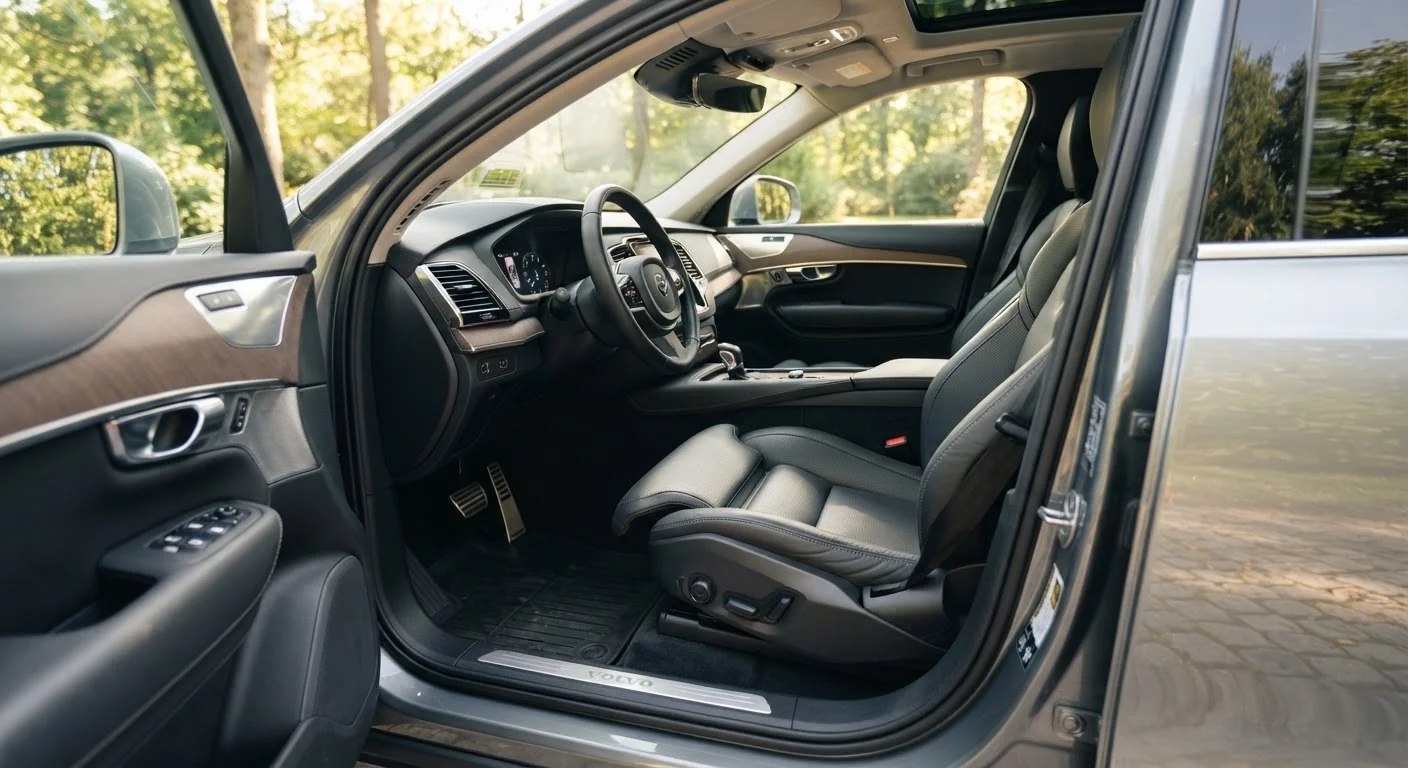
Why Ergonomic Design Matters for Older Drivers
Physical changes that often accompany aging — reduced joint flexibility, decreased grip strength, shorter reaction windows, and greater sensitivity to prolonged sitting — directly affect how comfortable and safe a vehicle feels to operate. A car that fits the driver's body well is not a luxury consideration; it is a safety factor.
Research published by the AAA Foundation for Traffic Safety has consistently noted that vehicle design features play a measurable role in crash risk among older motorists. When drivers must strain, twist, or overreach to control a vehicle, their attention and reaction time are compromised. Ergonomic design reduces those demands at the source.
This guide examines the key design dimensions — seating, entry geometry, cabin layout, and adaptive options — that matter most to drivers navigating later life. For a deeper look at driver-assist technologies that complement ergonomic design, see our hub on senior safety features.
40%
Older adults reporting difficulty entering vehicles
AAA research has found that a significant proportion of drivers aged 65 and older cite vehicle entry and exit as a meaningful physical challenge.
65+
Age group with highest per-mile crash risk
According to the CDC, drivers aged 75 and older have higher crash death rates per mile traveled than most other age groups, underscoring the importance of vehicle fit.
Seat Design and Adjustability
The driver's seat is where comfort and control intersect. For older adults, the most consequential seat attributes are height, lumbar support, cushion length, and the range of powered adjustments available.
Seat Height
A seat positioned too low forces occupants to push up from a deep squat — a motion that stresses knees and hips. Conversely, a seat positioned too high can make it difficult to clear the roofline during entry. Many crossovers and SUVs offer a seat height that falls roughly between 20 and 24 inches from the ground, a range many older drivers find easier to manage than traditional sedans.
Lumbar Support and Cushion Firmness
Adjustable lumbar support allows drivers to tailor the seat's curvature to their spine, reducing lower-back fatigue on longer trips. Look for systems that offer both height and depth adjustment rather than a single-position lumbar. Cushion firmness also matters: foam that is too soft can cause the pelvis to sink and rotate, increasing strain on the lower back.
Power Adjustability
Power-adjustable seats with memory settings allow a driver to exit and re-enter consistently without manually resetting the position — valuable when multiple people share the same vehicle. The more adjustment axes available (fore-aft, recline, height, lumbar), the better the fit can be tailored.
When assessing seat adjustability, test the full range of powered movement before sitting down — not just the position you end up in. A seat that moves far enough in every direction gives you flexibility as your physical needs change over time.
Many drivers set a seat position once and rarely revisit it, but progressive changes in posture and flexibility mean the ideal driving position may shift. Built-in flexibility future-proofs the fit.
Ask specifically whether the lumbar support adjusts both in height and in depth — many systems only offer one dimension, which may not address your particular back geometry.
A lumbar system that only pushes forward without moving up or down may not align with every spine curvature, leaving some drivers with more discomfort than no support at all.
Entry, Exit, and Door Geometry
Getting in and out of a vehicle gracefully — without grabbing the door or straining the back — depends on a combination of door opening width, roofline clearance, and door sill height.
Door Opening Width and Angle
A wider door opening reduces the need to twist the torso sideways during entry. Some manufacturers engineer doors to open to 90 degrees or beyond; others are limited to 70–75 degrees by design. Narrower openings are common on sporty or compact vehicles and can create real difficulty for anyone with reduced hip mobility.
Door Sill Height
The sill — the structural ledge at the base of the door opening — determines how high you must step over to enter. Lower sills ease entry but can be associated with lower overall seat height. Vehicles with running boards or factory step-assist options can offset a higher sill effectively.
Roofline Clearance
Taller rooflines allow drivers to enter more upright, reducing the need to duck the head, which can strain the neck. This is one reason many occupational therapists who work with older adults often note that boxier body styles tend to be functionally easier to enter and exit than low-slung coupes or sports sedans.
Avoid Relying on the Door for Support
Using the door itself as a handhold during entry and exit is a common habit but places stress on door hinges and can result in the door swinging unexpectedly. Over time, this can also contribute to imbalance during transfer. Purpose-built grab handles offer a safer and more stable alternative.
Cabin Layout and Control Accessibility
Once seated, a driver needs to reach controls, read displays, and operate ancillary functions without contorting or diverting extended attention from the road. Cabin design choices have a direct bearing on all three.
Instrument Clarity
Large, high-contrast instrument clusters and clear font sizing reduce visual strain. Heads-up displays (HUDs), which project speed and navigation information onto the windshield, can reduce the need to look down repeatedly — a benefit for older drivers experiencing any degree of bifocal adjustment.
Control Placement
Frequently used controls — climate, audio volume, and hazard lights — should be accessible without leaning forward or reaching across the body's midline. Physical knobs and buttons are generally easier for drivers with arthritis or reduced fine motor control than small touchscreen targets, which require more precision and visual attention.
Steering Wheel Adjustability
A tilt-and-telescoping steering wheel can be brought closer and angled to reduce arm reach and improve sight lines to instruments. This is a standard feature in many vehicles but worth confirming, as telescoping (fore-aft) movement is less universal than tilt alone.
Adaptive Aids and Aftermarket Solutions
When factory features do not fully meet a driver's needs, a range of adaptive aids can bridge the gap without requiring a new vehicle purchase.
- Swivel seat cushions: Rotate to face the door during entry and exit, significantly reducing hip rotation demands.
- Grab handles: Portable grab bars that attach to the door latch pillar provide a stable handhold during entry and exit.
- Steering wheel covers with grip: Textured covers improve grip for drivers with reduced hand strength.
- Pedal extenders: Bring pedals closer to shorter drivers, reducing the need to strain forward.
- Wide-angle mirror systems: Reduce blind spots without requiring the driver to turn the head as far.
For a broader review of products in this space, our guide to safety accessories for older drivers provides practical context. You can also explore the full safety accessories hub for additional options.
Try Adaptive Aids Before Buying a New Vehicle
If your current vehicle is otherwise reliable, a swivel cushion or a vehicle-specific grab handle may resolve entry difficulty at a fraction of the cost of a new car. Occupational therapists and adaptive driving specialists can recommend and fit these aids to your specific needs. Start with low-cost solutions before assuming a vehicle change is necessary.
How to Evaluate Access Features Before You Buy
Reading specifications is a starting point, but ergonomic suitability cannot be confirmed from a brochure. An in-person evaluation — ideally with a test drive and a structured entry-exit assessment — is essential.
When visiting a dealership or private seller, try the following steps systematically:
- Approach the open door from a standing position and note how far it swings open and how much clearance exists at head height.
- Lower yourself into the seat without pulling on the door or steering wheel — both are signs the entry geometry may be working against you.
- Adjust the seat to your preferred driving position and check that all primary controls are reachable without leaning.
- Exit the vehicle the same way you entered and assess whether any discomfort developed.
- Repeat the sequence on the passenger side if a regular passenger will also need easy access.
Occupational therapists who specialize in driving rehabilitation (sometimes called Certified Driver Rehabilitation Specialists, or CDRS) can provide a structured assessment that goes beyond what a standard test drive offers. This can be especially valuable for drivers managing specific physical conditions.
Our companion article on evaluating comfort and access features when shopping offers a detailed structured checklist for this process.
CDRS Assessments May Be Covered
Certified Driver Rehabilitation Specialist evaluations are sometimes covered in part by Medicare or private insurance when ordered by a physician as part of a broader rehabilitation plan. Coverage and eligibility vary by insurer and individual circumstance — consult your provider and a licensed benefits adviser for guidance specific to your situation.
The content on this site is for informational purposes only and is not a substitute for professional advice. Always consult a qualified professional for guidance specific to your situation.