

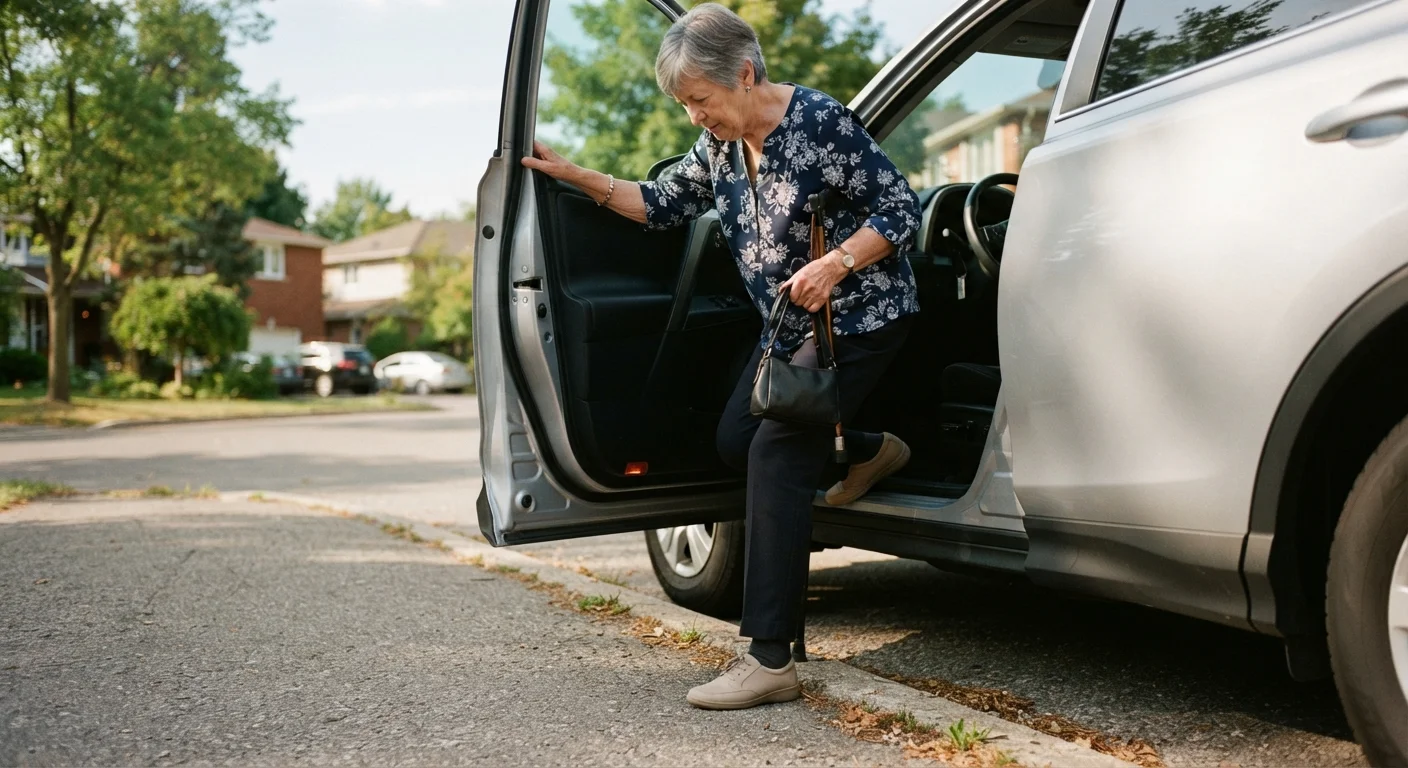
Why Getting In and Out of a Car Becomes Harder With Age
For many older adults, the simple act of stepping into or out of a vehicle can become a source of discomfort or anxiety. Reduced hip flexibility, weakened leg muscles, balance changes, and joint stiffness — common features of ageing — all affect how easily a person can manage this movement. A vehicle seat is lower than most chairs, which means getting up from it requires more effort from the legs and more stability from the core.
Vehicle design itself plays a role too. Sedans tend to sit low, which means a longer way down and a harder push back up. SUVs and crossovers sit higher, which reduces that bending distance but adds a step-up challenge. Understanding how your specific vehicle's seat height affects you is a useful starting point. Our article on seat height and getting in without the struggle explores this in more detail.
The good news is that with the right techniques and a small number of well-chosen aids, the process can become noticeably more manageable — without requiring major vehicle modifications. Comfort and mobility aids for senior drivers cover a broader range of options if you want to explore what else is available.
Slide the Seat Back Before You Exit
Before opening the door to get out, use the seat adjustment lever to slide your seat as far back as it comfortably goes. This creates more clearance between your knees and the dashboard, making it much easier to rotate your legs and stand without twisting your spine or hips.
Tools That Make Entry and Exit Safer
A handful of accessories are specifically designed to address the challenges of vehicle entry and exit. None of them are complex, and most do not require permanent installation.
Grab handle or assist grip
Attaches to the door frame or roof edge to give you a stable handhold when lowering into or rising from the seat.
Swivel seat cushion
Placed on the seat, it rotates so you can face out of the car before standing, reducing twisting of the hips and spine.
Portable car step
Hooks onto the door sill to reduce the height gap between the vehicle and the ground, especially useful for taller SUVs.
Non-slip footwear
Provides a secure foothold when stepping down, reducing the risk of slipping on wet or smooth ground.
For a broader comparison of entry-and-exit aids and how they perform in real-world use, the article on grab handles, assist grips, and swivel cushions offers a useful breakdown. If you drive a taller vehicle, portable car steps and running boards weighs the practical trade-offs worth considering before adding external steps.
Never Use the Door as a Support
Gripping the car door itself when getting in or out is a common habit that carries real risk. Car doors are not designed to bear body weight and can swing unexpectedly, causing a fall. Always reach for a fixed grab handle, the door frame, or a purpose-built mobility aid instead.
Step-by-Step: Getting In and Out With Less Strain
Follow these steps each time you enter or exit your vehicle. The sequence is designed to minimise joint loading, maintain your balance throughout, and keep both hands supported at the moments when you need it most.
What you will need
Park in a space that gives you room
Choose a parking spot with as much open space as possible on the passenger or driver side. A wider gap means you can open the door fully, giving you a larger, less obstructed entry and exit zone. Avoid spaces next to concrete pillars or high kerbs where possible.
Adjust the seat position before you exit
While still seated, slide the seat as far back as it will comfortably go. If your vehicle has a power seat, lower it slightly so there is less of a height difference between the seat and the ground. This small step significantly reduces the effort needed to stand.
Rotate your body before standing
Rather than trying to stand straight out of a forward-facing position, pivot so that both feet are fully outside the car and planted on the ground before you rise. A swivel seat cushion makes this rotation much easier if hip stiffness is a concern. See our guide to practical techniques for limited mobility for more on body positioning during this step.
Use a grab handle to push yourself upright
With both feet on the ground and your body rotated toward the open door, grip a fixed grab handle — one that attaches to the door frame or roof edge — and use it to push yourself steadily upright. Engage your leg muscles rather than pulling entirely with your arms. For guidance on choosing and fitting a handle, see our article on installing a car grab handle.
Enter by sitting down first, then swinging your legs in
When getting in, reverse the process: back up to the seat, feel it against the back of your legs, and lower yourself onto the seat first. Once seated, swing both legs in together rather than stepping in one leg at a time. A swivel cushion can assist by letting you face outward while sitting, then rotating inward once settled.
Confirm you are fully clear before closing the door
Before closing the door, check that your clothing, seatbelt, and any mobility aids are clear of the door frame. Then close the door with a firm, controlled movement. Reach for your seatbelt and adjust it for comfort — padded shoulder covers can help if the belt sits awkwardly across your chest or neck. Learn more in our article on seatbelt extenders and shoulder pad covers.
Check Your Footwear Before You Exit
Slippery-soled shoes or sandals significantly increase the risk of a foot sliding when stepping down from the vehicle. Wear footwear with a firm, non-slip sole whenever you drive, and make sure your foot is firmly planted on the ground before transferring your weight out of the seat.
Once you are comfortably seated, take a moment to adjust your seat and mirrors before driving. Our guide to adjusting your car seat and mirrors to fit your body walks through every adjustment in detail. If long drives are part of your routine, lumbar support and posture is worth reading before your next journey.
The content on this site is for informational purposes only and is not a substitute for professional advice. Always consult a qualified professional for guidance specific to your situation.