

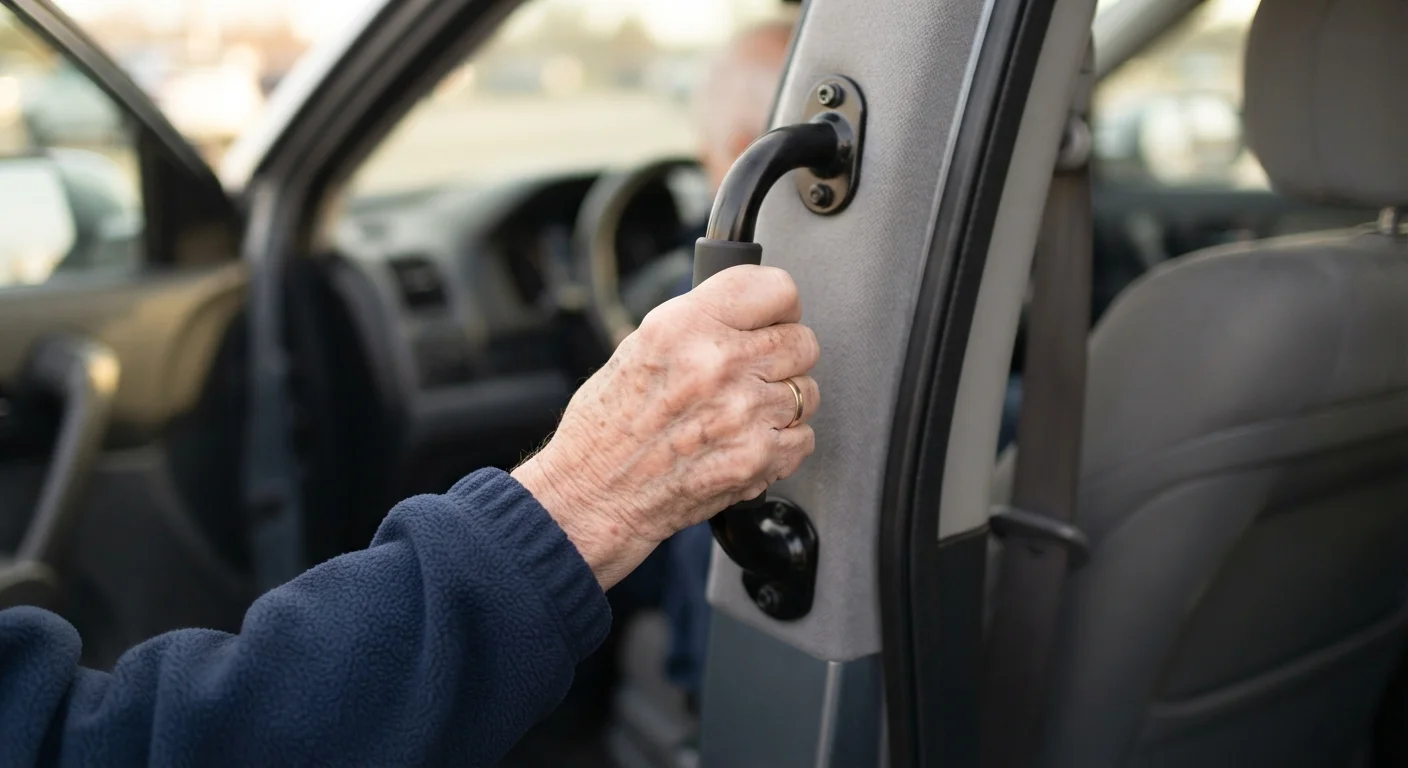
How Assist Grab Handles Work
A car door handle assist grab is a compact device — typically a padded or contoured bar — that inserts into the door latch striker on a vehicle's door frame. The latch striker is the small metal loop or post that the door's latch mechanism engages when the door closes. Because this point is located on the vehicle's body (not the door itself), an inserted grab handle remains stationary and stable while you use it.
When you open the car door, the handle is exposed and positioned at roughly waist-to-hip height, giving you something firm to grip as you lower yourself into the seat or push yourself upright to stand. Once you no longer need it, closing the door locks the handle back in place automatically.
Some models include additional features such as a non-slip grip surface, a window breaker tip for emergencies, or a built-in LED light for visibility in low-light conditions. The core mechanism, however, is consistent across most designs: a secure, no-tools attachment that activates simply by opening the door.
Not the Same as Interior Grab Handles
Many vehicles include small handles mounted above the door on the interior ceiling — sometimes called 'oh-shit handles' or 'chicken handles.' These are intended for passengers to steady themselves while the vehicle is in motion, not for entry and exit. Door handle assist grabs serve a different purpose: they are positioned at door level to support the standing-to-seated transition. The two should not be confused or used interchangeably.
Who Benefits Most From This Accessory
While anyone can find an assist grab handle useful, certain physical conditions make this accessory especially valuable. For older adults, the transition between standing and seated positions places significant demand on hip, knee, and ankle joints — as well as on core and leg muscles that may have weakened with age.
People managing the following conditions are likely to notice a meaningful difference:
- Arthritis: Joint pain and stiffness in the hands, wrists, or knees can make gripping a car roof or door edge difficult. An ergonomic assist handle reduces the force required.
- Hip or knee replacement: After joint replacement surgery, bending deeply or bearing weight unevenly during entry and exit can cause discomfort. A firm handhold allows for more controlled movement.
- Reduced grip strength: Many older adults experience a gradual decline in hand grip strength. Padded, wider-diameter handles are easier to hold than a thin door edge.
- Balance or vestibular issues: Conditions affecting balance — including inner ear disorders and certain medications — increase fall risk during the transition in and out of a vehicle.
See our guide to getting in and out of the car with less strain for a broader look at mobility aids that address these same challenges.
Try Before You Rely on It
Before depending on an assist grab handle during a solo outing, practice using it with another person present. This lets you confirm the handle seats correctly in your vehicle's latch, feels stable under your grip, and is positioned at a comfortable height for your body. A brief trial run at home is far safer than discovering a fit issue in a public parking lot.
Practical Considerations Before Using One
Assist grab handles are straightforward devices, but a few practical points are worth understanding before relying on one.
Latch striker compatibility: Standard latch strikers on most modern US passenger vehicles accept common assist grab designs. However, vehicles with flush or recessed strikers — found on some trucks, older models, or European imports — may not be compatible. If possible, check fit before committing to regular use.
Weight ratings: Manufacturers typically specify a maximum supported weight. Use only handles rated for your body weight, and treat the handle as a steadying aid rather than a full load-bearing support.
Installation: No permanent modification is required, but those with limited hand strength may find it difficult to seat the handle firmly. Understanding what the installation process involves can help you decide whether professional fitting makes sense.
Door opening width: An assist grab helps most when you can open the door wide enough to position yourself comfortably. Narrow door openings add difficulty regardless of handle use — a factor covered in depth in our article on why car door opening width matters more as you age.
For a comparison with other entry-and-exit aids — including swivel cushions and assist grips — visit our overview of grab handles, assist grips, and swivel cushions. These tools are also covered as part of a broader introduction to comfort and mobility aids for senior drivers.
36 million
Falls among US adults aged 65+ each year
According to the CDC, falls are the leading cause of injury among older adults — and vehicle entry and exit are recognized as a high-risk transition point.
~30%
Decline in grip strength between ages 50 and 80
Research published in the Journal of Hand Surgery indicates grip strength declines notably with age, making standard door edges harder to hold securely.
Frequently Asked Questions
Most models slide directly into the door's latch striker — the metal loop on the door frame where the door latches shut. No drilling or adhesive is needed. When the door closes, the handle is secured in place; when the door opens, the handle is accessible for gripping.
Most assist grab handles are designed to fit a wide range of standard passenger vehicles, SUVs, and trucks. However, latch striker designs do vary, so it's worth confirming compatibility with your specific vehicle before purchasing. Some minivans and older vehicles may have non-standard latch configurations.
Assist grab handles are generally rated to support a significant amount of weight — commonly up to 300 lbs — but they are intended to assist with balance and leverage, not to bear full static body weight. Always check the weight rating specified for any device you consider using.
Older adults with arthritis, hip or knee replacements, reduced grip strength, or balance challenges typically find these handles most useful. They are also helpful for anyone recovering from surgery or living with a condition that affects lower-body mobility.
Yes. Most assist grab handles can be used on any door with a compatible latch striker, so both drivers and passengers can benefit. You would simply move the handle between doors as needed, or purchase more than one.
The content on this site is for informational purposes only and is not a substitute for professional advice. Always consult a qualified professional for guidance specific to your situation.