

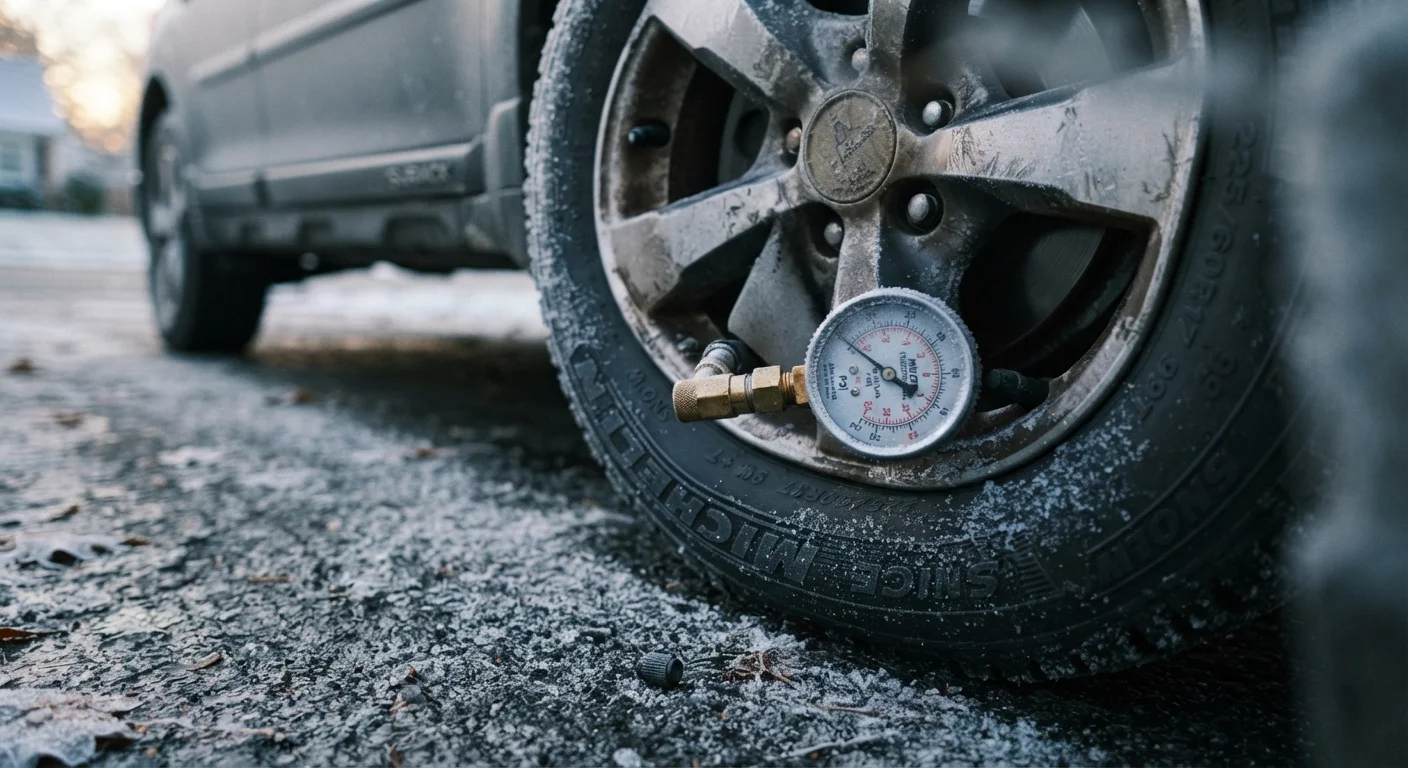
Why Air Pressure Responds to Temperature
The air inside your tires behaves like any gas — it expands when heated and contracts when cooled. This isn't a flaw or a slow leak; it's straightforward physics. When temperatures drop overnight in autumn or winter, the air molecules inside the tire slow down and take up less space, reducing the pressure pushing outward against the tire walls. The reverse happens in summer: heat causes those molecules to speed up, increasing pressure.
This effect is significant enough to matter in everyday driving. A tire that reads correctly on a mild fall afternoon may be noticeably underinflated by a cold winter morning. Similarly, a tire filled on a cool morning may read slightly high after sitting in direct summer sun for hours.
Temperature Change vs. Air Leak: How to Tell the Difference
If your tire pressure drops predictably with colder weather and returns to normal when temperatures rise, temperature change is the likely cause. If pressure continues to fall regardless of temperature — or drops suddenly — you may have a slow leak or valve stem issue. In that case, have a qualified mechanic inspect the tire. Do not attempt to drive on a tire that appears visibly flat or has dropped more than 5–6 PSI overnight without a corresponding temperature drop.
How Much Does Pressure Actually Change?
Automotive professionals commonly reference a rule of thumb: tire pressure changes by approximately 1 PSI for every 10°F shift in temperature. While this is an approximation rather than a precise formula, it gives a useful sense of scale.
Consider a practical scenario: if your tires are correctly set at 32 PSI on a 70°F day in late September, and the temperature drops to 20°F by January — a 50°F difference — you might expect those tires to read around 27 PSI. That 5 PSI gap is enough to affect handling, braking performance, and fuel economy noticeably.
~1 PSI
Pressure change per 10°F temperature shift
This approximation is widely referenced by tire manufacturers and automotive safety organizations as a practical planning guide.
25%
Of vehicles estimated to have at least one under-inflated tire
U.S. government safety research has consistently found a significant portion of passenger vehicles on the road are operating below recommended tire pressure.
3 hours
Minimum rest time before checking cold tire pressure
Most tire and vehicle manufacturers define "cold" tires as those that have not been driven in at least three hours, or driven fewer than one mile at low speed.
For context on how tire type interacts with seasonal conditions, see our article on all-season tire trade-offs — including how cold-weather grip is affected by more than just pressure.
Reading the Right Number and Checking Correctly
One of the most common mistakes drivers make is inflating tires to the pressure printed on the tire's sidewall. That number is the maximum the tire is rated to hold — not the target for everyday driving. The correct recommended pressure for your specific vehicle is printed on a sticker located on the inside edge of the driver's door, sometimes called the door jamb placard. It may also appear in your owner's manual.
Equally important is when you check. Always measure pressure when tires are cold — meaning the vehicle has been parked for at least three hours or driven fewer than a mile at low speed. Driving heats the air inside the tire and temporarily raises the reading, which can cause you to underinflate if you're trying to bring it down to the recommended figure.
Check Pressure Before Your Morning Drive
The best time to check tire pressure is first thing in the morning, before the vehicle has been driven. Tires that have sat overnight in cooler air will give you the most accurate cold-pressure reading. Keep a portable gauge in your glove compartment so it's always on hand. If you add air at a gas station, drive there slowly and add air promptly before the tires warm significantly from the road.
Temperature also affects other vehicle systems. Our guide on seasonal fluid checks covers what else to inspect as the weather changes.
What Happens When Pressure Is Off
Under-inflated tires flex more than intended with each rotation, generating excess heat and uneven tread wear — particularly along the outer edges of the tire. Over time, this shortens tire life and, more immediately, reduces the contact quality between your tire and the road surface. Stopping distances increase, and steering can feel sluggish or imprecise.
Over-inflated tires carry their own risks. The center of the tread bears most of the load, wearing faster than the edges and reducing the tire's ability to absorb road irregularities. The ride becomes harsher, and the tire is more vulnerable to damage from potholes or curb strikes.
If you're also curious about what tire wear patterns can reveal about your car's overall condition, our piece on what tire condition reveals is worth reading — particularly useful if you're evaluating a used vehicle.
Building a Simple Seasonal Pressure Habit
For most drivers, checking tire pressure once a month and before any long trip is sufficient to stay ahead of seasonal shifts. A quality handheld pressure gauge is an inexpensive tool that takes less than five minutes to use across all four tires — and the spare.
Mark your calendar at the start of each season as a reminder. Fall and early winter are particularly important because temperature drops can happen quickly and significantly. Spring is a good time to re-check as warmer weather may bring pressure back up or beyond the correct range.
Your vehicle's TPMS warning light (if equipped) will alert you to significant pressure loss, but it typically doesn't activate until pressure is already meaningfully below the safe range — so don't rely on it as your only check. A manual gauge reading is always more precise. For a broader look at how and why pressure fluctuates — including day-to-day changes unrelated to seasons — see why tire pressure changes more than you'd expect.
Frequently Asked Questions
Pressure typically drops about 1 PSI for every 10°F decrease in temperature. A tire properly inflated in summer could read 4–6 PSI low by mid-winter. That's enough to affect handling and fuel economy, which is why a check each fall and winter is worthwhile.
No. The number molded into the sidewall is the tire's maximum pressure rating, not the recommended operating pressure for your vehicle. Use the pressure shown on the sticker inside your driver's door jamb — that figure is set by the vehicle manufacturer for safe, comfortable performance.
Driving on significantly under-inflated tires increases braking distance, reduces steering response, and raises the risk of a blowout. Even a few PSI below the recommended level can affect safety in wet or icy conditions. Check and correct pressure before driving when possible.
The TPMS (Tire Pressure Monitoring System) warning light often triggers on cold mornings because overnight temperature drops cause pressure to fall below the alert threshold. The light may turn off after driving a few miles once tires warm up, but it's still worth checking the actual pressure with a gauge.
Some drivers use nitrogen fills, which do reduce moisture-related pressure variation slightly. However, for most everyday drivers the benefit over properly managed regular air is modest. The most important factor is checking and correcting pressure regularly regardless of what gas is in the tire.
The content on this site is for informational purposes only and is not a substitute for professional advice. Always consult a qualified professional for guidance specific to your situation.