

Summary
18 items · 20–35 minutes
Why Monthly Tyre and Brake Checks Matter
Tyres and brakes are the two systems most directly responsible for keeping your vehicle under control. Unlike a warning light that demands immediate attention, tyre wear and brake deterioration tend to happen gradually — quietly crossing a safety threshold before you realize anything is wrong.
A monthly check takes less than 35 minutes and requires no mechanical skill. It simply asks you to look, feel, and listen with a little guidance on what matters. This checklist is designed for drivers who want to stay confident and safe without needing to visit a shop every time a concern arises.
For a broader view of how these checks fit into your overall routine, see how monthly and seasonal checks differ. And if you already do a quick walk-around before driving, this monthly checklist goes deeper than what a pre-drive walk-around covers.
Do Not Inspect Hot Brake Components
Brake discs, calipers, and drums can reach very high temperatures during normal driving. Allow the vehicle to cool for at least 30 minutes before reaching near or touching any brake components. Touching hot metal can cause serious burns.
What You Will Need
Gather these simple items before you begin. Most are inexpensive and available at any auto parts retailer or hardware store.
Tyre pressure gauge
Measures air pressure in each tyre so you can compare it to the manufacturer's specification.
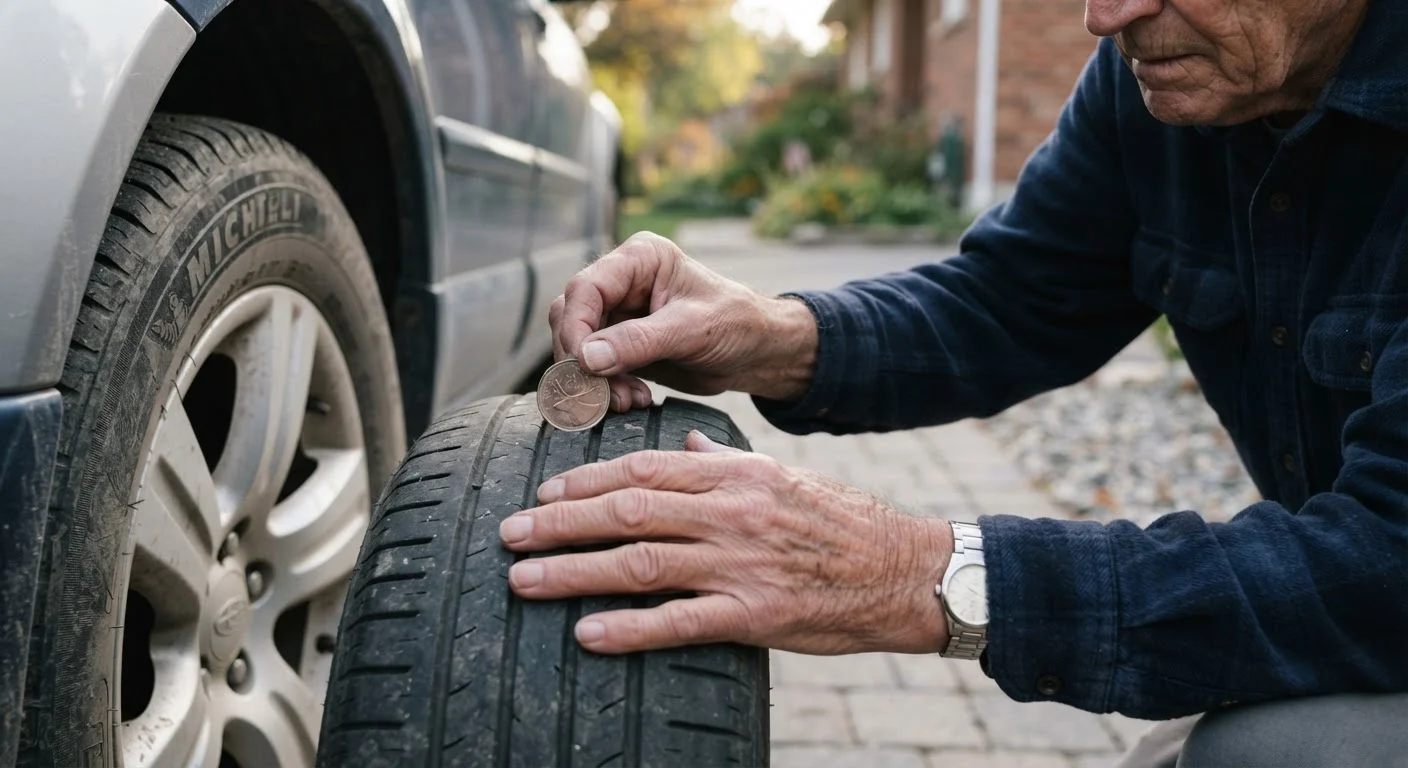
Penny (or tread depth indicator)
Used to estimate tyre tread depth at home without special equipment.
Flashlight or phone torch
Helps you see tyre sidewalls, brake rotors, and the fluid reservoir clearly in low-light conditions.
Tyre inflator or air compressor
Allows you to add air to tyres that are below the recommended pressure without driving to a filling station.
Notepad or phone notes app
Record any findings that seem unusual so you can describe them accurately to a mechanic.
Park on a flat, well-lit surface before starting. Never perform checks while the vehicle is on an incline or directly after a long drive, when brake components may be hot to the touch.
The Monthly Checklist
Work through each group in order. Check off items as you go and make a note of anything that looks, sounds, or feels different from normal. Bring those notes to your mechanic — they are far more useful than a vague description.
Tyre Pressure
Tyre Tread and Condition
Brake Pedal Feel
Brake Sounds and Behaviour
Visual Brake Inspection
Stop Driving Immediately If You Notice These
A grinding noise when braking, a pedal that sinks to the floor, or a tyre with a visible bulge or blowout are not issues to monitor over time — they are reasons to stop driving the vehicle and arrange a mechanic visit right away. Do not wait until your next scheduled service if any of these are present.
For a deeper understanding of the components you are inspecting, a senior driver's complete guide to tyre and brake maintenance explains how these systems work and what normal wear looks like. You may also want to review common tyre and brake myths so you know which assumptions to set aside.
If you drive frequently on steep or rural roads, specific habits that protect your brakes on those surfaces are worth reviewing separately.
This checklist is provided for general educational purposes only. It is not a substitute for professional inspection by a qualified mechanic. Always consult a certified technician if you notice anything that concerns you or are unsure about any finding.
The content on this site is for informational purposes only and is not a substitute for professional advice. Always consult a qualified professional for guidance specific to your situation.