

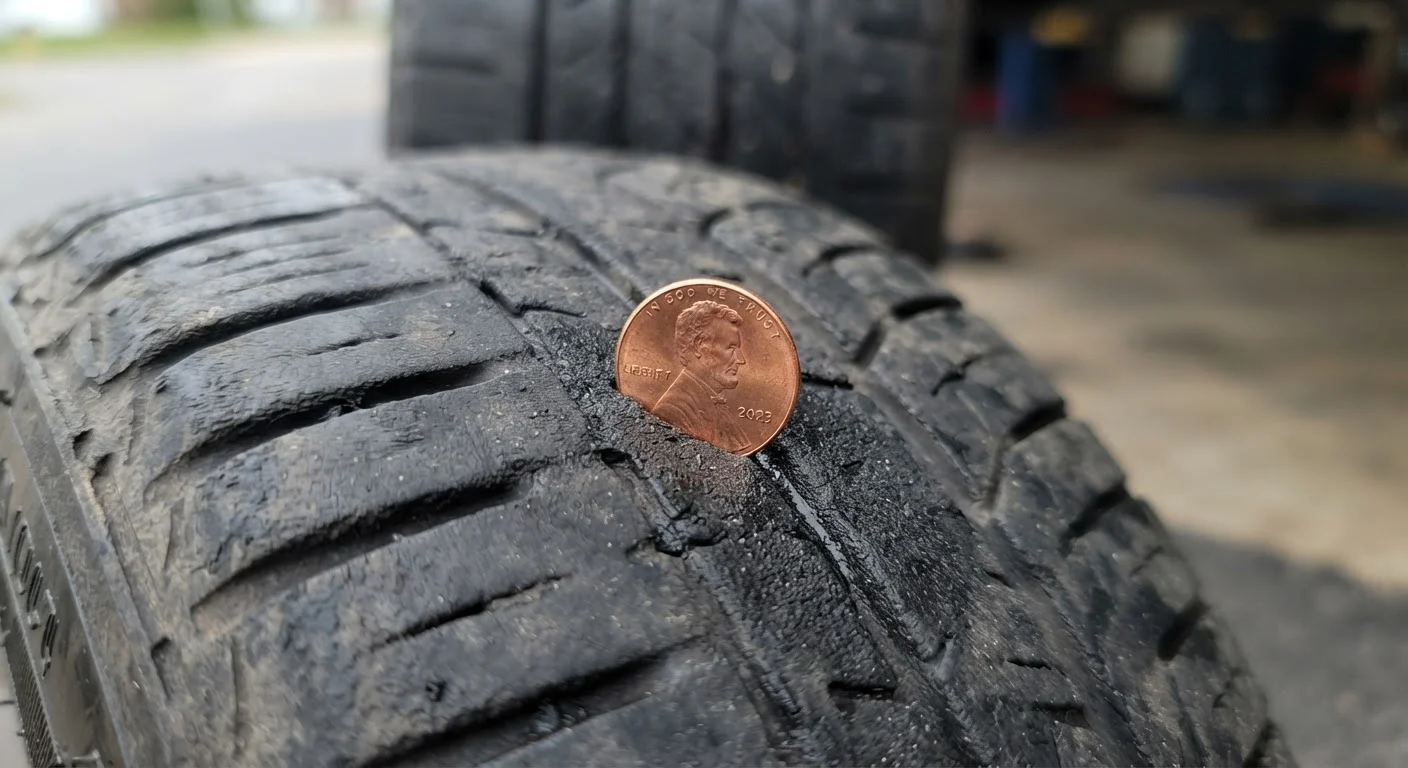
Why Tread Depth Matters for Safety
The grooves cut into a tyre's surface do more than grip the road — they act as channels that push water out from under the tyre as you drive. On a dry road, a worn tyre may feel perfectly adequate. On wet pavement, the difference between adequate tread and worn tread can mean several extra car lengths of stopping distance.
Research by tyre safety organizations has consistently shown that tyres worn to 2/32" can take up to 100 feet longer to stop on wet roads compared to tyres with 4/32" of tread remaining. For a senior driver traveling at highway speed, that difference is not trivial.
Common myths about tyres and brakes can lead drivers to underestimate how much tread depth actually affects their vehicle's performance in real road conditions.
2/32"
U.S. federal minimum tread depth
Federal Motor Vehicle Safety Standards require passenger tyres to be replaced at or before reaching this depth.
~100 ft
Extra stopping distance on wet roads
Tyre safety organizations estimate tyres at 2/32" can require significantly more distance to stop than tyres at 4/32" under wet conditions.
4/32"
Recommended replacement threshold
Many safety advocates and automotive professionals suggest replacing tyres at 4/32" rather than waiting for the legal minimum.
The Penny Test: How to Do It Step by Step
The penny test requires nothing more than a single coin and takes less than two minutes. Here is how to perform it correctly:
- Choose a penny. Hold it so Lincoln's head points downward toward the tyre.
- Insert it into a tread groove. Push the penny straight down into the groove rather than tilting it.
- Look at how much of Lincoln's head is visible. If the top of his head disappears into the groove, your tread is above 2/32" and still within the legal minimum. If the entire head is visible above the rubber, the tread is at or below 2/32" — replacement is overdue.
- Test multiple spots. Check at least three locations per tyre — the center of the tread, and each outer edge — because tyres can wear unevenly.
For an earlier warning, use a quarter instead. If the top of Washington's head is visible, tread depth is around 4/32" — still legal, but a signal to start planning for new tyres.
Use a Quarter for an Earlier Warning
The penny test tells you when a tyre has hit the legal minimum. For a slightly earlier alert, use a U.S. quarter — insert it head-down into the tread groove. If the top of Washington's head is visible, you're at approximately 4/32", which is the threshold many safety experts recommend for replacement. This gives you time to plan the expense rather than react to a failed inspection.
Tread Wear Indicators: The Built-In Warning System
Every passenger tyre sold in the U.S. is required to have tread wear indicators — small raised rubber bars moulded into the grooves at the 2/32" level. When the surrounding tread wears down to match the height of these bars, the tyre has reached the legal minimum.
You can identify indicator locations by looking for a small arrow, triangle, or the letters TWI (Tread Wear Indicator) on the tyre sidewall. The indicators sit at equal intervals around the tyre's circumference. When they become visible or flush with the surrounding tread surface, the tyre needs replacing.
These indicators are a helpful backup, but don't wait for them to become visible before acting. The penny or quarter test can give you advance notice while you still have a few weeks of safe driving left to arrange a tyre change. Keep in mind that uneven tread wear patterns may mean one section of the tyre reaches the indicators before the rest — another reason to check multiple spots.
What Worn Tyres Look Like in Practice
Beyond measurement tools, there are visual and physical clues that a tyre is nearing the end of its useful life:
- Smooth, shiny tread surface with little visible groove depth across the center or edges
- Tread wear bars visible and flush with the surrounding rubber
- Cupping or scalloping — a wavy, uneven surface suggesting suspension or alignment issues alongside wear
- Cracking along the grooves or sidewall — this relates to rubber age rather than tread depth, and is a separate concern
If you notice the car pulling to one side, vibrating at highway speed, or taking longer to stop than usual, worn or unevenly worn tyres may be contributing. These symptoms warrant an inspection by a qualified mechanic rather than self-diagnosis alone.
Tread depth also does not account for everything that makes a tyre safe or unsafe. Tyre age matters even when tread looks adequate — rubber degrades over time and can become brittle or lose grip even if the grooves appear deep enough. Similarly, tyre pressure affects how tread wears and how the tyre performs, so checking both together is the most complete approach.
Frequently Asked Questions
The federal legal minimum is 2/32 of an inch across the tyre's width. Many safety experts and tyre professionals recommend replacing tyres before they reach that threshold — typically at 4/32" — because wet-weather grip declines noticeably before the legal limit is hit.
Insert a penny into a tread groove with Lincoln's head pointing down into the tyre. If you can see the top of Lincoln's head, the tread is at or below 2/32" and the tyre should be replaced. For a slightly earlier warning, use a quarter — if the top of Washington's head is visible, you're at approximately 4/32".
A monthly visual check is a reasonable habit for most drivers. If you drive frequently in wet or cold conditions, or notice any change in how the car handles, check more often. Many mechanics also inspect tread depth during routine oil changes.
Yes. A tyre may have adequate tread but still be unsafe due to age-related rubber cracking, improper inflation, or internal damage not visible from outside. Always consider tread depth alongside the tyre's age and overall condition.
Driving on illegally worn tyres can result in a traffic citation and fine in most U.S. states. More importantly, the safety risk is significant — reduced grip, longer stopping distances, and higher risk of a blowout all increase with worn tread.
The content on this site is for informational purposes only and is not a substitute for professional advice. Always consult a qualified professional for guidance specific to your situation.