

What Coolant Actually Does
Your engine generates tremendous heat every time it runs. Without a way to manage that heat, metal components would warp and seize within minutes. Coolant circulates continuously through passages in the engine block and radiator, absorbing heat and releasing it into the outside air.
Beyond temperature control, coolant's additives form a protective layer on metal surfaces inside the engine and radiator, slowing the corrosion that water alone would accelerate. This is why a cooling system filled with nothing but plain water would suffer rust damage over time — even if it never froze.
For a broader look at all the fluids your car depends on, see our simple fluid reference guide.
~50%
Share of roadside breakdowns linked to cooling system issues
Industry estimates consistently point to cooling system failures as among the most common causes of non-collision roadside breakdowns.
30,000–50,000 mi
Typical coolant flush interval
Most vehicle manufacturers recommend a coolant flush within this mileage range, though your owner's manual provides the definitive interval.
−34°F
Freeze protection of a standard 50/50 coolant mix
A correctly mixed 50% ethylene glycol / 50% water solution provides freeze protection down to approximately −34°F (−37°C) under most conditions.
How to Check Your Coolant Level Safely
Checking coolant is one of the easiest under-the-hood tasks any driver can do. Follow these steps:
- Wait until the engine is completely cold — ideally several hours after driving or first thing in the morning.
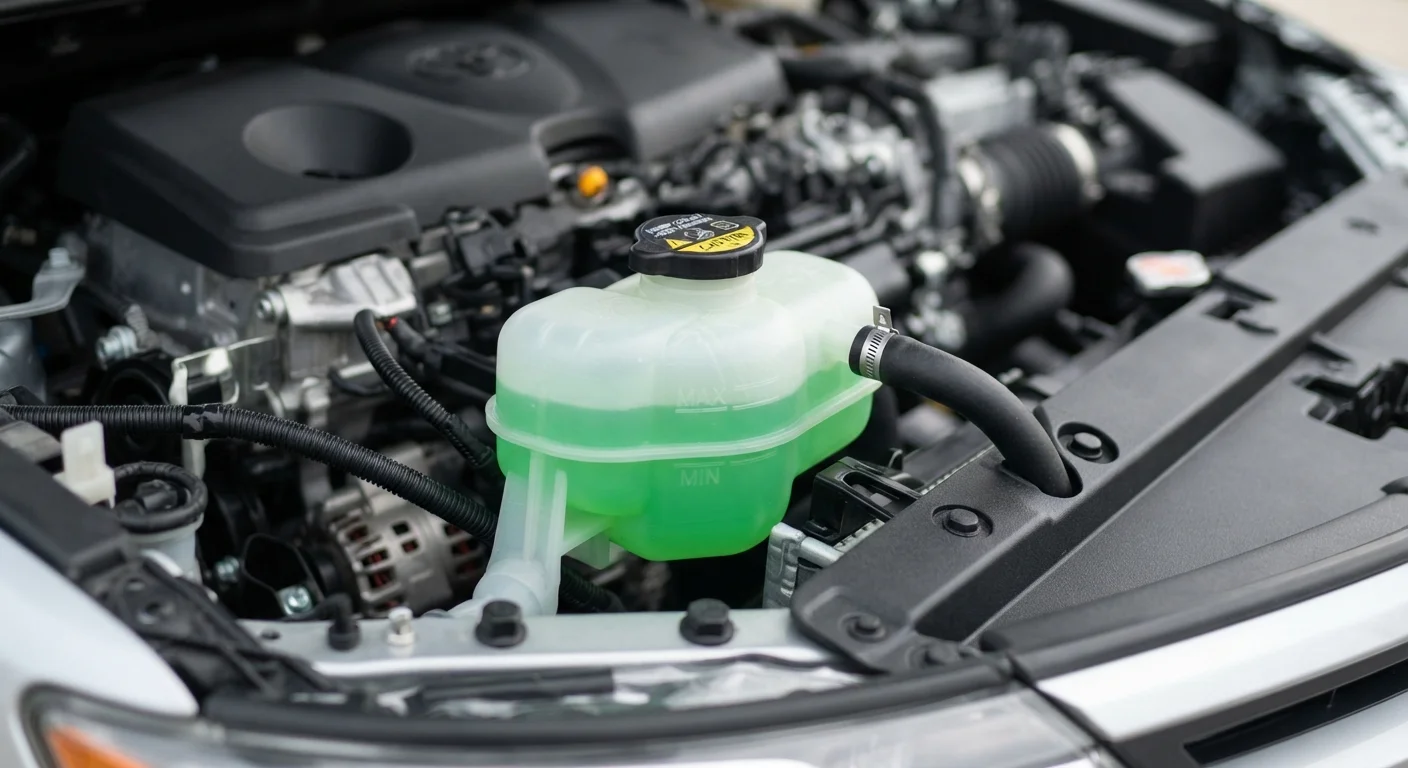
- Open the hood and locate the coolant reservoir — a semi-transparent plastic tank, usually near the radiator, with a colored cap labeled COOLANT or with a temperature symbol.
- Read the level against the MIN and MAX lines on the side of the tank. The fluid should sit between these two marks.
- Check the color. Healthy coolant is typically bright green, orange, or pink depending on type. Muddy, rust-colored, or oily fluid may indicate a problem worth having a mechanic inspect.
Check Coolant Only When the Engine Is Cold
Always wait at least two to three hours after driving before checking or adding coolant. The cooling system operates under pressure, and opening the cap on a warm engine can cause scalding fluid to spray out. If you are unsure whether the engine is cool enough, wait longer — there is no harm in being cautious.
If you need to top up, use the coolant type specified in your owner's manual. Mixing incompatible types can cause the additives to break down and may leave a gel-like residue in the system.
When Coolant Needs to Be Flushed
Over time, coolant's protective additives are used up, and the fluid becomes acidic. Acidic coolant can actually corrode the very parts it was designed to protect. A coolant flush drains the old fluid, clears out any deposits, and refills the system with fresh coolant.
As a general guideline, most vehicles benefit from a flush every 30,000–50,000 miles or every 3–5 years — but your owner's manual provides the most accurate interval for your specific car. Some newer vehicles use extended-life coolant that lasts longer.
Signs that a flush may be overdue include:
- Fluid that looks rusty, murky, or has visible particles floating in it
- A sweet smell coming from the engine bay
- The engine running warmer than usual
A coolant flush is a task best left to a qualified mechanic, as it involves draining and disposing of the old fluid (which is toxic to animals) and ensuring the system is properly refilled and bled of air pockets.
Temperature extremes affect coolant performance more than many drivers realize. Our guide on seasonal fluid checks covers how to prepare your cooling system before summer and winter.
Coolant Is Toxic — Dispose of It Responsibly
Used coolant is poisonous to pets and wildlife and must not be poured down a drain or left in an open container. Most auto parts stores and service centers accept used coolant for proper disposal. If a mechanic performs your flush, they will handle disposal as part of the service.
Warning Signs You Should Not Ignore
Catching cooling system problems early can prevent costly engine damage. Pay attention to these warning signs:
- Temperature gauge climbing toward HOT — pull over safely as soon as it is safe to do so and call for assistance. Do not continue driving an overheating engine.
- Steam or smoke from under the hood — this may indicate a coolant leak or a boiling-over situation.
- Low coolant warning light — check the reservoir level at your earliest opportunity.
- Heater blowing cold air — low coolant can prevent the heater core from producing warm air inside the cabin.
If your temperature gauge frequently runs high or you notice puddles of sweet-smelling, brightly colored fluid under your parked car, have a mechanic inspect the system promptly. For a deeper look at overheating risks and how to respond, see our article on coolant levels and overheating.
Staying on top of coolant is just one part of a healthy maintenance routine. Our guide to building a simple maintenance routine can help you keep all your fluids in check throughout the year.
Frequently Asked Questions
The terms are often used interchangeably, but antifreeze refers to the concentrated glycol-based liquid, while coolant is what you get after it is mixed with water. Most ready-to-use products sold today are pre-mixed coolant.
Look at the plastic coolant reservoir in your engine bay — it has MIN and MAX markings on the side. If the fluid is at or below the MIN line when the engine is cold, it needs topping up. A temperature warning light on your dashboard is also a sign to check immediately.
In an emergency, plain water can be used temporarily to prevent overheating. However, water alone does not protect against freezing or corrosion, so have the system properly topped up with the correct coolant as soon as possible.
A general guideline is every 30,000–50,000 miles or every 3–5 years, but your owner's manual is the most reliable source for your specific vehicle. Some modern extended-life coolants last longer.
Yes, checking the level in the reservoir is safe and straightforward — but only do it when the engine is fully cold. Never remove the radiator cap on a warm or hot engine, as pressurized hot coolant can spray out and cause burns.
The content on this site is for informational purposes only and is not a substitute for professional advice. Always consult a qualified professional for guidance specific to your situation.