

Why Coolant Matters More Than Many Drivers Realize
Your engine generates enormous heat every time you drive. Coolant — sometimes called antifreeze — circulates through the engine and radiator to absorb that heat and release it safely into the air. Without the right level of clean coolant, temperatures rise quickly and engine components can warp, crack, or seize within minutes.
For a deeper understanding of how coolant protects your engine year-round, see our guide to coolant and antifreeze basics.
~33%
Share of roadside breakdowns linked to cooling system issues
Industry estimates from roadside assistance providers consistently identify cooling system failures as one of the top three causes of roadside breakdowns.
$1,500+
Typical cost of overheating-related engine repairs
Head gasket and cylinder head damage caused by overheating can cost well over $1,500 to repair at most US service centers, according to general repair cost surveys.
How to Check Your Coolant Safely
The good news is that checking your coolant level does not require tools, mechanical skill, or opening any pressurized caps. Follow these steps every month and before long trips:
- Park on a level surface and make sure the engine has been off for at least two hours.
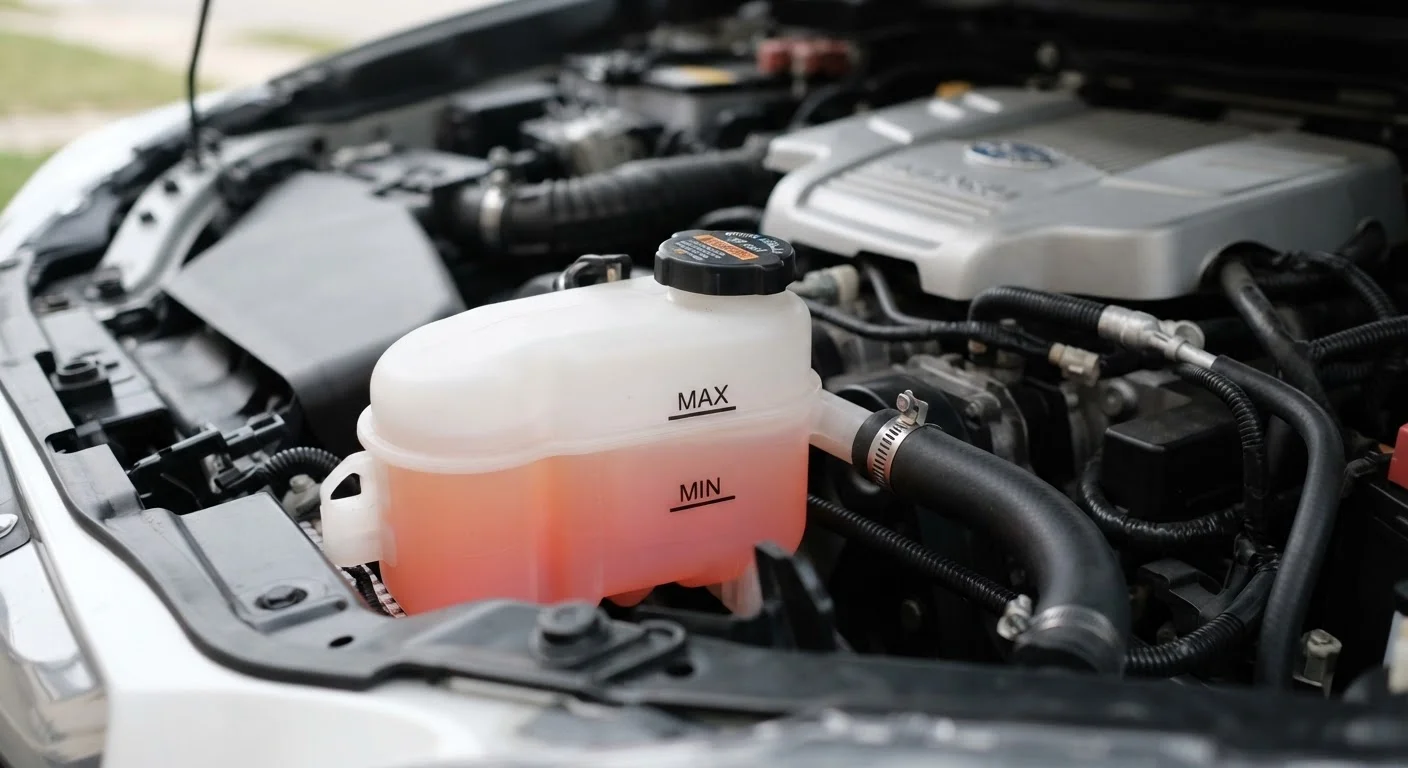
- Open the hood and locate the coolant reservoir — a translucent plastic tank, usually near the radiator, with colored fluid inside.
- Read the level through the side of the tank. The fluid should sit between the MIN and MAX lines.
- Check the color. It should be bright and clear, not murky or rust-colored.
- Close the hood. If the level is between MIN and MAX and the fluid looks clean, you are done.
If the level is below MIN, consult your owner's manual for the correct coolant type before adding any fluid.
Carry a Small Bottle of Pre-Mixed Coolant
Keeping a small bottle of pre-mixed coolant in your trunk means you can safely top off the reservoir if the level is low and the engine is cold, without needing an immediate shop visit. Make sure the type matches what your vehicle requires, as noted in the owner's manual. This is a precaution, not a substitute for investigating why the level dropped.
Best Practices for Preventing Overheating
Consistent habits are far more effective than reacting to emergencies. These proven practices help senior drivers keep their cooling systems in good shape:
Always wait for the engine to cool completely before inspecting coolant.
A hot cooling system is pressurized. Opening the radiator cap or reservoir cap while the engine is warm can release scalding steam and fluid, causing serious burns. Allowing the engine to cool for at least two hours eliminates this risk entirely.
Check the coolant level using the transparent reservoir, not the radiator cap.
Most vehicles built in the last few decades have a translucent plastic overflow reservoir with MIN and MAX markings on the side. Reading the level through this reservoir means you never need to open a pressurized cap. It takes less than 30 seconds and is completely safe.
Note the color and condition of your coolant each time you check it.
Fresh coolant is typically bright green, orange, pink, or blue depending on the formulation. Coolant that appears rusty, murky, or oily may be contaminated or degraded and can lose its ability to protect the engine. Spotting a color change early helps you address the issue before it becomes serious.
Look for puddles or drips beneath your car as part of your routine walk-around.
Coolant leaks often show up as small puddles under the front of the car. Coolant has a slightly sweet smell and may appear green, orange, or pink. Catching a leak early prevents the level from dropping dangerously low while you are driving.
Know your dashboard temperature gauge and take action at the first sign of overheating.
The temperature gauge is your most immediate warning tool. If the needle moves toward the red zone or a warning light appears, the engine is approaching a dangerous temperature. Continuing to drive can warp cylinder heads or cause catastrophic engine failure, turning a simple fix into a major repair.
Top off coolant only with the correct type specified in your owner's manual.
Different engine formulations require specific coolant types, and mixing incompatible coolants can reduce corrosion protection and damage seals or hoses. The owner's manual identifies the correct type, and many auto parts stores stock pre-mixed formulations that can be added directly without diluting with water.
For a seasonal approach to fluid checks — including coolant — see our seasonal fluid check guide.
Quick Actions You Can Take Today
You do not need to overhaul your routine to protect your engine. A few small habits, done consistently, make a significant difference:
When to Call a Mechanic Instead
Checking the coolant reservoir is safe and straightforward, but some cooling system tasks — such as flushing and replacing coolant, inspecting hoses, or diagnosing a persistent leak — require professional equipment and expertise. If your level drops repeatedly even after topping it off, that signals a leak that a qualified mechanic should diagnose. Do not attempt to pressure-test the system or remove hoses yourself.
Staying on top of basic maintenance also supports your overall driving safety. Our senior safety features hub covers additional ways to keep your vehicle reliable and confidence-inspiring.
This article provides general vehicle maintenance education and is not a substitute for advice from a qualified mechanic. Always consult a licensed automotive professional for diagnosis, repairs, or if you are uncertain about any aspect of your vehicle's condition.
The content on this site is for informational purposes only and is not a substitute for professional advice. Always consult a qualified professional for guidance specific to your situation.