

What an Inspection Actually Covers
A used car inspection is a structured look at a vehicle's condition before you commit to buying it. Done properly, it covers five main areas: the exterior, the interior, the engine bay, the undercarriage, and a test drive. Each area tells you something different about how the car has been cared for and whether hidden problems could cost you money later.
This article is a quick-reference companion to the full inspection preparation guide, which covers what to bring and what to ask on the day. For a printable step-by-step walkthrough, use the pre-purchase inspection checklist alongside this reference.
| Five areas a full inspection covers | Exterior, interior, engine bay, undercarriage, and test drive |
| When to schedule a PPI | After your initial viewing, but before agreeing to buy |
| Vehicle history report | Run one using the car's 17-digit VIN before or during your viewing |
| Maintenance records to request | Oil change logs and records of any major scheduled service |
| Dashboard warning lights | Should all go out within seconds of engine start; any that stay on need diagnosis |
| Seller refuses independent inspection | Treat this as a serious concern — trustworthy sellers allow it |
Red Flags to Watch For
Not every problem is obvious at a glance. Knowing what to look for — and where — makes a real difference.
Exterior
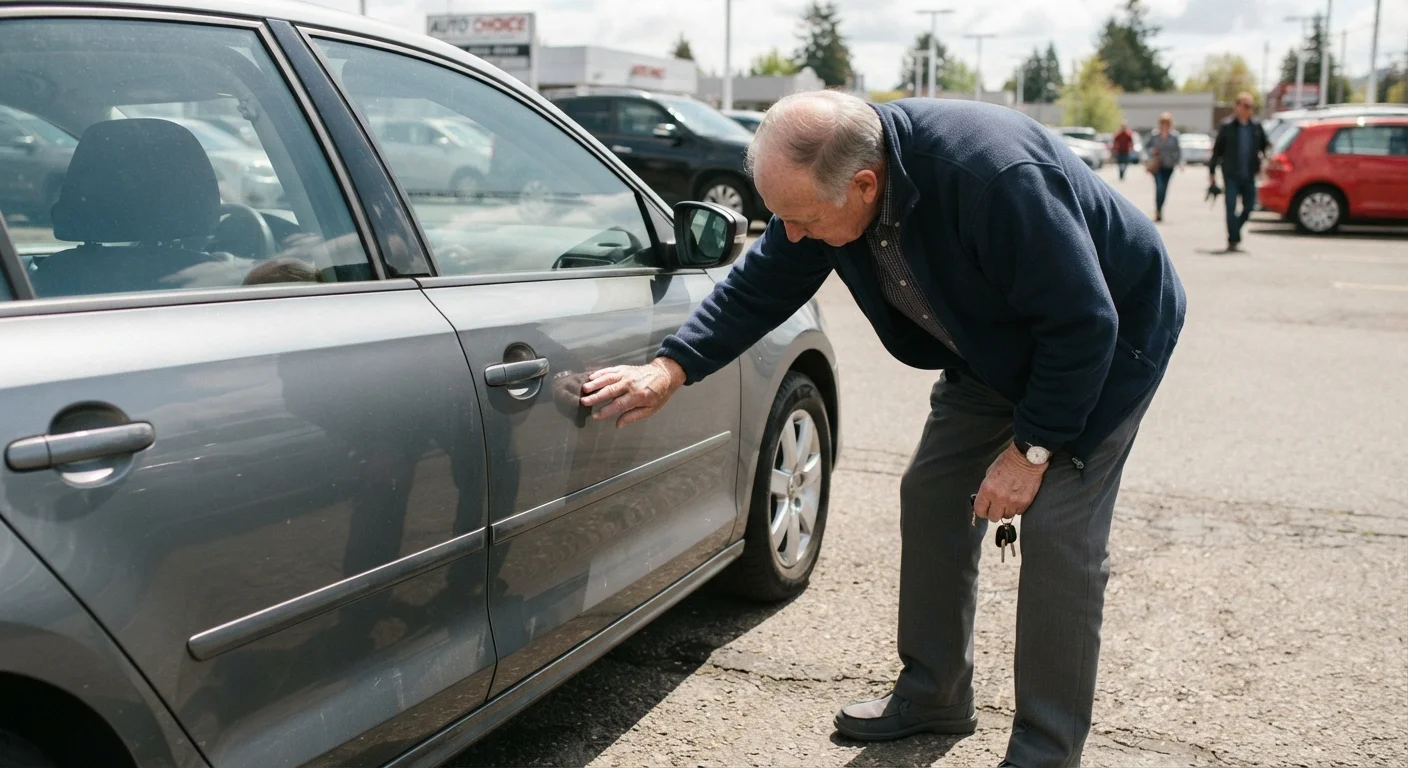
Check that panel gaps between doors, fenders, and the hood are even on both sides of the car. Mismatched paint color, overspray on rubber door seals, or rippled bodywork can indicate prior collision repair. Running a magnet along body panels is a simple test: if it doesn't pull firmly, body filler may be present beneath the surface.
Engine Bay
Look for oily residue around hoses and gaskets, a milky or white film inside the oil cap (a possible sign of coolant mixing with oil), or belts that appear cracked or frayed. These are signals to have a qualified mechanic investigate further before you proceed.
Interior and Dashboard
Start the engine and watch the warning lights. Check engine, ABS, and airbag indicator lights should all turn off within a few seconds of startup. Any warning light that stays on needs diagnosis by a mechanic before purchase. Also test every switch, power window, and climate control setting to confirm they function.
Undercarriage
Surface rust on older vehicles is common, but rust on frame rails or structural components is more serious. If you can't safely check underneath yourself, ask your mechanic to put the car on a lift during a pre-purchase inspection. For a broader view of how this step fits into the full buying process, see this end-to-end guide for senior buyers.
Key Inspection Terms
Sellers and mechanics use shorthand that can be confusing during a first viewing. The definitions below cover the terms most likely to come up. For a wider glossary covering the full buying process, see Key Terms Every Senior Should Know.
Pre-Purchase Inspection (PPI)
An independent inspection of a used vehicle performed by a licensed mechanic you hire, before you agree to buy. A PPI gives you an unbiased assessment of the car's mechanical condition that the seller cannot influence.
VIN
Vehicle Identification Number — a unique 17-character code assigned to every vehicle. Running a vehicle history report with the VIN can reveal past accidents, ownership changes, odometer readings, and title issues.
Salvage Title
A designation applied to a vehicle that an insurance company has declared a total loss, typically after a major collision or flood. A salvage title can affect safety, insurability, and future resale value.
OBD-II Port
A standardized diagnostic socket found in most vehicles built after 1996, usually located under the dashboard. Mechanics plug a scan tool into this port to read stored trouble codes from the car's onboard computer.
Frame Damage
Structural damage to a vehicle's main frame or unibody. Even after repair, frame damage can affect alignment, handling, and crash safety, making it an important item to ask about and disclose.
Timing Belt
A rubber belt (or metal chain on some engines) that synchronizes internal engine components. Timing belts require scheduled replacement; a snapped belt can cause severe engine damage, so knowing the service history is important.
Body Filler
A putty-like compound applied under paint to smooth dents or repair collision damage before repainting. Heavy use of body filler under a panel can signal undisclosed prior damage that a simple magnet test may detect.
As-Is Sale
A transaction in which the vehicle is sold in its current condition with no warranty from the seller. If problems surface after purchase, the buyer bears the full cost of any repairs.
Questions to Ask the Seller
Going in with a prepared list of questions puts you in a stronger position. These are the ones that matter most:
- Has the car ever been in a collision? Ask directly, then verify with a vehicle history report using the VIN.
- How long have you owned it, and why are you selling? Short ownership periods and vague answers both warrant follow-up.
- Do you have maintenance records? Oil change logs and scheduled service records are a meaningful sign of responsible ownership.
- Has it had any major mechanical work? Engine, transmission, or suspension repairs aren't automatically disqualifying — but you need to know about them upfront.
- Will you allow an independent inspection? A seller who declines is a significant concern.
Once you've completed your viewing, the pre-purchase checklist for seniors will help you confirm nothing was missed before you sign anything.
This article is for general informational purposes only and does not constitute mechanical, financial, or legal advice. Vehicle condition and value vary widely; consult a qualified mechanic before purchase, and a licensed financial adviser or attorney for guidance specific to your own circumstances.
The content on this site is for informational purposes only and is not a substitute for professional advice. Always consult a qualified professional for guidance specific to your situation.