

Start With What You Actually Need
Before browsing a single listing, spend thirty minutes writing down what you genuinely need from a car. This isn't about dream features — it's about practical reality. How far do you drive each week? Do you have any mobility considerations, such as difficulty with low seats or heavy doors? Will you be driving primarily in a city, in the suburbs, or on rural roads?
Comfort and visibility matter more than most buyers initially admit. A higher seating position — common in small SUVs and crossovers — is often easier to enter and exit than a low sedan. Wide door openings, light steering, and clear sight lines are worth prioritizing. Think about who else might drive the car and whether your typical trips involve highway speeds or mostly local errands.
Set a realistic all-in budget that goes beyond the sticker price. Registration fees, sales tax, insurance, and the first year of routine maintenance all add up. As a rough planning rule, budget an additional 10–15% over the purchase price to cover these initial ownership costs. For a broader look at how this decision fits your situation, see our guide on choosing between new and used.
Write Down Your Must-Haves First
Before visiting a single dealership or browsing listings, write a short list: three features you must have and three you'd like but can live without. This simple exercise prevents you from being talked into a car that doesn't actually fit your life. Keep the list with you during every viewing.
Where to Search for a Used Car
Used cars are sold through several distinct channels, each with different trade-offs.
- Franchise dealerships (affiliated with a manufacturer) often sell certified pre-owned (CPO) vehicles. CPO programs typically include a multi-point inspection and an extended limited warranty, which can offer real peace of mind. Prices are generally higher than private sales, but so is accountability.
- Independent used car lots vary widely in quality. Some maintain strong community reputations; others do not. Ask about return policies, inspection records, and whether they'll allow an outside mechanic to look at the car.
- Private sellers can offer lower prices, but there's no warranty and fewer consumer protections. You're responsible for doing all the due diligence.
- Online marketplaces (such as classified listing sites) give you broad search reach. Be cautious about listings with vague descriptions, no photos, or pressure to close quickly without a viewing.
For a detailed breakdown of how to evaluate each of these sources, this guide on practical sources and search strategies covers the topic thoroughly.
~77%
Used car share of total US auto sales
Used vehicles consistently outsell new ones in the US market, reflecting their role as the primary entry point for most buyers.
$26,000–$30,000
Approximate average used car transaction price (US)
Industry data from recent years suggests average used car prices sit well below the new-car average, though prices fluctuate with supply conditions.
1 in 5
Used cars with a significant undisclosed history
Vehicle history data providers have reported that a meaningful share of used cars carry unreported accidents or title issues, underscoring the value of a history check.
Narrowing Down Your List
Once you have a few candidates in mind, do some homework before contacting sellers. Look up reliability data from sources like consumer survey organizations and owner forums. A model with a long track record of low repair frequency is worth more in the long run than a flashier car with a spotty history.
Pay attention to mileage in context. A five-year-old car with 40,000 miles driven mostly on highways is often in better mechanical shape than the same car with 40,000 city miles, since highway driving puts less strain on the engine and brakes. Vehicles in the 40,000–80,000 mile range often represent a reasonable balance between depreciation and remaining useful life, though this varies by make and maintenance history.
When comparing two similar vehicles, request the actual maintenance records rather than relying solely on the seller's word. A car with documented oil changes and scheduled services is worth paying a modest premium for.
Consistent maintenance is the single strongest predictor of how a used car will hold up. Records provide evidence that claims about the car's care are accurate.
If you're buying from a private seller, meet at a neutral public location for the first viewing and always bring a trusted companion.
Private sales carry fewer consumer protections than dealer transactions. A second set of eyes can catch things you might overlook and adds a layer of personal safety.
Also check whether parts and service are readily available in your area. A less common import may be harder and costlier to maintain locally. Sticking to models that are widely serviced can save you time and money down the road.
What to Check Before the Test Drive
Two documents should be in hand before you schedule a test drive: a vehicle history report and, ideally, any available maintenance records.
A vehicle history report — available through services that use a car's VIN — will show reported accidents, ownership history, title status (including whether it's been declared a salvage title), and odometer readings over time. A salvage or rebuilt title means the car was previously deemed a total loss by an insurer. That's not automatically disqualifying, but it does significantly affect value, insurability, and safety, and warrants extra scrutiny.
Always Check the Vehicle History Report
Never skip the vehicle history report, even for a car that looks immaculate. A clean exterior can conceal a prior flood, a major accident, or a rolled-back odometer. Reports are available from multiple services using the car's 17-digit VIN number. This step costs relatively little and can save you from a very expensive mistake.
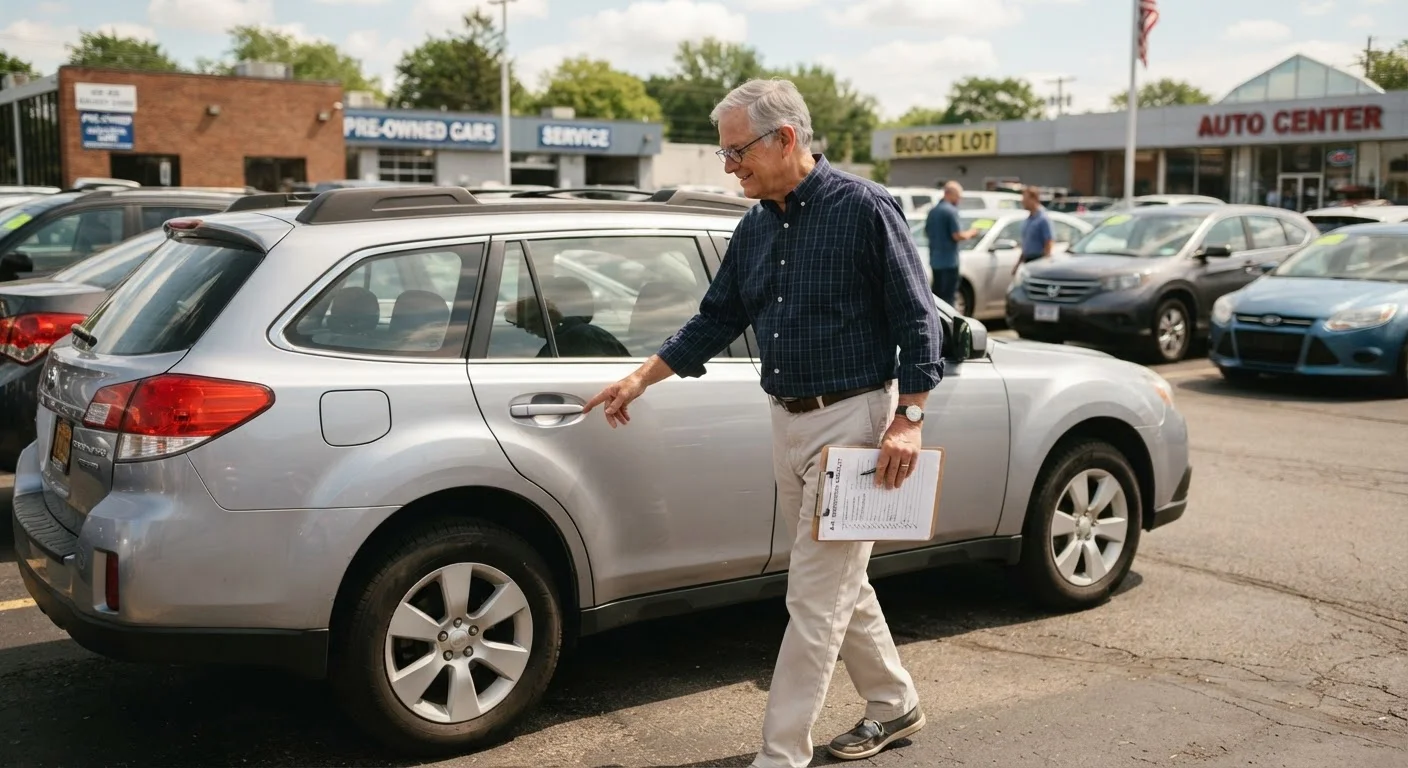
Walk around the car in daylight. Look for uneven panel gaps (a sign of past collision repair), mismatched paint, rust around wheel arches or beneath door edges, and any cracks in the windshield. Pop the hood and check for obvious fluid leaks, corroded battery terminals, or belts that look cracked or frayed. You don't need to be a mechanic — you're looking for obvious red flags, not diagnosing the engine.
Making the Most of the Test Drive
A test drive should last at least 20–30 minutes and include a mix of conditions: surface streets, a short highway stretch if possible, and some slow-speed maneuvering such as parking. This gives you a realistic sense of how the car handles in your everyday environment.
While driving, listen for unusual noises — clunks over bumps, squealing brakes, or a vibration at highway speed. These can indicate worn suspension components, brake issues, or wheel balancing problems. Check that all controls — mirrors, seat adjustments, climate controls, and infotainment — are within comfortable reach and easy to operate.
Pay specific attention to how easy it is to see out of the car in all directions. Thick rear pillars or a high trunk line can create blind spots that make reversing harder. If the car has a backup camera, make sure the display is clear and responsive.
After the drive, sit quietly for a moment with the engine idling and notice whether anything feels off — unusual smells (burning oil, exhaust inside the cabin), warning lights on the dashboard, or a rough idle.
Next Steps After the Test Drive
If the car passes your initial checks and you're seriously interested, the single most valuable next step is a pre-purchase inspection (PPI) by an independent mechanic — one you choose, not the seller's shop. For a fee typically in the $100–$150 range, a qualified mechanic can identify issues that aren't visible to the naked eye: worn brake pads, suspension wear, fluid leaks, or signs of prior flood damage. This is general pricing context; actual costs vary by location and shop.
Once you have the inspection results, you're in a much stronger position to negotiate on price or walk away if the car has issues that weren't disclosed. Be prepared to walk away — there are always other cars.
After purchase, your next major task is arranging insurance before you drive the car home. Insurance requirements and costs vary by state, coverage level, and your driving history. For a step-by-step look at that process, see our guide to selecting car insurance. For the full paperwork and registration process, our complete walkthrough from research to registration picks up where this guide leaves off.
Keep Up with Maintenance After Purchase
Buying a reliable used car is only the beginning. Staying on top of routine checks — oil changes, tire rotations, brake inspections — is what keeps it reliable over the years. For a practical reference, see our full-year vehicle check calendar for senior drivers.
This article provides general information for educational purposes only and is not a substitute for personalized financial, legal, or insurance advice. Terms, costs, and regulations vary by state and individual circumstance. Consult a licensed professional for guidance specific to your situation.
The content on this site is for informational purposes only and is not a substitute for professional advice. Always consult a qualified professional for guidance specific to your situation.