

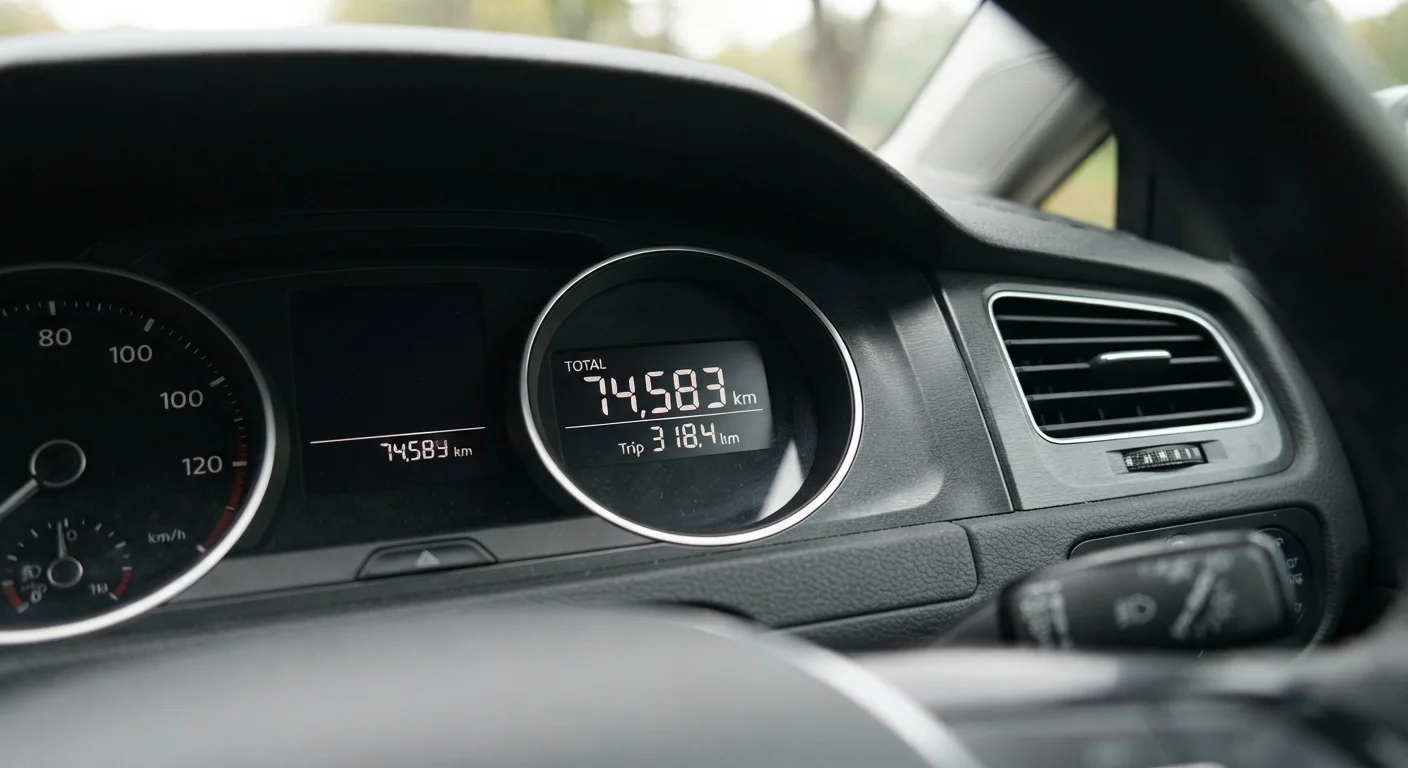
What the Odometer Actually Measures
The odometer counts cumulative miles from the moment a vehicle leaves the factory. That single number is one of the first things most used car shoppers look at — and understandably so. More miles generally means more wear on the engine, transmission, brakes, and suspension components.
But the odometer only measures distance, not difficulty. A car with 80,000 miles of gentle highway commuting may be in significantly better mechanical shape than one with 50,000 miles of urban stop-and-go or rough rural roads. The number on the dial tells you how far a car has traveled, not how hard it worked to get there.
For a fuller picture, the odometer reading should always be paired with service history and a sense of the vehicle's typical driving environment. See our guide on mileage vs. age for more on how both factors affect reliability.
Highway Miles vs. City Miles: Why the Difference Matters
Not all miles are created equal. Highway driving — steady speeds on open roads — is relatively easy on most mechanical systems. Engines run at consistent temperatures, brakes are used less frequently, and transmissions shift less often. City driving is the opposite: frequent braking, idling in traffic, short trips that don't allow the engine to reach full operating temperature, and constant acceleration cycles.
A car used primarily for short city errands accumulates wear more quickly per mile than one used for long highway trips. When reviewing a listing, ask the seller about typical use. A retired driver who took one long road trip per year is a very different ownership scenario than a rideshare vehicle logging urban miles around the clock.
~15,000
Average miles driven per year in the US
The Federal Highway Administration reports that the average American driver logs approximately 15,000 miles annually, making this a useful benchmark when evaluating used car listings.
452,000+
Vehicles affected by odometer fraud annually (est.)
NHTSA has historically estimated that hundreds of thousands of vehicles sold each year in the US may have fraudulent odometer readings, costing buyers significant money.
Odometer Fraud: What the Law Says and How to Protect Yourself
Odometer rollback — altering the mileage display to show a lower number — is a federal crime under the Truth in Mileage Act. Sellers are legally required to provide accurate mileage disclosures on the title at the time of transfer. Despite these protections, the National Highway Traffic Safety Administration (NHTSA) has estimated that odometer fraud affects hundreds of thousands of vehicles sold each year in the US.
Protecting yourself starts with requesting a vehicle history report, which compiles odometer readings recorded at past title transfers, inspections, and service visits. If recorded mileage drops between reports or shows large unexplained gaps, treat that as a red flag. A pre-purchase inspection by a qualified, independent mechanic can also reveal wear patterns inconsistent with the claimed mileage — things like unusually worn pedals, steering wheel, or seat fabric on a supposedly low-mileage vehicle.
Digital Odometers Are Not Tamper-Proof
Many buyers assume that modern digital odometers are immune to fraud, but specialized equipment can alter electronic readings just as easily as older mechanical dials could be wound back. This makes third-party verification — through history reports and mechanic inspections — just as important on newer vehicles as on older ones.
Low Mileage Isn't Always the Safe Bet
It's tempting to assume that low mileage equals low risk. In reality, a car that sits parked for extended periods can develop its own set of problems. Rubber seals and hoses dry out, brake rotors develop surface rust, belts crack, and fluids degrade even without driving. A vehicle with 25,000 miles on a 12-year-old car may need more immediate attention than one with 80,000 miles that's been driven and serviced consistently.
Why low mileage isn't always the most important number explores this in more depth. The key takeaway: always ask for maintenance records, not just the mileage figure. A well-documented service history is often a stronger indicator of a vehicle's condition than a low odometer reading.
For related context on how age and mileage interact, see our article on how mileage and age interact when assessing a used vehicle.
Using Odometer Data as a Starting Point, Not a Final Answer
A practical approach treats the odometer reading as the first filter, not the final verdict. Use mileage to narrow your search, then dig deeper. Pull a vehicle history report to verify past recorded readings. Review any available service documents — oil changes, tire rotations, major repairs — to gauge how conscientiously the vehicle was maintained. And always arrange a pre-purchase inspection before committing.
Once you've interpreted the mileage alongside these other sources, you'll be in a far stronger position to judge value. For your next step, our article on service history documents explains what complete records look like and what to do when they're missing.
Ask for a Full Vehicle History Report
Before finalizing any used car purchase, request a vehicle history report using the car's VIN (Vehicle Identification Number). These reports compile odometer readings from past title transfers, which can help you spot discrepancies. They also flag reported accidents, flood damage, and ownership history — all useful context beyond what the odometer can tell you.
Frequently Asked Questions
There is no universal cutoff, but many buyers treat 100,000 miles as a rough threshold for closer scrutiny. A well-maintained vehicle can reliably exceed 150,000 miles or more, while a poorly maintained one may have issues well below 100,000. Context — age, service records, and driving type — matters more than the number alone.
Request a vehicle history report from a provider that aggregates odometer disclosures from title transfers and inspections. Look for readings that decrease over time or large unexplained gaps. A pre-purchase inspection by a qualified mechanic can also reveal wear inconsistent with the stated mileage.
Generally, yes. Highway driving involves steady speeds with less braking and acceleration, which puts less stress on brakes, transmission, and engine components. City driving involves more frequent stops, idling, and gear changes, which can accelerate wear over the same mileage total.
Not necessarily. A car that sits unused for long periods can develop problems with seals, hoses, belts, and fluids — even with very low mileage. Age-related deterioration happens regardless of how many miles are on the clock. Always review service history alongside the odometer figure.
Ask for maintenance records, oil change history, and any repair invoices. A vehicle history report will show odometer readings recorded at past title transfers. Together, these give a more complete picture than the current dashboard number alone.
The content on this site is for informational purposes only and is not a substitute for professional advice. Always consult a qualified professional for guidance specific to your situation.