

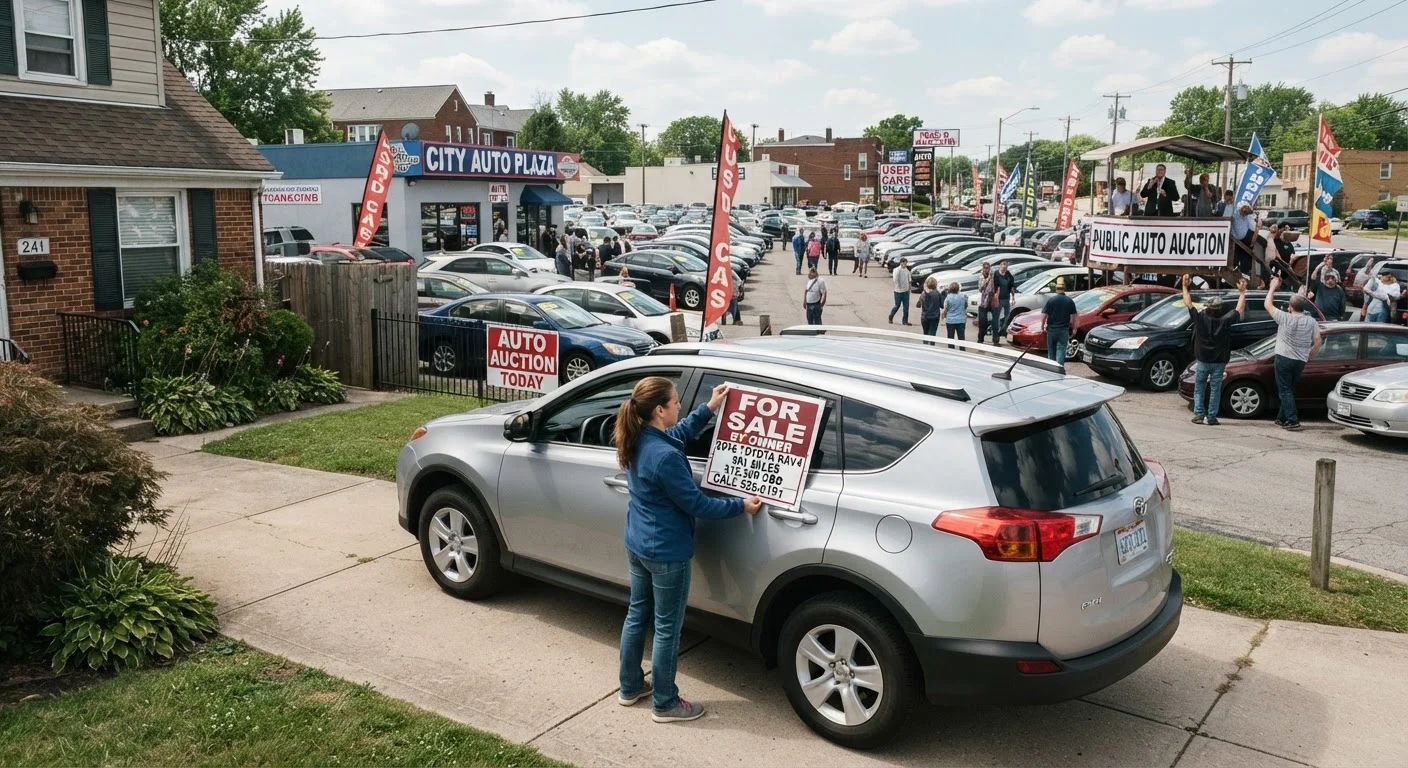
Why Where You Buy Matters
Most used car shoppers focus on the car itself — make, model, mileage, price — but overlook one equally important decision: where to buy. The source you choose shapes how much protection you have, how much negotiating room exists, and how smoothly the transaction goes. For seniors working with a fixed budget or limited mobility, picking the right channel from the start can save real time, money, and stress.
This article breaks down the three main used car sources available in the U.S. market: dealerships, private sellers, and auctions. Understanding each one helps you decide which fits your situation before you spend a single afternoon looking at cars. For a broader overview of the entire used car search process, see Finding a Used Car That Suits Seniors.
Buying From a Dealership
Dealerships — both franchised (affiliated with a specific manufacturer) and independent (selling various brands) — are the most structured buying environment. They handle title transfers, can arrange financing, and are regulated by state dealer licensing laws that include disclosure requirements. If something goes wrong, you generally have a clearer path to recourse than with a private sale.
The trade-off is price. Dealerships build their overhead and profit margin into asking prices, so you typically pay more per vehicle here than through a private party. Franchised dealers also offer Certified Pre-Owned (CPO) programs — used vehicles that have cleared a manufacturer inspection and come with a limited warranty. CPO vehicles cost more than standard used cars but provide added peace of mind.
Verify Dealer Licensing Before You Visit
Independent dealerships vary widely in quality. Check whether a dealer is licensed with your state's motor vehicle authority and look for any complaints filed with your state Attorney General's consumer protection office before visiting. A licensed dealer is legally obligated to follow state disclosure rules — an unlicensed one is not.
Independent dealerships vary widely in quality. Check whether a dealer is licensed with your state's motor vehicle authority and look for any complaints filed with your state Attorney General's consumer protection office before visiting.
Buying From a Private Seller
Private sellers are individuals — not businesses — selling their own vehicles, most commonly listed on online classifieds or community boards. Prices are often lower than dealer listings because there's no business overhead built in, and sellers are frequently motivated to move quickly.
The risk is higher. Private sales are generally "as-is," meaning no warranty, no guaranteed disclosure, and limited legal recourse if problems emerge after the sale. It's also where most vehicle fraud (odometer rollback, hidden damage, title issues) tends to occur. Running a vehicle history report using the 17-digit VIN and having an independent mechanic inspect the car before any money changes hands are non-negotiable steps. Our roadmap from first search to test drive walks through what to check at each stage.
Private Sales Offer Less Legal Recourse
Unlike dealerships, private sellers in most states are not required by law to disclose all known defects, though intentional concealment of a material defect may be actionable in some jurisdictions. Because enforcement is difficult and costly, prevention — thorough inspection before purchase — is far more practical than pursuing a claim after the fact.
Buying at Auction
Auto auctions range from government surplus sales and dealer-only wholesale auctions to public consignment auctions. Public auctions are open to individual buyers and can surface vehicles at prices below retail — but the environment is not beginner-friendly.
Vehicles are typically sold strictly as-is, inspection time is brief (sometimes just a slow roll-through the lot), test drives are rarely permitted, and bidding happens fast. Winning a bid commits you to the purchase. For buyers who are comfortable with risk and have mechanical knowledge or a trusted advisor on hand, auctions can be worthwhile. For most seniors buying their primary vehicle, they represent a higher-stakes option best approached cautiously, if at all.
~40%
Used cars sold by private sellers annually
Industry estimates suggest roughly four in ten used vehicle transactions in the U.S. occur between private parties rather than through dealerships.
$1,000–$3,000
Typical price gap: dealer vs. private seller
Consumer research consistently finds dealership asking prices for comparable vehicles tend to run higher than private listings, reflecting overhead and profit margin.
~200-point
Items in a typical CPO inspection checklist
Manufacturer-certified programs generally require inspections covering 150–200+ mechanical and cosmetic items before a vehicle earns CPO status.
If you're still weighing whether used is the right direction entirely, our complete roadmap to choosing between new and used covers the full decision from budget to final inspection.
Choosing the Right Source for Your Situation
No single source is right for everyone. A few honest questions can point you in the right direction:
- How much risk can you absorb? If a surprise repair bill would seriously strain your budget, lean toward a dealership or CPO option over a private sale or auction.
- How important is convenience? Dealerships handle paperwork, financing, and registration steps. Private sales and auctions put more administrative work on the buyer.
- How flexible is your budget? If you need to stretch every dollar, a well-vetted private sale may offer better value — provided you do the due diligence.
Regardless of source, budget for a pre-purchase inspection by an independent mechanic — generally $100–$200 — before finalizing any deal. It's one of the most reliable ways to avoid inheriting someone else's mechanical problems. Once you've identified your preferred source, understanding your financing and budgeting options is the natural next step.
This article provides general educational information about used car buying channels and is not financial, legal, or professional advice. Terms, protections, and regulations vary by state and individual circumstance. Consult appropriate professionals for guidance specific to your situation.
Frequently Asked Questions
Dealerships are generally subject to more consumer protection regulations, including disclosure requirements under many state laws. Private sales have fewer legal safeguards, so the buyer carries more responsibility for verifying a vehicle's condition and history. Neither channel guarantees a problem-free car.
Yes, most public auctions are open to anyone. However, auction environments move quickly, vehicles are typically sold as-is, and opportunities to inspect cars are limited. First-time buyers or those unfamiliar with auctions may find the pace stressful.
A Certified Pre-Owned (CPO) vehicle is a used car that has met specific inspection and condition standards set by a manufacturer or dealership. CPO cars usually come with a limited warranty, but they tend to cost more than comparable non-certified used vehicles.
Always meet in a public place, never pay before inspecting the vehicle in person, run a vehicle history report using the VIN, and have an independent mechanic inspect the car before committing. Trust your instincts if anything feels off.
In most U.S. states, you still owe sales tax on a private vehicle purchase — it is typically paid when you register the vehicle at the DMV. Tax rules vary by state, so check with your local motor vehicle agency.
Dealerships handle most paperwork, including title transfer. Private sellers should provide a signed title, bill of sale, and any maintenance records they have. Auctions issue their own sale documents; the buyer must handle title transfer afterward.
The content on this site is for informational purposes only and is not a substitute for professional advice. Always consult a qualified professional for guidance specific to your situation.