

Why Hybrids Appeal to Cautious Buyers
For many drivers — particularly those who have owned gasoline vehicles their entire lives — the idea of switching to a fully electric car can feel like a big leap. Range anxiety (concern about running out of charge before reaching a destination), unfamiliar charging infrastructure, and uncertainty about new technology are all understandable hesitations.
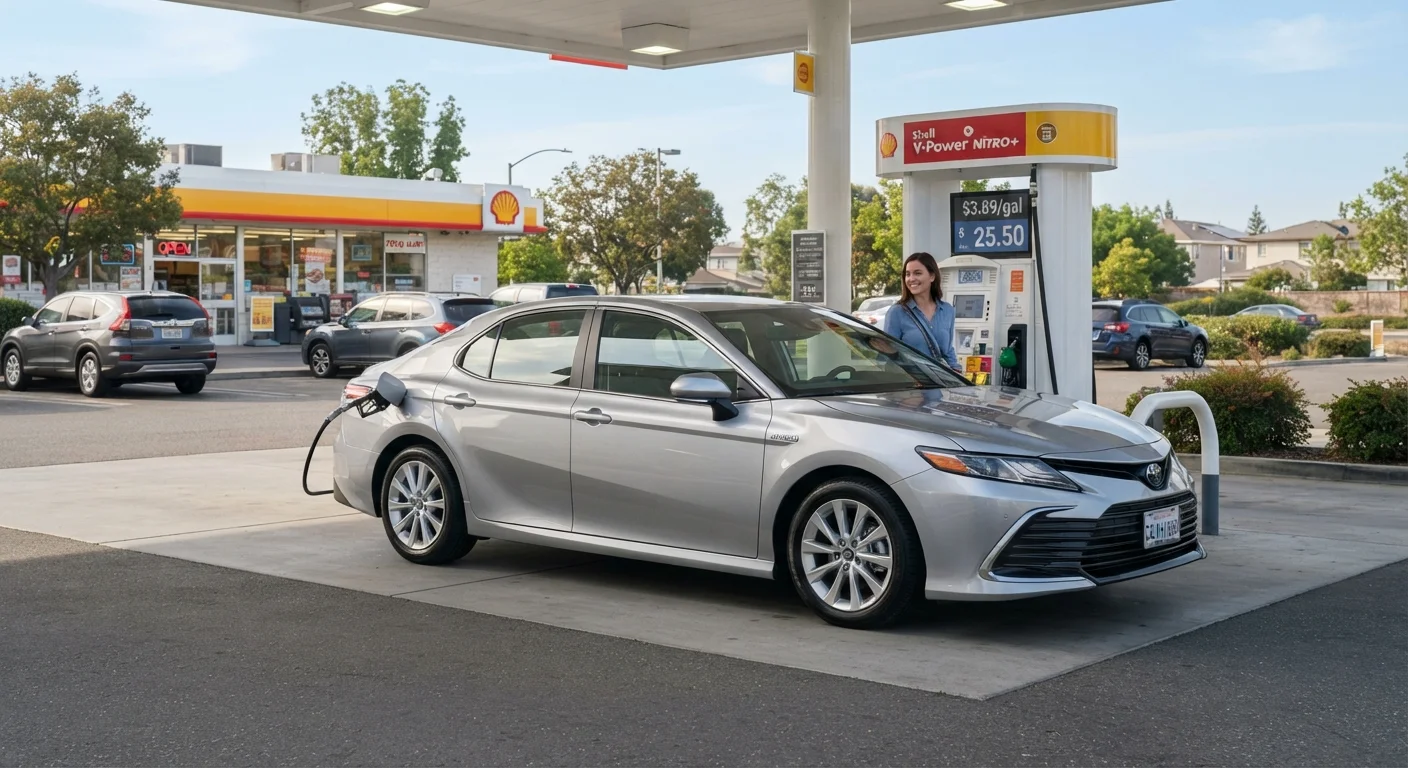
A hybrid car addresses most of those concerns directly. It behaves much like a conventional car: you fill it up at a regular gas station, you don't track charging times, and the driving experience is largely familiar. The electric components work quietly in the background, improving efficiency without demanding anything extra from the driver.
For a plain-language overview of how both technologies work, see our guide to electric and hybrid cars explained in plain English.
20–35%
Typical city fuel economy improvement in a hybrid
Fuel economy gains vary by model and driving conditions; city driving generally yields the largest efficiency benefit due to frequent stops and regenerative braking opportunities.
0
External charging sessions required for a standard hybrid
Unlike plug-in hybrids or full EVs, a standard self-charging hybrid replenishes its battery entirely through driving, requiring no home charger or public charging station.
How a Hybrid Actually Works Day to Day
Understanding what a hybrid does under the hood helps remove any mystery. When you start moving from a stop, the electric motor often does most of the work — this is when an engine is least efficient. Once you reach cruising speed, the gasoline engine takes over or the two work together. When you brake, the system recovers energy and stores it back in the battery. The car manages all of this automatically; there are no switches to flip or modes to select.
This seamless operation is one reason hybrids suit senior drivers well. There is no new routine to learn, no charging cable to manage, and no range calculation before a trip. The vehicle simply runs more efficiently than a gasoline-only car while keeping everything familiar.
Try a Test Drive That Mirrors Your Real Routine
When test-driving a hybrid, ask the dealer if you can drive the same routes you use most often — local roads, parking lots, and any hills you encounter regularly. Real-world performance in your actual driving environment is more meaningful than any spec sheet figure. Pay attention to how the transition between electric and gasoline power feels, and whether the dashboard display is easy to read at a glance.
It is worth understanding the distinction between a standard hybrid and a plug-in hybrid before shopping. Our article on hybrid vs. plug-in hybrid explains how each type charges and which driving habits each suits best.
Where Hybrids Work Best — and Where They Have Limits
Hybrids deliver their greatest efficiency advantage in city and suburban driving — exactly the kind of driving many seniors do most. Frequent stops give the regenerative braking system more opportunities to recover energy, and lower speeds allow the electric motor to carry more of the load.
On long highway stretches, the efficiency advantage narrows. The gasoline engine works steadily at highway speeds, and there is less opportunity for regenerative braking. That said, highway performance is perfectly reliable — a hybrid will handle a road trip without difficulty; it simply won't outperform a conventional car by as wide a margin in that setting.
If you are weighing a hybrid against a fully electric vehicle, our article on full electric vs. hybrid for older drivers offers a balanced comparison on comfort, convenience, and practicality.
Making a Confident, Informed Decision
A hybrid is not right for every driver, but it is a well-established, widely available technology with a strong reliability record. For drivers who want improved fuel economy, a smaller environmental footprint, and the peace of mind that comes from conventional refuelling, it represents a sensible, low-risk step toward more modern transportation.
Before finalizing any decision, it helps to think through your typical driving distances, your access to service centers familiar with hybrid systems, and how the purchase fits your overall budget. Our checklist of questions to ask before buying your first EV or hybrid covers these considerations in detail.
For seniors also thinking about overall value and affordability, the Affordable Senior Cars hub provides guidance on reliable, budget-conscious vehicle choices.
You can also explore what older drivers should know about new hybrid models for a closer look at current options and the trade-offs worth considering before you buy.
This article is for general informational and educational purposes only. It does not constitute financial, legal, or purchasing advice. Vehicle pricing, fuel economy figures, and features vary by model, trim level, and region. Consult a licensed dealer or qualified financial adviser for guidance specific to your situation.
Frequently Asked Questions
No. A standard hybrid charges its own battery automatically while you drive, using the engine and regenerative braking. You only need to fill up with gasoline as you always have. Plug-in hybrids are a separate category that do require external charging.
Maintenance costs for hybrids are generally comparable to conventional vehicles for routine services like oil changes and tire rotations. The regenerative braking system can actually reduce wear on brake pads over time. The high-voltage battery is a long-term consideration, but most modern hybrid batteries are engineered to last the life of the vehicle under typical use.
Fuel economy improvements vary by model and driving conditions, but hybrids often achieve noticeably better mileage — particularly in city driving — compared to similar gasoline-only vehicles. The electric motor takes on more work during low-speed, stop-and-go situations where conventional engines are least efficient.
Yes. Because a hybrid always has its gasoline engine available, range is not a concern on long trips. You can refuel anywhere regular gasoline is sold. Highway driving tends to show smaller efficiency gains compared to city driving, but the vehicle performs reliably at any distance.
Hybrids can offer fuel savings that offset a slightly higher purchase price over time, though individual results vary. For seniors prioritizing reliability and lower running costs, they are worth considering. For a broader look at affordable options, see resources focused on budget-conscious vehicle choices.
The content on this site is for informational purposes only and is not a substitute for professional advice. Always consult a qualified professional for guidance specific to your situation.