

Start here
What Makes a Car Electric or Hybrid?
Next
How Each Type Works Day to Day
Then
Charging and Fueling: What to Expect
Compare
Key Differences That Matter to Seniors
Go deeper
Ready to Learn More?
What Makes a Car Electric or Hybrid?
At the most basic level, three types of vehicles now share the road: gasoline-only cars, fully electric cars (called EVs), and hybrids that combine both energy sources.
Electric Vehicle (EV)
A car powered entirely by electricity stored in a battery. It has no gasoline engine and must be charged from an external power source.
Hybrid
A vehicle that combines a gasoline engine with an electric motor and battery. The two systems work together to improve fuel efficiency.
Plug-In Hybrid (PHEV)
A type of hybrid with a larger battery that can be charged from a wall outlet, allowing the car to run on electricity alone for a set number of miles before switching to gasoline.
Regenerative Braking
A system that captures energy when the car slows down and converts it back into electricity, helping to recharge the battery while driving.
Range
The maximum distance a vehicle can travel on a full charge (for EVs) or a full tank combined with a full charge (for plug-in hybrids) before needing to refuel or recharge.
Level 2 Charging
A faster method of home or public charging that uses a 240-volt power source, similar to what large appliances use, and can fully charge most EVs overnight.
A fully electric vehicle stores electricity in a large battery pack and uses an electric motor to drive the wheels. There is no gasoline engine involved at all. A hybrid, by contrast, pairs a conventional gasoline engine with an electric motor and a smaller battery. The two systems work together, each handling the job it does most efficiently.
Within the hybrid category, there is an important distinction worth knowing early: a standard hybrid manages all of its own charging internally, while a plug-in hybrid has a larger battery that can also be recharged from an external power outlet — giving it a meaningful amount of electric-only driving range before the gasoline engine takes over. For a deeper look at that difference, see our guide to hybrid vs. plug-in hybrid.
How Each Type Works Day to Day
Understanding the daily experience of each vehicle type removes much of the mystery around them.
Driving a fully electric car feels notably smooth and quiet. Because electric motors deliver power instantly, acceleration is responsive without any of the gear-shifting sensation of a traditional engine. The cabin is noticeably quieter at all speeds. For a closer look at what's happening under the hood, our article on what happens inside an electric car engine covers the mechanics in plain terms.
Driving a standard hybrid is nearly identical to driving a conventional car. The transition between the electric motor and gasoline engine happens automatically and almost imperceptibly. You don't need to manage anything — the car handles it.
Driving a plug-in hybrid starts in electric mode until the battery depletes, then switches seamlessly to gasoline. Drivers who charge regularly can handle most short daily errands entirely on electricity, while longer trips simply continue on gas.
Try Before You Decide
A test drive is one of the most useful steps you can take. Ask the dealer to demonstrate how the car transitions between electric and gasoline modes, and spend time with the dashboard controls. Many people find these vehicles feel more intuitive than they expected after just a few minutes behind the wheel.
Charging and Fueling: What to Expect
One of the most common concerns about EVs is charging — and the reality is straightforward once you understand the basics.
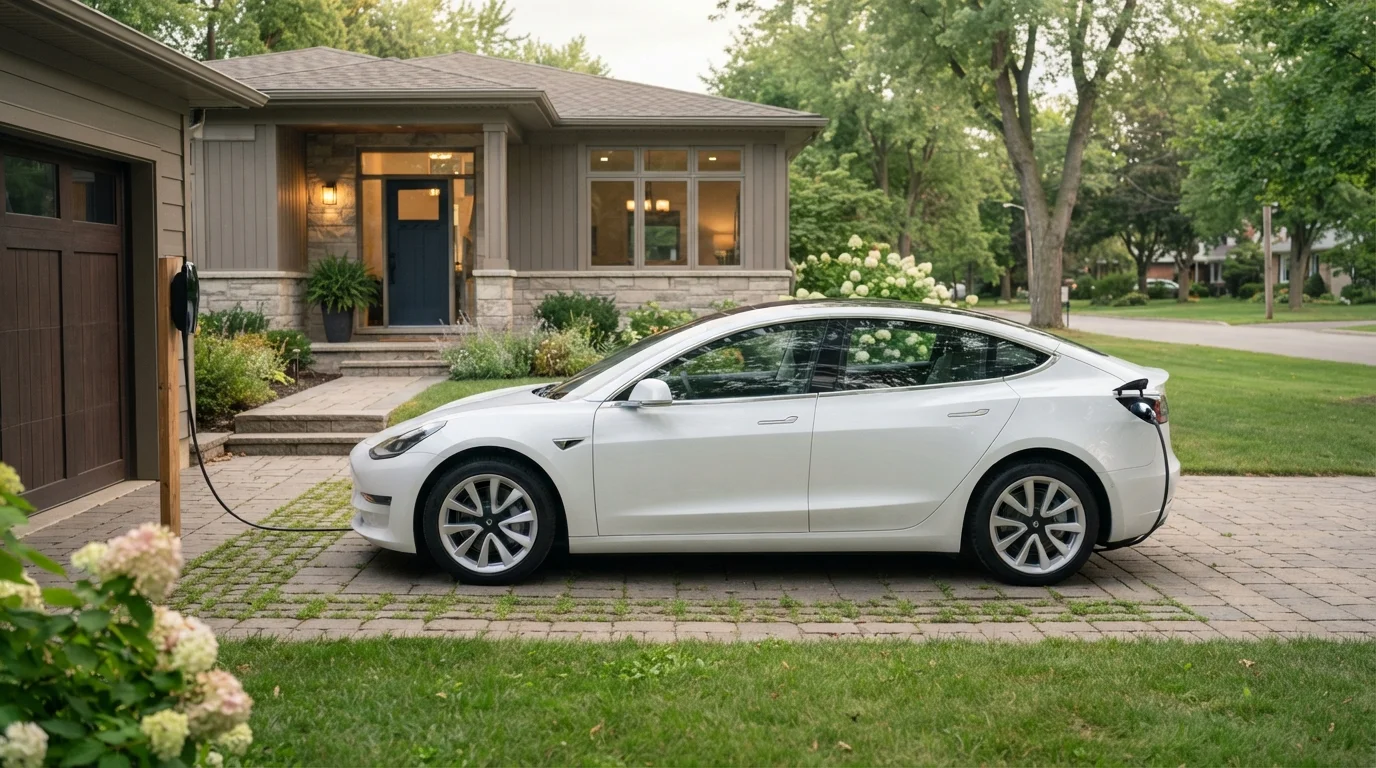
Most EV owners do the majority of their charging at home, plugging in overnight much like a smartphone. A standard household outlet provides slow charging suitable for topping up, while a dedicated home charger (installed by a licensed electrician) charges significantly faster. Public charging stations — found at shopping centers, parking garages, and along highways — offer faster options for when you're away from home.
Hybrids and plug-in hybrids still use gasoline, so fueling works exactly as it always has. Plug-in hybrids add the option of electric charging, but that is a choice, not a requirement — the car will run on gas alone if needed.
For a clear explanation of charging terminology like kilowatt-hours, Level 2 charging, and range estimates, the Battery Range and Charging Speeds glossary is a helpful companion resource.
Public Charging Is Expanding Rapidly
The number of public charging stations across the United States has grown substantially in recent years and continues to increase. That said, availability still varies significantly by region — rural and less-populated areas may have fewer options. It is worth researching the charging infrastructure in your area before committing to a fully electric vehicle.
Key Differences That Matter to Seniors
When evaluating whether an EV or hybrid suits your lifestyle, a few practical factors tend to carry the most weight.
- Daily driving distance: If most trips are local errands and short commutes, an EV's range is rarely a concern. Frequent long-distance travel may favor a plug-in hybrid or standard hybrid instead.
- Home charging access: Owners with a garage or dedicated parking space adapt to home charging easily. Those who rely entirely on street parking will depend more on public charging infrastructure.
- Maintenance simplicity: EVs eliminate oil changes entirely. Both EVs and hybrids generally have fewer mechanical parts under the hood, which can translate to fewer routine service visits — though any maintenance should be performed by a qualified technician familiar with these systems.
- Comfort and controls: Many newer EVs and hybrids use large touchscreens to manage features. If that feels unfamiliar, it is worth spending time with the controls during a test drive before deciding.
These are factors to weigh — not a verdict. What works well depends entirely on individual circumstances.
Don't Rely on Advertised Range Alone
Manufacturer range estimates are typically measured under controlled conditions. Real-world range can be lower depending on driving speed, terrain, outside temperature, and how much heating or air conditioning you use. When evaluating any EV, factor in a practical buffer below the advertised figure to avoid unexpected situations.
Ready to Learn More?
This overview is designed as a starting point, not the final word. Each vehicle type has nuances worth exploring as you consider your options.
If you want a structured checklist of questions to ask before buying, Questions to Ask Before Buying Your First EV or Hybrid covers range needs, charging access, insurance, and maintenance considerations in practical detail. And once you've made a choice, Making the Most of an EV or Hybrid in Your Daily Routine offers guidance on charging habits, route planning, and getting comfortable with your vehicle's features.
Battery Range & Charging Speeds Glossary
A senior-friendly quick-reference glossary covering essential EV and hybrid terms — from kWh and range to Level 2 charging and regenerative braking. Useful to read alongside this article.
Questions to Ask Before Buying Your First EV or Hybrid
A practical checklist that walks through range needs, home charging access, insurance considerations, and maintenance questions to address before making a purchase decision.
U.S. Department of Energy — Alternative Fuels Data Center
A free government resource offering charging station locators, vehicle comparison tools, and fuel cost calculators to help evaluate electric and hybrid options objectively.
This article provides general educational information about electric and hybrid vehicle technology. It is not financial, purchasing, or maintenance advice. Consult a licensed mechanic or qualified adviser for guidance specific to your situation.
Frequently Asked Questions
No. A standard hybrid charges its own small battery using the gasoline engine and a process called regenerative braking — capturing energy when the car slows down. You simply fill it with gas at a pump as usual, just like a conventional car.
Range varies by model and driving conditions, but many current electric vehicles can travel roughly 150 to 300 miles on a full charge. Factors like highway speed, temperature, and climate control use can affect that figure. Always check the EPA-estimated range for any specific vehicle.
Charging costs depend on your local electricity rates and how much you drive. Many owners find home charging less expensive per mile than buying gasoline, though individual results vary. A licensed electrician can advise on home charging setup costs.
EVs have fewer moving parts than gasoline engines, so some routine maintenance — like oil changes — is eliminated entirely. Hybrids still require conventional maintenance for their gasoline components. Both types do require periodic battery system checks by a qualified technician.
Regenerative braking is a system that captures the energy normally lost as heat when you slow down, and converts it back into electricity to recharge the battery. It makes the car slightly more efficient and can feel a little different from traditional braking, though most drivers adapt quickly.
Yes, though it requires some planning. Public fast-charging stations are available along major highways and in many cities, allowing drivers to add significant range in 20–45 minutes depending on the charger type. Route-planning tools built into most EVs can identify charging stops automatically.
The content on this site is for informational purposes only and is not a substitute for professional advice. Always consult a qualified professional for guidance specific to your situation.