

Why EV Terminology Can Feel Overwhelming
Shopping for an electric or hybrid vehicle introduces a new vocabulary — kilowatt-hours, DC fast charging, regenerative braking — that can make the experience feel more complicated than it needs to be. The good news: you only need to understand a handful of core concepts to evaluate whether an EV or hybrid fits your lifestyle.
This glossary is designed as a quick-reference companion. Bookmark it, print it, or keep it open while you research vehicles. For a broader introduction to how these technologies work, see Electric and Hybrid Cars Explained in Plain English.
kWh (Kilowatt-Hour)
The unit used to measure battery capacity in an electric vehicle, similar to how gallons measure a fuel tank's size. A higher kWh rating generally indicates the potential for greater driving range.
kW (Kilowatt)
The unit of power used to describe charging speed. A higher kW rating means electricity is delivered to the battery faster, reducing the time needed to charge.
Range
The estimated distance an EV can travel on a single full charge. Manufacturer-quoted ranges are measured under standardized test conditions and may differ from real-world driving.
Level 1 Charging
Charging using a standard 120-volt household outlet. Requires no special equipment but adds range slowly — typically 3 to 5 miles per hour of charging.
Level 2 Charging
Charging via a 240-volt dedicated unit installed by an electrician. Adds roughly 15 to 30 miles of range per hour and is the most common home charging setup for EV owners.
DC Fast Charging
A high-speed public charging method that delivers direct current (DC) power, bypassing the car's internal converter. Can add significant range in 20 to 30 minutes, though not all vehicles support it.
EVSE
Electric Vehicle Supply Equipment — the technical term for a home or public charging unit. The equipment manages the safe flow of electricity from the outlet to the vehicle's battery.
Regenerative Braking
A system that converts kinetic energy (motion) back into electrical energy when the vehicle slows down. This energy is stored in the battery, extending driving range.
Plug-In Hybrid (PHEV)
A vehicle with both a combustion engine and a battery that can be charged from an external outlet. It can run on electricity for shorter trips and switch to gasoline for longer journeys.
State of Charge (SOC)
The current battery level expressed as a percentage, similar to a fuel gauge. Most EVs display SOC on the dashboard and allow drivers to set charging limits.
Preconditioning
Warming or cooling the vehicle's cabin while it is still plugged in, so the battery is not used for temperature management at the start of a trip. Particularly useful in cold weather.
Onboard Charger
The component inside the vehicle that converts AC (alternating current) electricity from Level 1 or Level 2 chargers into DC power the battery can store. Its capacity determines the maximum Level 2 charging speed.
Key Numbers You'll See on Every EV Listing
When you look at an EV's specifications, three numbers matter most: battery capacity, range, and charging speed. Here's how to read them.
| Average EV battery capacity (mainstream models) | 40–100 kWh (General industry range; varies by model and trim) |
| Typical Level 1 charging speed | 3–5 miles of range per hour (Using a standard 120V household outlet) |
| Typical Level 2 charging speed | 15–30 miles of range per hour (Using a 240V dedicated home charging unit) |
| DC Fast Charging range added | Up to 100+ miles in ~30 minutes (Varies by vehicle acceptance rate and charger output) |
| Cold weather range reduction | Up to 20–40% in extreme cold (U.S. Department of Energy general guidance) |
| Recommended daily charge level (battery longevity) | 20–80% SOC (Commonly recommended by EV manufacturers; check your vehicle manual) |
Battery capacity is measured in kilowatt-hours (kWh) — think of it like the size of a fuel tank. A larger kWh number generally means more potential range, though actual range also depends on driving habits, temperature, and terrain.
Range is the estimated distance the vehicle can travel on a full charge. Manufacturer estimates are tested under controlled conditions, so real-world range is often somewhat lower — particularly in cold weather or at highway speeds. When comparing vehicles, consider your typical weekly driving distance and whether the quoted range comfortably covers it with room to spare.
Charging speed tells you how quickly the battery can be replenished. It's expressed in kilowatts (kW). A higher kW rating means faster charging — but only up to the vehicle's own maximum acceptance rate. Plugging into a faster charger than your car supports won't damage the battery; the car simply draws what it can handle.
Once you're ready to dig into home charging setup, EV Charging at Home: What Seniors Need to Know walks through outlet types and installation questions in plain language.
Charging Levels and What They Mean Day-to-Day
EV charging is divided into three levels, and understanding the difference helps you plan where and how often you'd need to charge.
Charging at Home vs. Public Stations
Most EV owners do the majority of their charging at home overnight, using Level 1 or Level 2 equipment. Public DC fast chargers are useful for longer road trips or when you need a quick top-up away from home. Understanding both options helps you plan realistically before purchasing. Availability of public chargers varies significantly by region, so it's worth checking coverage in your area.
Level 1 uses a standard 120-volt household outlet — the same type used for lamps and appliances. No special equipment is needed, but charging is slow: roughly 3 to 5 miles of range per hour. For drivers covering short distances daily, overnight Level 1 charging can be sufficient.
Level 2 uses a 240-volt outlet, similar to what a clothes dryer uses. A licensed electrician installs a dedicated charging unit (called an EVSE) in your garage or parking area. Level 2 typically adds 15 to 30 miles of range per hour — enough to fully charge most vehicles overnight. This is the setup most EV owners use at home.
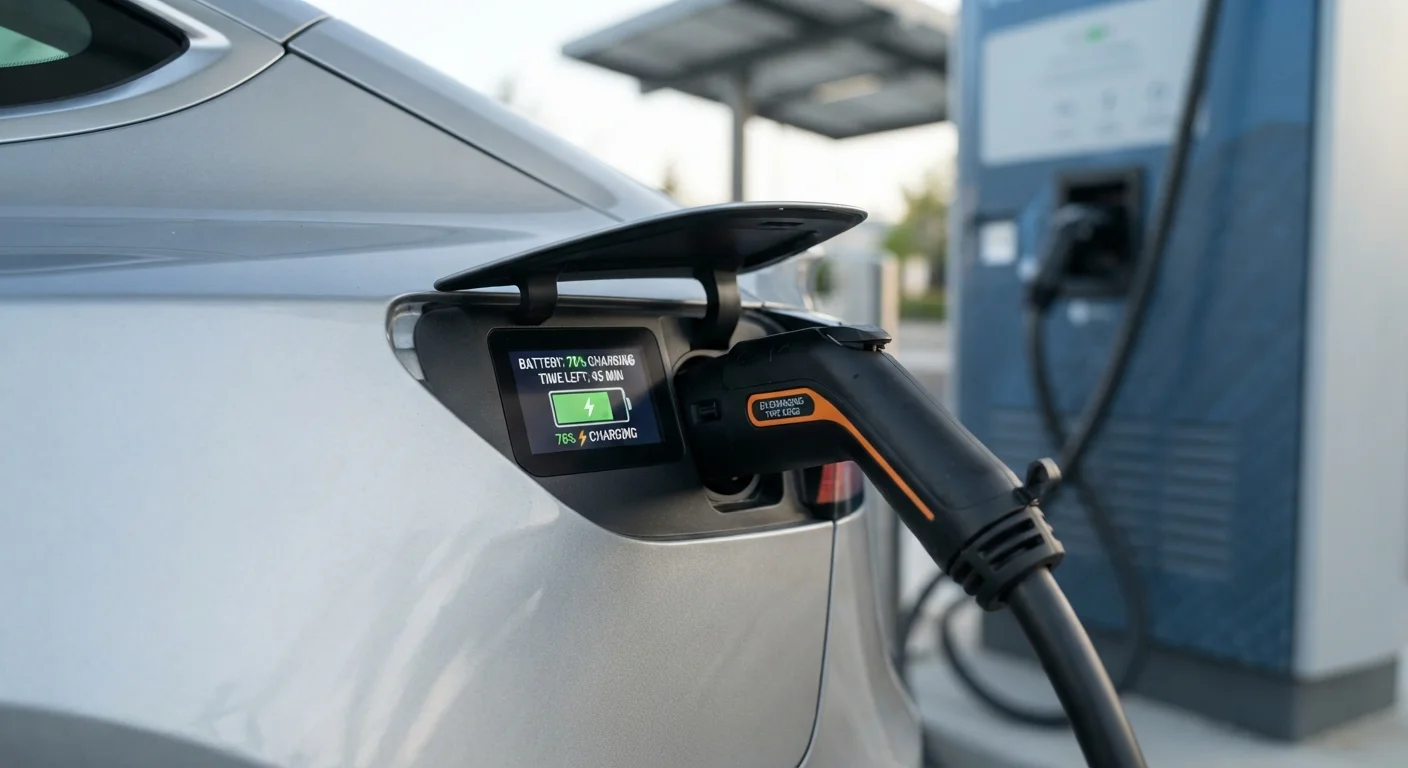
DC Fast Charging (Level 3) is found at public charging stations, not homes. It delivers power directly as DC (direct current), bypassing the car's onboard converter for much faster speeds — sometimes 100+ miles of range in 20 to 30 minutes. Not all vehicles support DC fast charging, and repeated fast charging can have mild long-term effects on battery health depending on vehicle and usage patterns.
Before purchasing, use the checklist in Questions to Ask Before Buying Your First EV or Hybrid to assess which charging level makes sense for your home and driving habits.
Getting More From Your Battery Every Day
A few simple habits can meaningfully extend the distance you get from each charge. Most EVs and plug-in hybrids include features designed to help — you just need to know they exist.
Regenerative braking captures energy normally lost as heat when you slow down, converting it back into electricity stored in the battery. It's automatic in most EVs and feels slightly different from traditional braking — you may notice the car slowing more than usual when you lift your foot off the accelerator. Some vehicles let you adjust the intensity of this feature.
Preconditioning lets you warm or cool the cabin while the car is still plugged in, so the battery isn't drained managing temperature once you're driving. In cold climates especially, this can noticeably protect your real-world range.
Eco mode adjusts throttle response and climate settings to prioritize efficiency. It's a simple toggle available in most EVs and hybrids — useful for everyday driving even if you switch it off for longer highway trips.
For practical guidance on building these habits into your routine, see Making the Most of an EV or Hybrid in Your Daily Routine.
This article provides general educational information about electric and hybrid vehicle terminology. Vehicle specifications, charging times, and range estimates vary by make, model, and real-world conditions. Consult vehicle documentation and a qualified dealer or electrician for guidance specific to your situation.
The content on this site is for informational purposes only and is not a substitute for professional advice. Always consult a qualified professional for guidance specific to your situation.