

Why These Myths Matter
Electric vehicles (EVs) have quietly become a practical option for millions of American drivers — yet a number of persistent misconceptions continue to discourage people from exploring them. For seniors weighing a vehicle purchase, myths around range, charging, cost, and complexity can make EVs feel riskier than they actually are. Sorting the evidence from the assumptions is the first step toward a confident decision.
If you've encountered similar misconceptions in the broader car-buying process, our look at common assumptions about new cars that can lead seniors astray covers additional myths worth examining before you shop.
Myth
Electric cars don't have enough range to be practical — you'll constantly run out of charge.
Fact
Most modern EVs offer 200–300+ miles of range on a full charge, which comfortably exceeds the average American's daily driving.
Range anxiety — the fear of running out of battery — is one of the most common reasons people hesitate about EVs. However, data from the U.S. Department of Transportation consistently shows that the average American drives fewer than 40 miles per day. Even more modestly-ranged EVs provide several times that capacity. Seniors who drive primarily for errands, appointments, and local trips are unlikely to encounter range limitations in everyday use. Longer highway journeys do require some planning around charging stops, but this is a manageable consideration rather than a fundamental flaw.
Myth
Charging an EV is complicated and public chargers are unreliable or hard to find.
Fact
Home charging handles most daily needs, and public charging networks have grown substantially across the U.S.
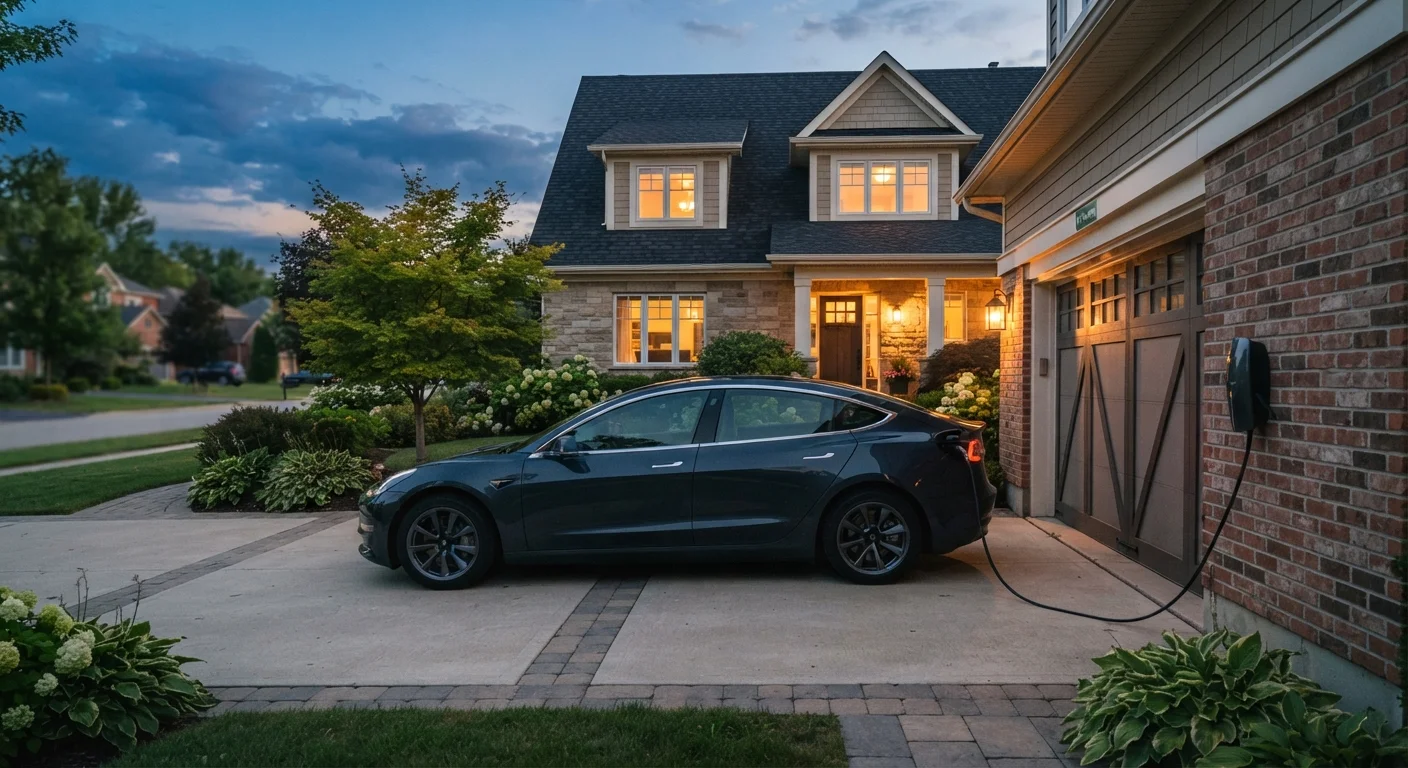
The most straightforward EV charging setup is a standard home outlet or a Level 2 home charger (a 240-volt unit, similar to what powers a clothes dryer). Plugging in overnight typically provides a full charge by morning. For trips beyond home range, public fast-charging stations are increasingly available along highways and in retail areas. Apps and in-car navigation systems now make locating nearby chargers far easier than in previous years. While network reliability can vary by region and provider, the overall infrastructure continues to improve steadily.
Myth
EV batteries will fail quickly and cost tens of thousands of dollars to replace.
Fact
EV battery degradation is gradual, and most manufacturers provide lengthy warranties covering significant capacity loss.
Battery technology has matured considerably. Most EV manufacturers offer battery warranties of eight years or 100,000 miles — often covering replacement if capacity drops below a defined threshold. Real-world studies have shown that many EV batteries retain 80–90% of their original capacity after years of typical use. For drivers who own a vehicle for eight to ten years and then sell it, a full battery replacement is rarely a cost they will personally encounter. Additionally, battery costs have declined substantially over the past decade as production has scaled.
Myth
Electric cars are far more expensive to maintain and repair than conventional vehicles.
Fact
EVs have fewer moving parts than gasoline cars, which generally translates to lower routine maintenance costs.
A conventional internal combustion engine contains hundreds of moving parts — pistons, valves, a transmission, exhaust components — all of which require periodic service. An EV's electric motor is mechanically simpler and has no oil to change, no timing belt, and no exhaust system to maintain. Consumer and government research has generally found that EV owners spend less on routine maintenance over time. Brake wear is also reduced in many EVs because of regenerative braking, which uses the motor to slow the vehicle and recover energy. Specialized repairs, such as high-voltage system work, do require certified technicians, but these needs arise infrequently for most owners.
Myth
EVs are too technologically complex for older drivers to use comfortably.
Fact
Many EV features — smooth acceleration, quiet operation, minimal controls — are praised by seniors for their simplicity and comfort.
The driving experience in an EV is, in many ways, less demanding than a gasoline car. There's no gear-shifting, the acceleration is smooth and immediate, and the cabin is notably quieter. Large touchscreen interfaces can take adjustment, but most functions remain accessible through straightforward menus, and steering wheel controls handle common tasks. Automakers have also introduced voice-command features that allow drivers to adjust settings without looking away from the road. If certain technology features feel unfamiliar, dealership staff and many community programs offer hands-on orientations.
What Confident EV Ownership Actually Looks Like
Once the core myths are addressed, a clearer picture emerges: for many seniors, an EV or plug-in hybrid (a vehicle that runs on both electricity and gasoline) can align well with real driving patterns and lifestyle priorities. Most retired or semi-retired drivers travel well within the daily range modern EVs provide. Home charging — simply plugging in overnight — handles the vast majority of charging needs without any special planning.
<40 miles
Average American's daily driving distance
U.S. Department of Transportation data indicates most Americans drive well under 40 miles on a typical day, within the range of most EVs.
8 years / 100K mi
Typical EV battery warranty coverage
Most major EV manufacturers provide at least an 8-year or 100,000-mile warranty on their traction battery packs in the U.S.
~30% less
Estimated routine maintenance cost savings
Studies from organizations including Consumer Reports have suggested EV owners may spend roughly 30% less on routine maintenance versus comparable gasoline vehicles.
That said, EVs aren't maintenance-free. Tires, brakes, cabin filters, and coolant still need periodic attention. Our detailed guide on EV maintenance realities explains exactly what's involved. And if you do venture beyond your home range, public charging is more accessible than many expect — see our overview of how public EV networks actually work for a plain-language walkthrough.
Financing an EV purchase comes with its own set of myths. If you have questions about loans and credit, our article on financing myths that can cost older car buyers money is a useful companion read. When you're ready to go further, a practical checklist of questions to ask before buying your first EV or hybrid can help you evaluate your specific situation before visiting a dealership.
This article provides general information about electric vehicles for educational purposes. Individual vehicle performance, costs, and suitability vary. Consult a qualified automotive or financial professional before making purchase decisions based on your personal circumstances.
The content on this site is for informational purposes only and is not a substitute for professional advice. Always consult a qualified professional for guidance specific to your situation.