

Where the 'No Maintenance' Myth Comes From
Electric vehicles genuinely do eliminate some of the most frequent maintenance tasks associated with petrol-powered cars — no oil changes, no timing belt replacements, fewer moving parts overall. Automakers and enthusiasts have understandably highlighted these advantages, and for good reason. But somewhere along the way, a simpler message took hold: EVs don't need maintenance. That shorthand is misleading, and for drivers planning a long ownership period, it can be genuinely costly.
Understanding what EVs actually require — and what they don't — is a practical first step before or after purchase. Our guide to how electric cars work internally provides helpful context on the systems involved.
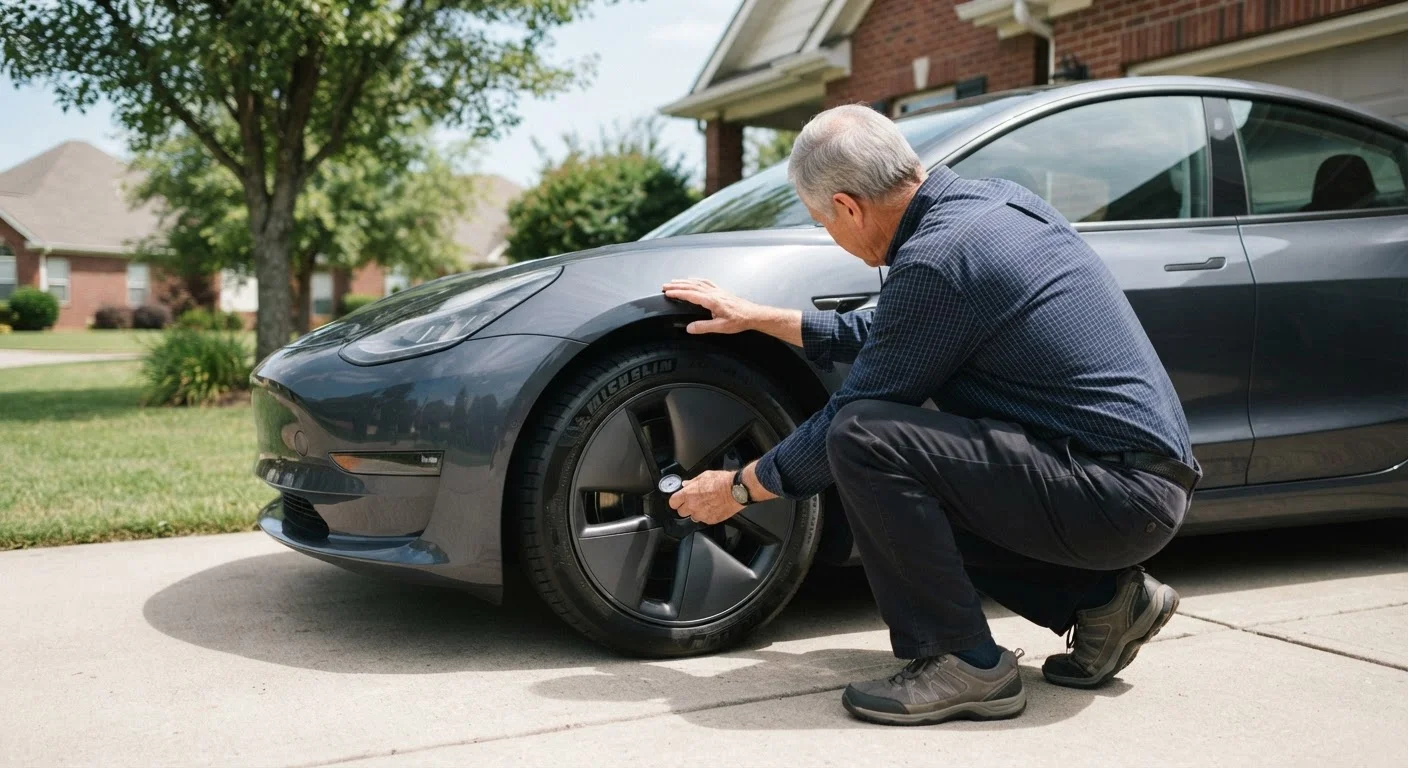
Skipping tire rotations and pressure checks because 'there's no engine to worry about.'
Why it happens: Owners associate maintenance primarily with engine-related tasks, so when those disappear, tire care can fall off the radar entirely.
Ignoring the 12-volt auxiliary battery, assuming it's not present or not important in an EV.
Why it happens: Most people know EVs have a large high-voltage traction battery, and assume that's the only battery. The smaller 12-volt battery — which powers lights, locks, and electronics — is easy to forget.
Neglecting brake fluid changes because regenerative braking reduces how often friction brakes are used.
Why it happens: Regenerative braking does significantly reduce wear on brake pads, leading owners to assume the entire brake system requires less attention.
Overlooking battery coolant and thermal management system checks.
Why it happens: This system has no equivalent in a petrol car, so it's unfamiliar territory. Many EV owners don't know it exists until a problem arises.
Assuming cabin air filters don't need replacing because the car has no exhaust pipe.
Why it happens: Cabin air filters are often associated in people's minds with engine air filters, and since EVs have no engine air filter, owners assume both are absent.
Missing scheduled software and system inspections because nothing feels broken.
Why it happens: EVs rely heavily on software to manage battery performance, safety systems, and driver assistance. These updates and checks are invisible, so owners may not think to ask about them.
Why This Misunderstanding Has Real Consequences
Skipping maintenance on any vehicle leads to accelerated wear, reduced reliability, and potentially voided warranty claims. With EVs, the risk is compounded by unfamiliarity — many owners simply don't know which checks still apply. The result can be an unexpected repair bill at the worst possible time.
~30%
Fewer moving parts in an EV vs petrol car
Industry estimates suggest electric drivetrains have significantly fewer mechanical components, reducing certain failure points — but not eliminating maintenance entirely.
2 years
Typical brake fluid replacement interval
Many vehicle manufacturers recommend brake fluid inspection or replacement every two years regardless of mileage, including for electric vehicles.
It's also worth noting that some EV maintenance tasks differ in frequency rather than being eliminated entirely. Regenerative braking — a system that recaptures energy during deceleration — reduces brake pad wear significantly, but the brake fluid, rotors, and calipers still degrade over time and need periodic inspection. Similarly, EVs use a separate cooling system for their battery pack, which requires its own coolant checks. These are easy to overlook if you're accustomed to a petrol car's service schedule.
For a fuller picture of what ownership actually costs over time, see our article on the real long-term cost of owning an electric car.
Skipping Service May Void Your Warranty
Most EV manufacturers require owners to follow a documented service schedule to keep the vehicle warranty valid. Failing to maintain records of routine checks — even simple ones — could leave you without coverage if a significant component fails. Keep all service receipts and check your warranty documentation for specific requirements.
Staying informed about your specific vehicle's service intervals is straightforward: check the owner's manual or ask your dealer for an EV-specific maintenance schedule. These are often shorter documents than you'd expect — but they matter. You can also review essential routine car checks that apply broadly, including to EVs.
If you're still deciding whether an EV is right for you, the questions to ask before buying your first EV or hybrid covers maintenance considerations alongside range and charging factors.
The content on this site is for informational purposes only and is not a substitute for professional advice. Always consult a qualified professional for guidance specific to your situation.