

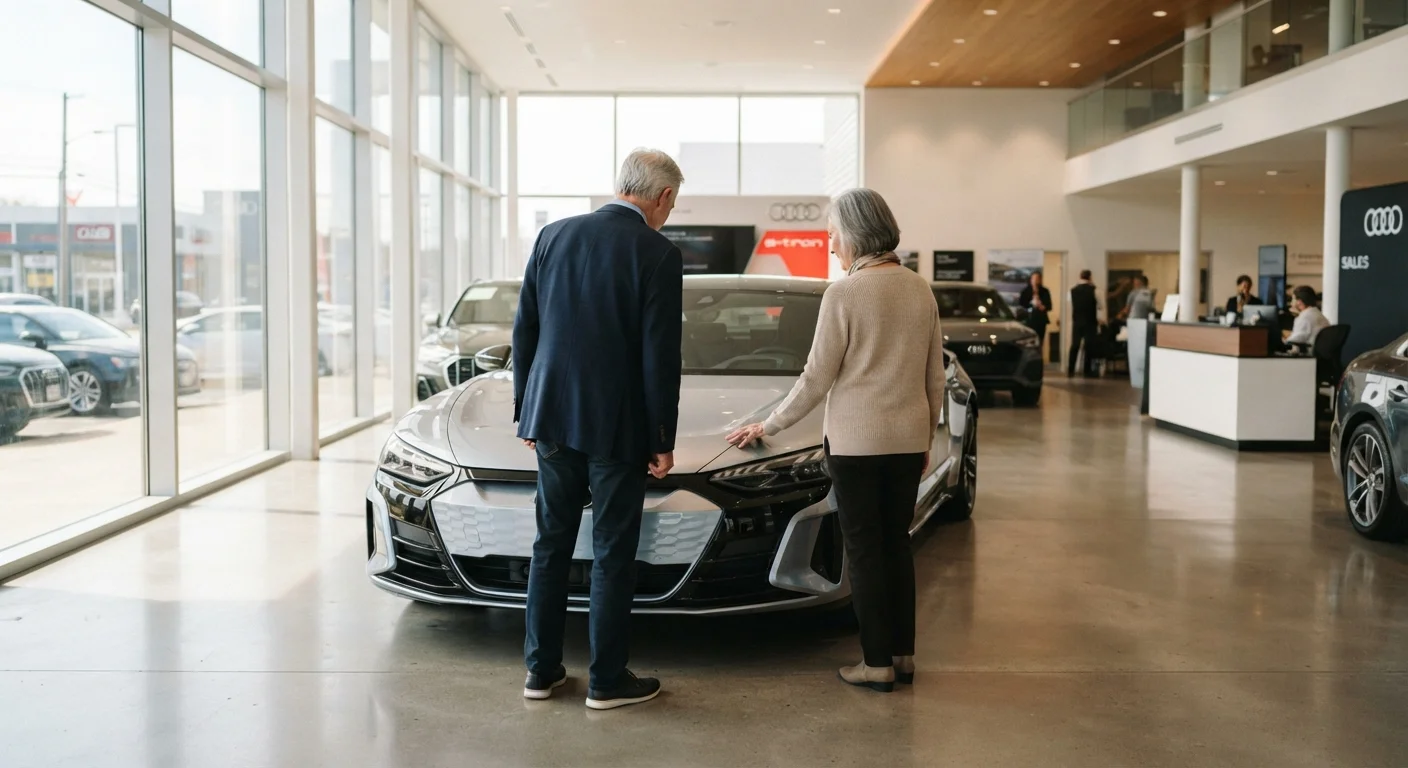
Why These Assumptions Matter for Senior Car Buyers
Buying a new car is one of the larger financial decisions most households make, and for seniors, the stakes are compounded by practical priorities: reliable transportation, ease of use, and value that holds over time. Widely held assumptions about new cars — that newer automatically means safer, that warranties eliminate repair costs, or that electric vehicles are impractical — can quietly push buyers toward choices that don't actually serve their needs.
The goal here is not to discourage buying new, but to replace assumptions with accurate information. Informed buyers ask better questions, compare the right details, and avoid regret after the paperwork is signed. It's also worth noting that comparing new and used options side by side is a worthwhile step before committing to either path.
Myth
A newer car is automatically safer than an older one, so any recent model will protect me well.
Fact
Safety ratings depend on the specific vehicle's design, not just its age — and scores vary considerably even among vehicles sold in the same year.
While safety technology has broadly improved over time, a newer model year is no guarantee of a strong crash-test result. NHTSA and IIHS evaluate vehicles individually, and scores can differ between trims of the same model. A higher trim may include automatic emergency braking as standard, while the base trim does not. Always check the rating for the precise configuration you plan to buy.
Myth
Electric cars are too complicated to charge and are not practical for seniors who don't live near charging stations.
Fact
Most EV owners charge at home overnight using a standard or Level 2 charger, making the process comparable to plugging in a phone.
Charging anxiety is one of the most persistent EV misconceptions. For drivers who cover typical daily distances, a home charger installed by a licensed electrician provides a full charge by morning. Public fast-charging networks have also expanded considerably. Beyond charging, many seniors find EVs easier to manage day-to-day — smooth, linear acceleration, no gear changes, and quieter cabins can all reduce driving fatigue. See why seniors often find EVs easier to drive than expected for more on this topic.
Myth
The standard new-car warranty means I won't have to pay for repairs for several years.
Fact
New-car warranties exclude many items and have mileage or time limits; out-of-pocket costs can still arise during the warranty period.
"Bumper-to-bumper" warranties typically cover manufacturing defects for three to five years or a set mileage, whichever comes first. However, consumables — tires, brake pads, filters, and wiper blades — are almost always excluded. Powertrain warranties cover the engine and transmission but not every system. Assuming full coverage can result in surprise expenses. Reading the warranty document before purchase, rather than after, is strongly advisable.
Myth
All new cars come with the same advanced safety features, so I don't need to compare trims.
Fact
Driver-assistance technologies such as automatic emergency braking, lane-keeping assist, and blind-spot monitoring are often optional or limited to higher trim levels.
Manufacturers frequently offer safety technology as a package add-on or reserve it for mid- and upper-tier trims. Two vehicles with identical nameplates sold at different price points may have very different standard equipment. When evaluating a vehicle, request the full features list for the specific trim you are considering. Consumer information resources and manufacturer websites publish standard-versus-optional breakdowns that make comparison straightforward.
Myth
Buying new is always the smarter financial decision because you get a reliable car with no hidden history.
Fact
New cars depreciate rapidly — often losing a significant portion of their value in the first few years — making them a different financial proposition than many buyers realize.
New vehicles typically lose value quickly once driven off the lot. That depreciation may not matter to a buyer planning to keep a vehicle for many years, but it does affect resale value if circumstances change. A well-maintained, low-mileage used vehicle with a clean vehicle history report can offer reliability comparable to a new one at a lower entry cost. The new vs. used car comparison hub and common myths about buying used cars can help seniors weigh both sides of this decision.
Making Sense of Safety Tech, EVs, and Warranty Fine Print
Three areas generate the most confusion for senior buyers: safety ratings, electric vehicles, and warranty coverage. On safety, the key habit is verification — always look up the NHTSA or IIHS score for the exact trim and model year you're considering, rather than assuming a recent vehicle automatically rates well.
Safety Ratings Require Direct Verification
A newer model year is not a guarantee of a top safety score. The National Highway Traffic Safety Administration (NHTSA) and the Insurance Institute for Highway Safety (IIHS) publish independent crash-test ratings for specific model years and trim levels. Before assuming a vehicle is safe, look up its actual score for the exact configuration you are considering — results can differ significantly between trims or between model years of the same vehicle.
On EVs, much of the apprehension stems from unfamiliarity rather than genuine practical barriers. Charging infrastructure and vehicle range have both improved substantially, and the driving experience of an electric vehicle — smooth, quiet, and free of gear changes — often suits seniors particularly well. For a fuller picture, see common myths about electric cars that put people off unnecessarily.
Warranty Coverage Is Not Unlimited
New-car warranties typically cover specific components for defined mileage or time periods — not everything that can go wrong. Wear items such as brake pads, tires, and wiper blades are almost always excluded. Read the warranty document in full and ask the dealer to clarify exactly what is and is not covered before signing. Assumptions about "bumper-to-bumper" protection can lead to unexpected out-of-pocket costs.
Finally, new-car buyers comparing across trims should also consider whether adaptive accessories might close a comfort or mobility gap more cost-effectively than a higher trim upgrade. The facts about adaptive car accessories for seniors article separates myth from reality on that front. And for broader insurance implications of any new vehicle, car insurance myths that affect seniors is a useful companion read.
This article is for general informational and educational purposes only. It does not constitute financial, insurance, legal, or personalised purchasing advice. Vehicle features, warranty terms, safety ratings, and pricing vary by manufacturer, model, trim, and region. Readers are encouraged to consult official safety rating databases, read manufacturer warranty documents in full, and speak with a licensed professional for advice tailored to their individual circumstances.
The content on this site is for informational purposes only and is not a substitute for professional advice. Always consult a qualified professional for guidance specific to your situation.