

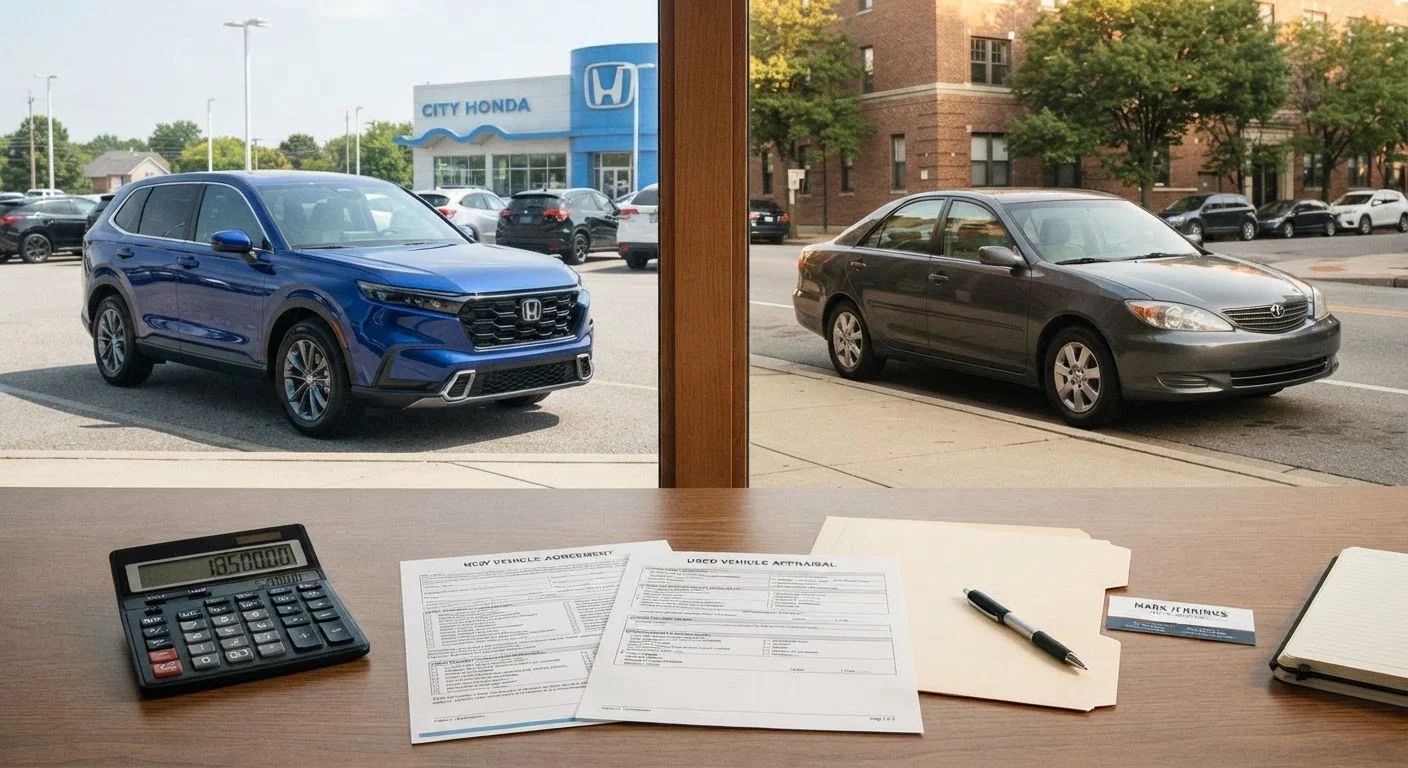
Option A
New Car Financing
Lower rates, longer terms, higher sticker prices.
Best for: Buyers who prioritize predictable payments, manufacturer warranties, and the lowest available interest rates.
Option B
Used Car Financing
Smaller loan amounts, higher rates, shorter terms.
Best for: Budget-conscious buyers willing to accept slightly higher rates in exchange for a lower total loan balance.
Why Lenders Price New and Used Loans Differently
When a lender evaluates an auto loan, they are assessing the risk that the vehicle — their collateral — loses value faster than you pay down the debt. New cars carry a predictable depreciation curve and a clear title history, which makes them lower-risk from a lender's perspective. Used vehicles introduce variables: unknown maintenance history, higher mileage, and faster depreciation already in progress. Lenders compensate for that uncertainty with higher interest rates.
According to data published by the Federal Reserve, average interest rates on used car loans have historically run 2–4 percentage points higher than comparable new car loans, though the actual spread varies with your credit score, loan term, and lender type. That gap may seem small, but on a multi-year loan it compounds into a meaningful difference. For more on how lenders and dealers differ in their loan structures, see how dealer and bank financing compare.
| Criterion | New Car Loan | Used Car Loan |
|---|---|---|
| Typical interest rate | Lower (varies by credit) | Higher by 2–4+ points |
| Common loan terms | 36–84 months | 24–72 months |
| Vehicle age restrictions | None | Often capped at 7–10 years |
| Mileage restrictions | None | Often capped at 100,000 miles |
| Manufacturer financing programs | Sometimes available | Generally not available |
| Typical loan amount | Higher (new price) | Lower (used price) |
| Depreciation risk (early) | Higher — steep first-year loss | Lower — steepest drop already passed |
Loan Terms and Monthly Payment Differences
New car loans are commonly offered in terms ranging from 36 to 84 months. Used car loans typically top out at 60 to 72 months — and lenders may cap the term even shorter if the vehicle is older or has high mileage. A shorter term means higher monthly payments, which matters considerably for seniors managing a fixed budget.
However, a longer term is not automatically an advantage. Stretching a new car loan to 72 or 84 months lowers your payment but substantially increases the total interest you pay over the life of the loan. How repayment length affects total cost is a separate but closely related decision worth examining before you sign anything.
2–4%
Typical APR gap: used vs. new loans
Federal Reserve consumer credit data consistently shows used car loan rates running meaningfully above new car loan rates across credit tiers.
60 mo.
Common maximum term for older used cars
Many lenders cap used car loan terms at 60 months for vehicles over five years old, limiting payment flexibility compared to new car loans.
~20%
Estimated new car value loss in year one
Industry depreciation estimates generally place the first-year value decline of a new vehicle between 15% and 25%, depending on make and model category.
Lender Requirements and Vehicle Eligibility
Not every used car qualifies for financing on equal terms. Most lenders impose age and mileage thresholds — for example, declining to finance vehicles older than seven to ten years or with more than 100,000 miles. Vehicles that fall outside these thresholds may require a larger down payment, face higher rates, or be ineligible for financing altogether.
New cars face no such restrictions. Any new vehicle from a franchised dealership will generally qualify for standard financing, and new-car buyers may also have access to manufacturer-sponsored loan programs, which sometimes offer reduced rates during promotional periods. Those promotional rates are not guaranteed and depend on your credit profile and the specific program's eligibility rules.
Getting Pre-Approved Before You Shop
Regardless of whether you are considering a new or used vehicle, obtaining a pre-approved loan offer from a bank or credit union before visiting a dealership gives you a concrete rate to compare against any financing offered on-site. Pre-approval does not commit you to borrowing — it simply establishes a baseline. This step can be especially useful for seniors who want to enter negotiations with clear numbers rather than relying solely on dealership-presented financing options. Rates and terms on pre-approvals vary by institution and credit profile.
For a broader look at what each vehicle type means for your day-to-day ownership experience — beyond just the loan — see what actually matters for seniors when choosing new vs. used.
Total Cost: It's Not Just the Sticker Price
A used car priced at $18,000 may seem far more affordable than a new car priced at $30,000 — and in many cases it is. But the full comparison requires accounting for interest paid over the loan term, insurance premiums (which are often higher on new vehicles but can be offset by lower repair costs), and warranty coverage. Used cars typically carry limited or no manufacturer warranty, meaning repair bills land directly on the owner. For detail on that tradeoff, see warranty differences between new and used vehicles.
Depreciation is another factor that affects new car buyers immediately. A new vehicle can lose a significant portion of its value in the first one to two years of ownership, meaning you may owe more than the car is worth early in the loan — a situation called being "underwater" on the loan. Used cars have typically absorbed the steepest depreciation before you buy them, as explained in why used car depreciation works differently. If paying cash is an option for you, financing vs. paying cash for a used car breaks down that comparison honestly.
This article provides general financial information for educational purposes only and is not personalized financial or lending advice. Loan terms, rates, and eligibility vary by lender, credit profile, vehicle, and market conditions. Consult a licensed financial professional or lending institution for guidance specific to your situation.
The content on this site is for informational purposes only and is not a substitute for professional advice. Always consult a qualified professional for guidance specific to your situation.