

The Hidden Risk of Trusting Your Mental Map
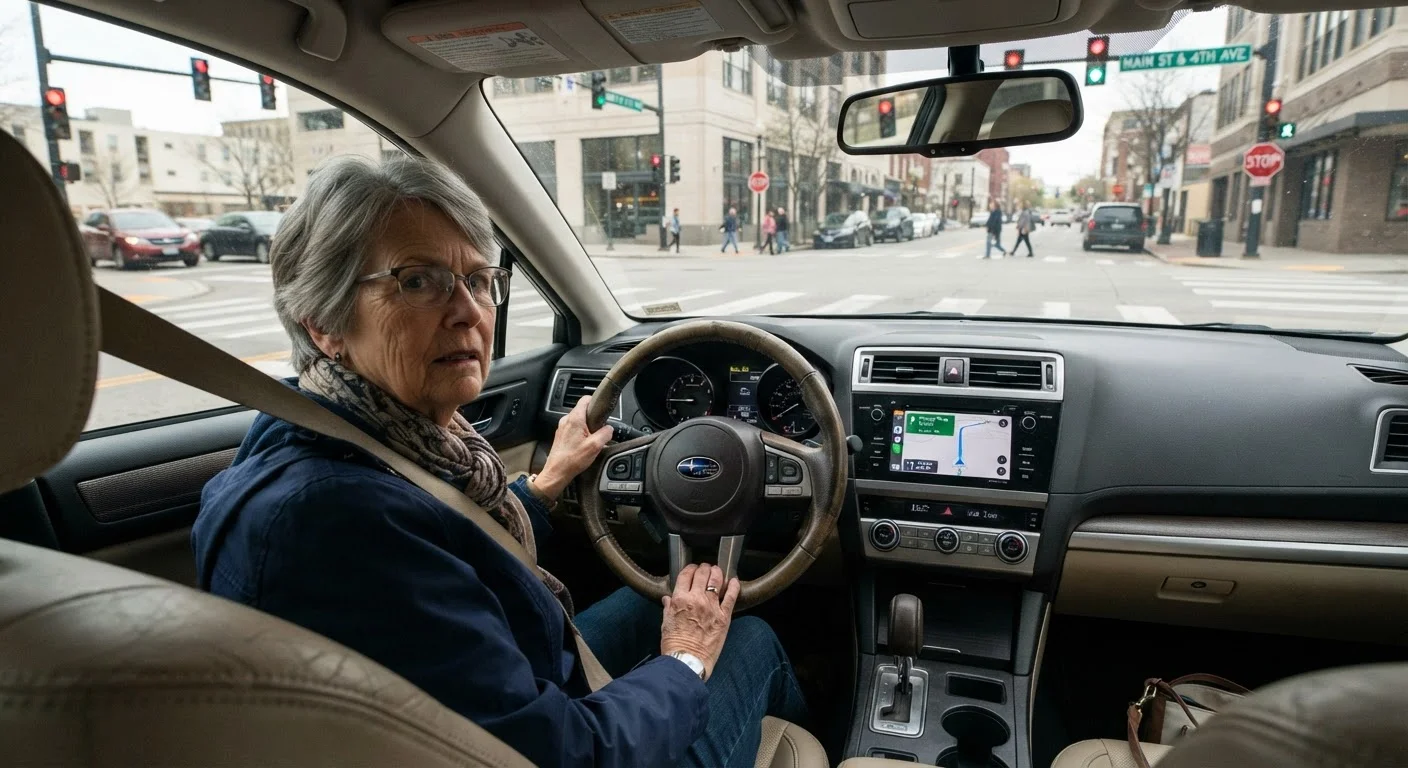
Most experienced drivers have navigated familiar routes hundreds of times. That familiarity can feel like a reliable safety net — but it carries a risk that's easy to overlook. Roads change. Businesses close. Construction reroutes traffic. A mental map that was accurate five years ago may no longer match reality.
For older drivers in particular, relying solely on memory can quietly amplify cognitive demands. When a familiar landmark disappears or a turn comes unexpectedly, the brain must rapidly problem-solve while simultaneously managing the vehicle — a split-second juggle that increases the chance of errors.
This doesn't reflect a deficit in ability. It reflects a real challenge that affects drivers of all ages when conditions shift. Understanding where memory-based navigation tends to fail is the first step toward driving more confidently.
Assuming a frequently driven route is still accurate after months or years away.
Why it happens: Familiarity breeds confidence. Drivers who know a route well often don't consider that road layouts, business landmarks, or signage may have changed since they last drove it.
Skipping navigation aids because the destination seems close or simple.
Why it happens: Short trips feel like they don't warrant extra preparation, so drivers skip tools they'd use for longer journeys — even when unfamiliar streets are involved.
Relying on a passenger to give verbal directions in real time.
Why it happens: It seems like a natural solution — someone in the car can simply read the map or give turn-by-turn instructions. But verbal directions from a passenger are often mistimed or unclear under pressure.
Dismissing navigation technology as too complicated to learn or use.
Why it happens: Many older drivers had negative early experiences with confusing technology or received little guidance on setup. This creates a lasting hesitation that's hard to overcome without support.
Not accounting for how stress or fatigue affects real-time memory recall while driving.
Why it happens: Drivers often plan trips when they feel rested and alert, and assume they'll recall stored directions just as easily on the day of the trip — even if circumstances differ.
How Simple Navigation Tools Change the Experience
Navigation aids don't have to be complicated to be effective. A voice-guided GPS device or a smartphone app with large text and spoken directions can remove much of the guesswork from unfamiliar routes. Instead of mentally rehearsing a sequence of turns, a driver can focus on the road itself — which is exactly where attention belongs.
40%
Drivers who report stress from getting lost
Research on driving and wayfinding consistently finds that unexpected route changes are among the most commonly cited sources of stress for older drivers.
2–3x
Cognitive load increase during navigation errors
Studies on driver attention suggest that recovering from a missed turn requires significantly more mental effort than following a planned route, especially in unfamiliar areas.
Features worth looking for include clear voice prompts that announce turns well in advance, automatic rerouting when a wrong turn occurs, and displays with high-contrast, readable text. Some systems also provide lane guidance, which is especially useful on multi-lane roads and highway interchanges.
For a deeper look at which specific features make the biggest difference, see navigation features designed for older drivers. If you want a broader overview of accessible in-car technology, navigation and connectivity tech for senior drivers covers GPS, backup cameras, and more in plain language.
Don't Program While Driving
Navigation apps should always be set up before you start the vehicle or while safely parked. Entering an address or adjusting settings while in motion is a serious distraction. If you miss a turn and need to update the route, pull over in a safe location first.
It's also worth remembering that navigation tools work best when they complement — not replace — a driver's own judgment. Staying aware of road signs and surroundings remains essential. If you've wondered how driver-assist systems fit into this picture, common misconceptions about driver-assist systems is a useful read.
This article is for general informational purposes only. Driving conditions and technology features vary widely; consult your vehicle's manual and a qualified professional for guidance specific to your situation.
The content on this site is for informational purposes only and is not a substitute for professional advice. Always consult a qualified professional for guidance specific to your situation.