

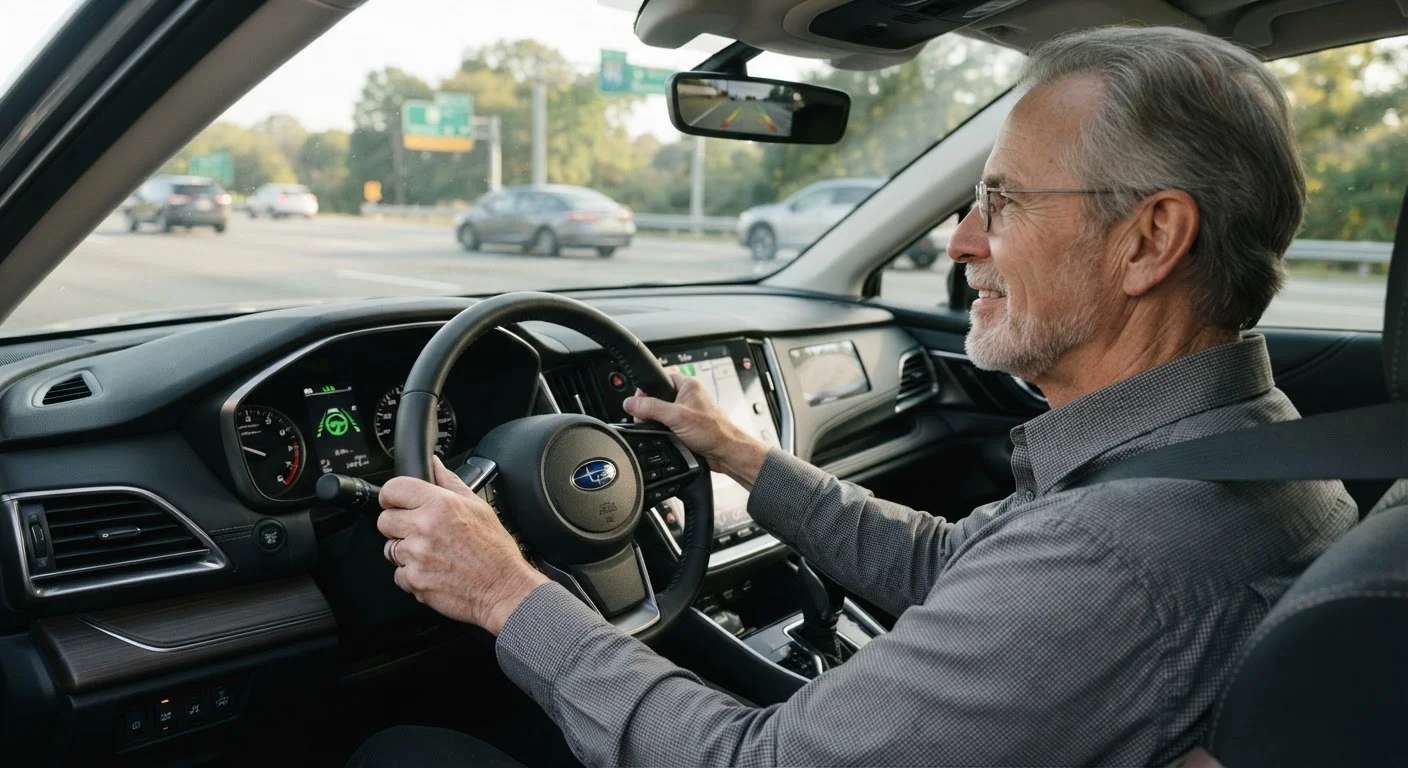
Why Misunderstanding These Systems Matters More for Seniors
Driver-assist technology has advanced rapidly, and modern vehicles now arrive equipped with features that would have seemed futuristic a decade ago. For older drivers, many of these systems address real age-related concerns — slower reaction times, reduced peripheral vision, or difficulty monitoring blind spots. That makes them genuinely valuable. But their value depends almost entirely on the driver understanding what each system actually does.
Misunderstanding these features is not a harmless error. When drivers assume a system will handle something it cannot, they reduce their own vigilance precisely when it matters most. For seniors, who may already face additional scrutiny about driving safety, an avoidable technology-related incident carries outsized consequences. The misconceptions below are among the most widely held — and the most consequential to correct.
Myth
If my car has lane-keeping assist, it will steer me back into the lane automatically — so I don't need to keep both hands on the wheel.
Fact
Lane-keeping assist provides a gentle corrective nudge or alert; it is not a steering system and cannot maintain lane position continuously without driver input.
Lane-keeping assist (LKA) is designed to warn a driver who is drifting unintentionally — not to drive the car. Most systems apply brief steering torque or issue an audio and visual alert. They typically disengage if they detect hands off the wheel for more than a few seconds, and they can fail entirely when lane markings are faded, obscured by snow, or absent at intersections. Relying on LKA as a substitute for attentive steering introduces real risk, particularly on rural or poorly maintained roads where markings vary significantly.
Myth
Automatic emergency braking (AEB) will always stop my car before a collision, so I can react a little more slowly.
Fact
AEB can reduce collision severity in certain conditions, but it cannot reliably stop a vehicle in all scenarios and is not a substitute for driver reaction.
Automatic emergency braking uses forward-facing sensors to detect a potential collision and apply the brakes faster than most human reactions allow. However, the National Highway Traffic Safety Administration (NHTSA) has documented that AEB performance varies considerably across vehicle makes and speed ranges. Most systems are optimized for highway speeds and may not activate effectively at low speeds common in parking lots, or in situations involving pedestrians at the vehicle's side. AEB is a supplemental safeguard — maintaining safe following distances and scanning the road ahead remains the driver's responsibility.
Myth
Blind-spot monitoring means I no longer need to turn my head and physically check blind spots before changing lanes.
Fact
Blind-spot monitoring alerts you to vehicles in an adjacent lane but has documented gaps — including motorcycles, fast-approaching vehicles, and cyclists in some configurations.
Blind-spot monitoring (BSM) uses radar or ultrasonic sensors mounted in the rear bumper area to detect vehicles alongside your car. While genuinely useful, the system typically has a fixed detection zone that may not capture every vehicle type or speed. Motorcycles, bicycles, and narrow vehicles are more frequently missed than larger cars. The Insurance Institute for Highway Safety (IIHS) has noted that BSM systems vary considerably in their detection range and reaction speed. The physical shoulder check remains a critical safety habit regardless of what technology is fitted to the vehicle.
Myth
Adaptive cruise control means I can set my speed and let the car handle highway driving without monitoring the road.
Fact
Adaptive cruise control automates speed and following distance only — it does not steer, navigate, or respond to all traffic scenarios.
Adaptive cruise control (ACC) uses forward sensors to maintain a set following distance from the vehicle ahead, automatically slowing and resuming speed within a programmed range. It does not handle curves, lane changes, merging traffic from on-ramps, or stopped emergency vehicles on the shoulder. Several serious crashes have been linked to drivers treating ACC as a fully autonomous feature. The system requires the driver to remain visually engaged and ready to brake or steer at any moment. Think of it as a fatigue-reducing tool on long straight highways — not a self-driving capability. For a fuller picture of what these features involve, see our plain-language guide to driver-assist systems.
Myth
Once a car has these safety systems, older drivers don't need to update their driving habits or skills.
Fact
Driver-assist features are most effective when the driver understands their operation — and seniors who learn the technology's actual limits use it more safely.
Research consistently shows that drivers who overestimate system capability engage in riskier behavior — increasing, not decreasing, their crash exposure. Conversely, drivers who understand what each system does and does not do tend to integrate the technology productively into their existing safe-driving habits. Many dealerships, senior centers, and community organizations offer orientation sessions on vehicle safety technology. Taking even a brief orientation when purchasing a new vehicle can meaningfully close the gap between expected and actual system performance. For more on this, our article on why seniors often get less from safety tech than expected explains how to address these gaps directly.
Myth
Driver-assist systems work equally well in all weather and lighting conditions.
Fact
Camera and sensor-based systems are significantly affected by rain, snow, fog, glare, and dirty sensors — conditions that are common and not always obvious.
The cameras, radar units, and ultrasonic sensors powering most driver-assist features are calibrated for clear conditions. Heavy rain reduces camera resolution; snow and ice can block bumper-mounted radar; bright morning or evening glare can overwhelm forward cameras used for AEB and LKA. Many systems display a warning on the dashboard when sensors are impaired, but not all do so reliably. Routine cleaning of camera lenses and sensor areas in your owner manual, and awareness that system reliability drops in challenging conditions, are both practical and important habits. Exploring the latest safety features in new vehicles can help you understand which technologies are more weather-resilient than others.
Using Driver-Assist Technology Wisely and Safely
The goal of driver-assist systems is not to replace driver judgment but to provide an additional layer of awareness and response. Seniors who approach these tools with clear, accurate expectations tend to benefit most from them — while remaining the active, responsible agent behind the wheel.
Sensor Performance Drops in Poor Conditions
Cameras, radar, and ultrasonic sensors used by driver-assist systems can be impaired by heavy rain, snow, ice, mud, direct glare, or even a dirty bumper. In these conditions, some systems may deactivate entirely or provide unreliable alerts. Never assume a system is fully operational during adverse weather — verify function through your dashboard indicators and stay extra vigilant.
A few practical habits reinforce safe use. First, read the relevant sections of your vehicle's owner manual before relying on any system in real traffic — manufacturer descriptions are the authoritative source for what your specific vehicle can do. Second, if your vehicle's dealership or manufacturer offers a technology orientation session, take advantage of it. Third, treat any system alert as a prompt to act, not as confirmation that the car is handling the situation. The alert is the beginning of your response, not the end of it.
For further perspective on common misunderstandings across a broader range of vehicle features, the article on common misconceptions about modern car safety technology offers a useful companion read. Similarly, if you're considering accessories that complement your vehicle's existing systems, safety accessories for seniors covers options worth exploring.
These Systems Still Require Your Full Attention
No driver-assist feature currently available in consumer vehicles can replace an engaged, attentive driver. Hands must remain on the wheel, and eyes must remain on the road. Treating any system as a substitute for your own judgment has been associated with serious crashes. Always read your vehicle's owner manual to understand exactly what each feature can and cannot do.
This article provides general educational information about driver-assist systems and is not a substitute for your vehicle manufacturer's documentation, a licensed driving instructor's assessment, or advice tailored to your specific health or driving circumstances.
The content on this site is for informational purposes only and is not a substitute for professional advice. Always consult a qualified professional for guidance specific to your situation.